
The Conscious Living · Japan
Where Argentine soul meets Swiss precision and Japanese awareness.
There are places and objects in this world that do not ask to be admired. They ask to be felt. Through the lens of Valeria Viollaz, founder and creative director of VV Interior Home, this curated journey through Japan is not a travel guide — it is an invitation to a different quality of attention.
Rooted in the philosophy of conscious living and the belief that true luxury is the one that endures, this selection brings together spaces, creators, and experiences that share a common thread: the art of doing less, and meaning more. Each encounter carries the same quiet conviction that has always defined VV Interior Home — that the most meaningful things are not the loudest, nor the most visible, but those that leave something behind long after the moment has passed.
Japan, in this sense, is not a destination. It is a state of mind that Valeria has long recognized as a mirror of her own curatorial vision — a culture that has always understood that beauty lives in impermanence, in restraint, and in the profound dignity of the everyday.
This is where Argentine soul meets Swiss precision and Japanese awareness.
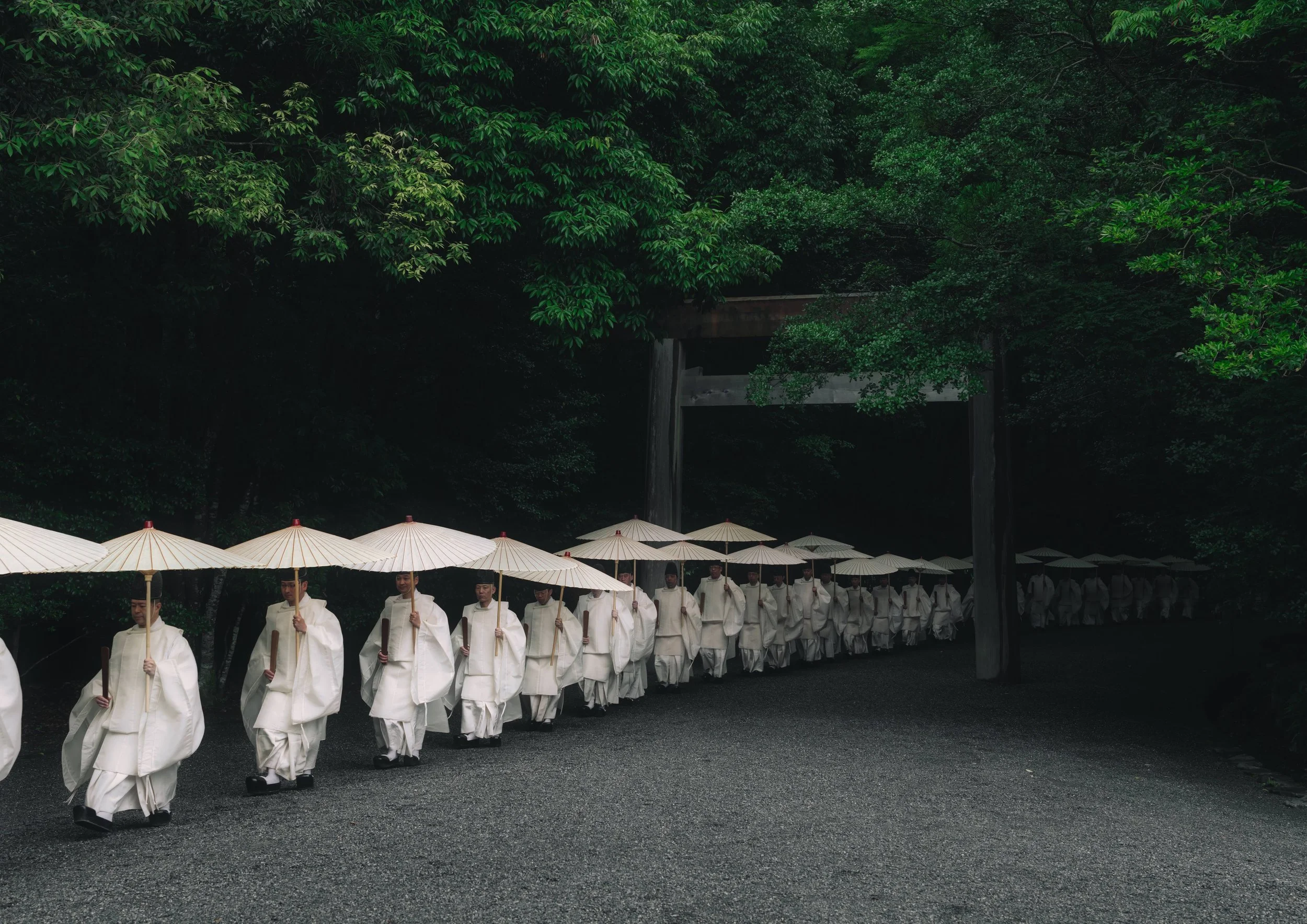
The procession beneath the torii — Nagoshi no Ōharae, Ise Jingu, Mie, Japan · 2023.
Curation: VV Interior Home by Valeria Viollaz
Photography: Takayuki Yoshikawa
Where Half a Year Dissolves Ise Jingu · Nagoshi no Ōharae · Mie, Japan
The forest keeps the count
ISE JINGU — MIE PREFECTURE
On the thirtieth of June, something quietly ends. Across Japan's great Shinto shrines, priests gather to release the unseen weight accumulated since the year began — Nagoshi no Ōharae, the great purification of midsummer, performed in unbroken continuity since the Heian period.
At Ise Jingu, the most sacred shrine in the country, the procession moves beneath the torii in silence — white robes, white parasols, a line of priests disappearing into cedar shadow. There is no performance in it. No audience to please. Only the discipline of a ritual that has asked nothing of time except to be repeated, faithfully, twice a year, for over a thousand years.
To witness it, even briefly, is to understand something Japan has always known: that renewal is not an event. It is a practice — quiet, communal, and unhurried — carried forward by those who do not ask to be seen, only to be faithful.
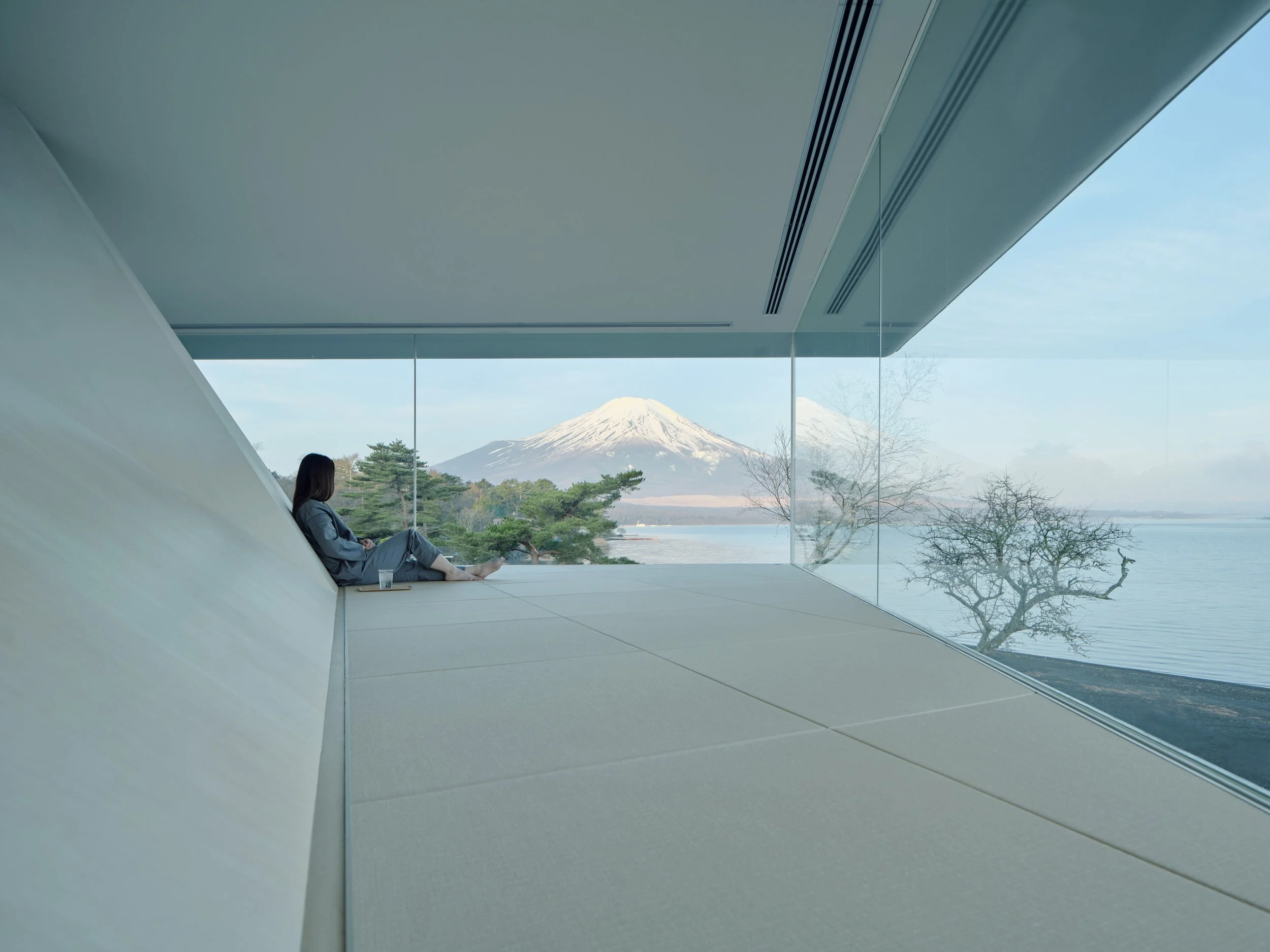
Silence before the mountain — CYCL Sauna, Lake Yamanakako, Japan
Curation: VV Interior Home by Valeria Viollaz
Photography: CYCL
01 — Silence Before the Mountain CYCL Sauna · Lake Yamanakako · Mount Fuji, Japan
Stillness as a ritual
CYCL — LAKE YAMANAKAKO
At the foot of Mount Fuji, where the lake merges with the sky, CYCL redefines the ancient bathing ritual as a conscious act of presence. This lakeside facility in Yamanakako, Yamanashi, is built around a single extraordinary element: natural spring water from the Fuji underground aquifer, flowing at 90 liters per minute and maintained at a constant 12 degrees year-round — pure enough to drink.
The architecture, inspired by the kasagumo — the lenticular cloud that crowns Mount Fuji — dissolves the boundary between interior and landscape. A 360-degree panoramic lounge opens entirely toward the lake and the mountain, inviting a slowness that is both rare and necessary.
CYCL is not simply a place to visit. It is a place to return to yourself — where water, silence, and one of the world's most iconic landscapes converge into a single, unhurried breath.
cycl.co.jp
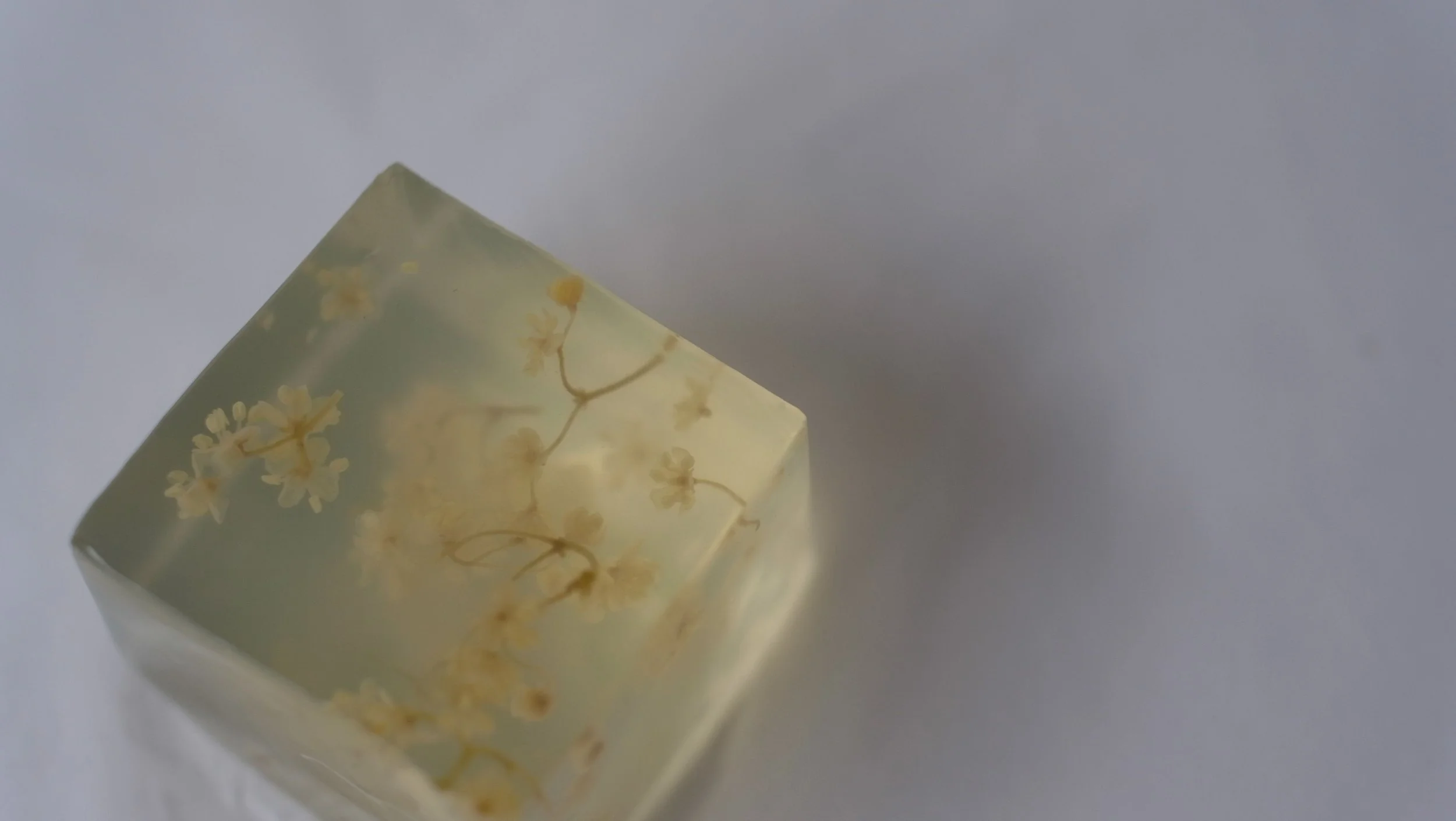
The Sweetness of Silence · Kobutsunomi 鉱物の実 A fruit of reminiscence, Okashimaru, Kyoto, Japan.
Curation: VV Interior Home by Valeria Viollaz ·
Photography: Okashimaru
02 — The Sweetness of Silence Okashimaru · Wagashi Laboratory · Kyoto, Japan
Beauty before the last bite
OKASHIMARU — KYOTO
Sayoko Sugiyama creates confections in Kyoto that begin where most sweets end — at the threshold between looking and tasting. Each piece captures a fleeting moment from the natural world: silence in snow, light filtered through leaves, the trace of wind on water.
Made from seasonal ingredients — mountain potato, agar, wild fruits, handpicked botanicals — her works are not decorations. They are edible meditations. Objects that disappear, and in disappearing, leave something behind.
Okashimaru reminds us that the most meaningful things are also the most impermanent.
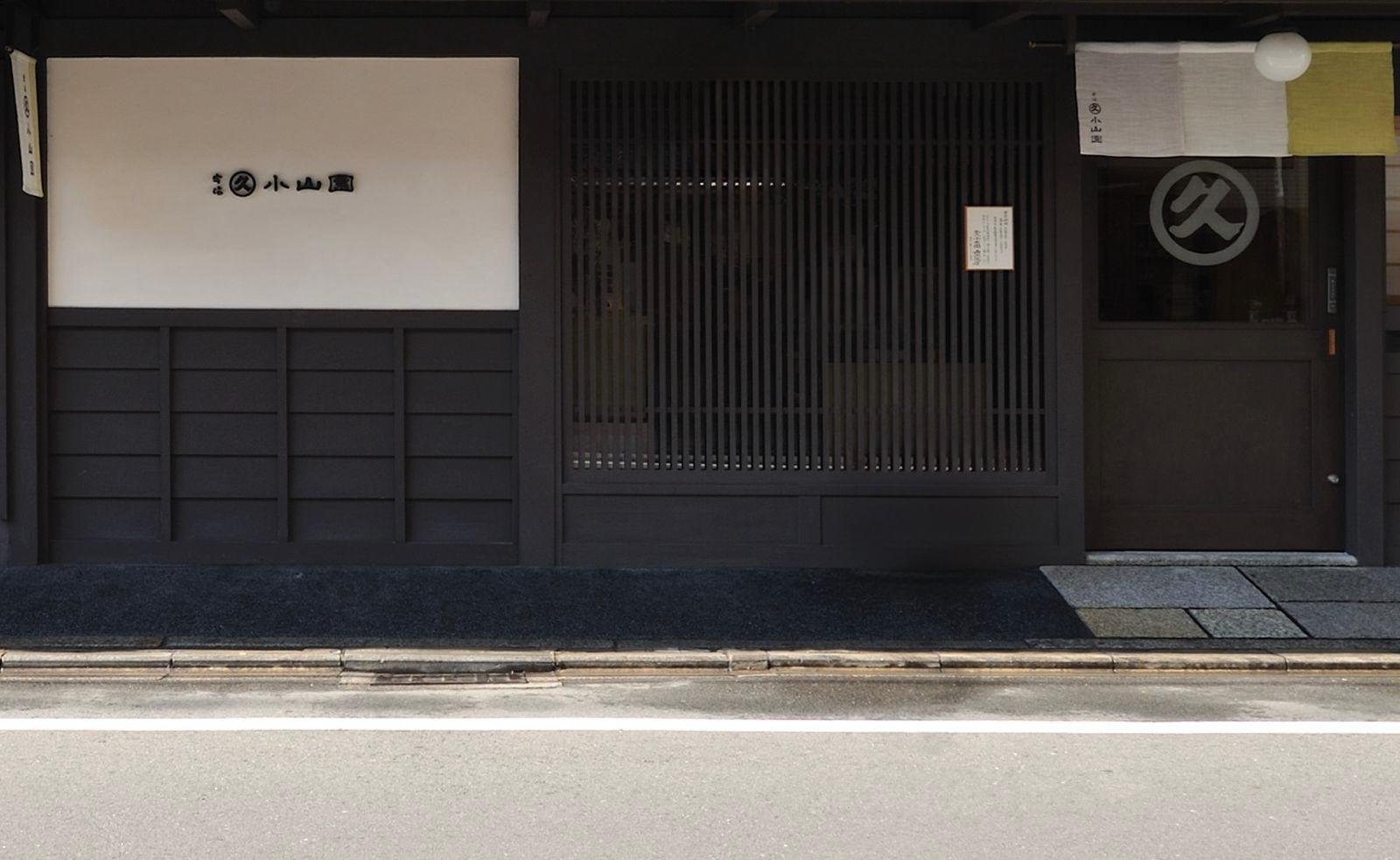
Nishitoin Store — Marukyu Koyamaen, Kyoto, Japan.
Curation: VV Interior Home by Valeria Viollaz
Photography: Marukyu Koyamaen
03 — Quality as a Way of Life Marukyu Koyamaen · Uji Tea Estate · Kyoto, Japan
Three centuries in a single bowl
MARUKYU KOYAMAEN — UJI, KYOTO
Founded in the 17th century in Uji, Kyoto, Marukyu Koyamaen has been held by the Koyama family for over three hundred years. Not as a business passed down — but as a responsibility. Each generation inheriting not only the estate, but the conviction that quality is not a standard to meet. It is a way of being.
Their matcha is cultivated in silence, in the same fields, with the same patience. Supplied to the head masters of Japan's most revered traditional tea schools, it is not made for the market. It is made for the moment — the precise, unhurried moment of a single bowl prepared with full attention.
In a world that moves fast and produces faster, Marukyu Koyamaen reminds us that the most enduring things are never rushed.
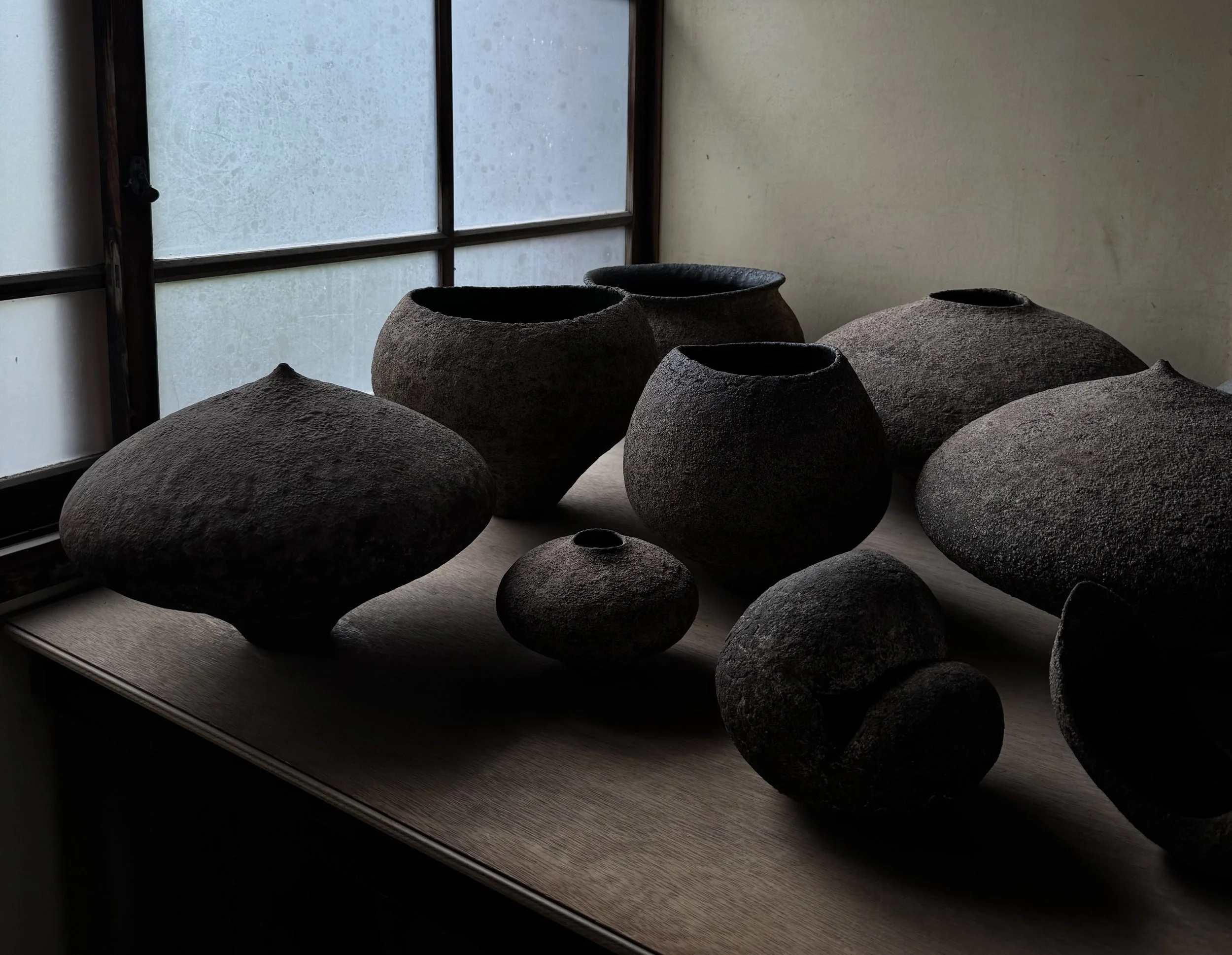
Hiroshi Aoki Studio · Japan.
Curation: VV Interior Home by Valeria Viollaz
Photography: Hiroshi Aoki
04 — Earth Before Language Hiroshi Aoki · Ceramic Artist · Japan
The form you already knew
HIROSHI AOKI — JAPAN
I was looking for something. I didn't know exactly what — only that I would recognize it when I found it.
Hiroshi Aoki's vessels arrived that way. Not as a discovery, but as a recognition. Dark, mineral, hand-built from raw clay and fired until the surface holds the memory of ancient ground — each piece carries a weight that has nothing to do with its size, and everything to do with its honesty.
Aoki works where pottery meets silence. His forms are rounded, deliberate, imperfect in the way that only things made entirely by hand can be. They do not perform. They do not decorate. They simply remain — on a table, in a room, in the mind long after you've looked away.
To encounter his work is to understand that some things do not need to be explained. They only need to be recognized.
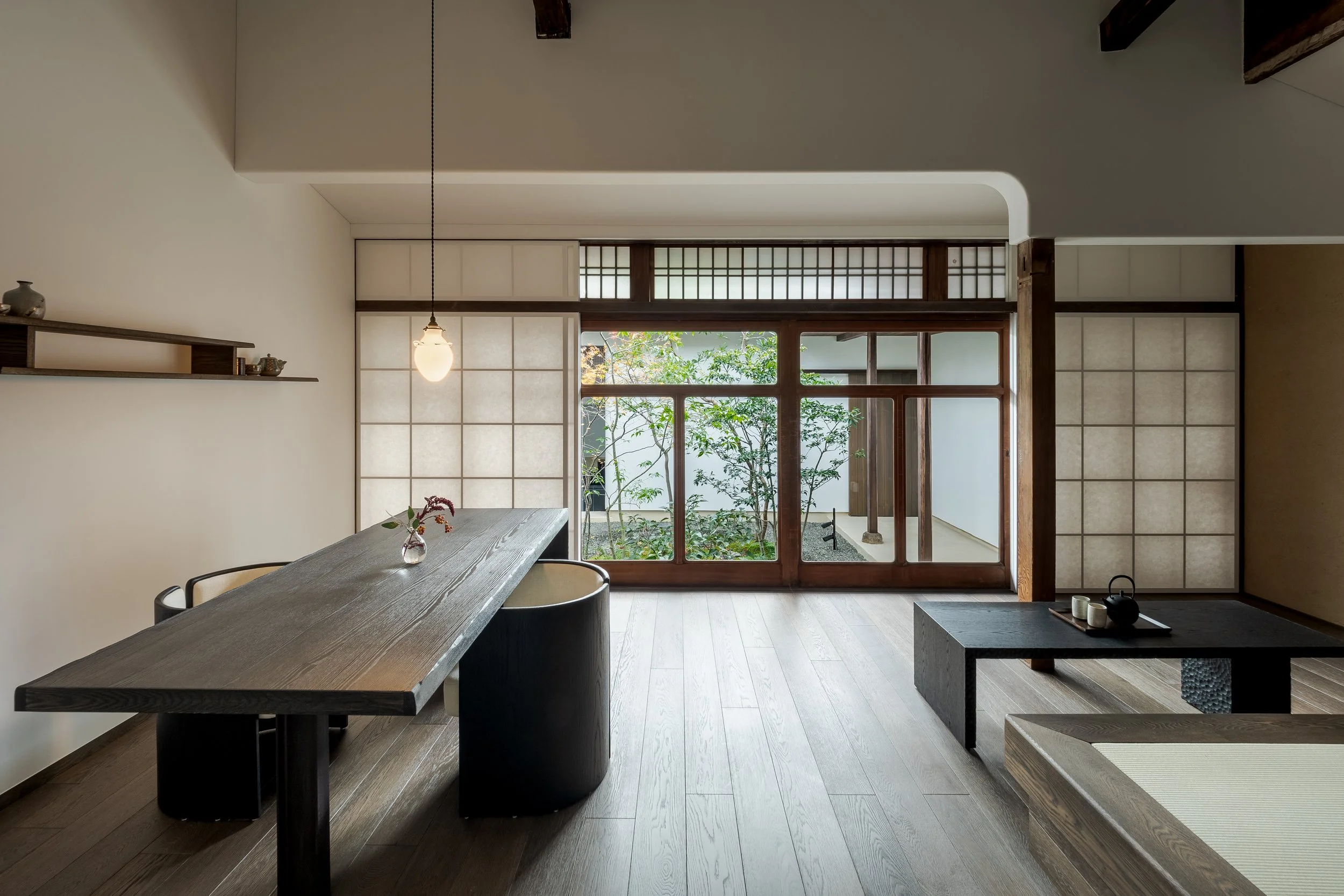
Yoruya · Kurashiki Bikan Historical Quarter, Japan.
Curation: VV Interior Home by Valeria Viollaz
Photography: Yoshiro Masuda
05 — Where the Thread Holds Yoruya · Boutique Hotel · Kurashiki, Japan
A house that remembers
YORUYA — KURASHIKI, JAPAN
There are buildings that have absorbed so much time they no longer need to announce it. Yoruya is one of them.
Behind a traditional timber-latticed façade in Kurashiki's Bikan Historical Quarter, this 110-year-old former kimono merchant's residence has been transformed into something rarer than a hotel: a place that holds its past without being imprisoned by it. Exposed beams, tatami floors, and shoji panels evoke the textures of old Kurashiki, while contemporary furnishings crafted in pale hinoki or reddish cedar offer subtle counterpoints.
Throughout, handmade fabrics, art objects, and ceramic tableware custom-made by local kilns specialising in Bizen ware — one of Japan's six great pottery traditions — cultivate a sense of stillness that extends into every crafted detail.
To sleep here is not to stay somewhere. It is to be held, briefly, by a history that was already in motion long before you arrived — and will continue long after you leave.
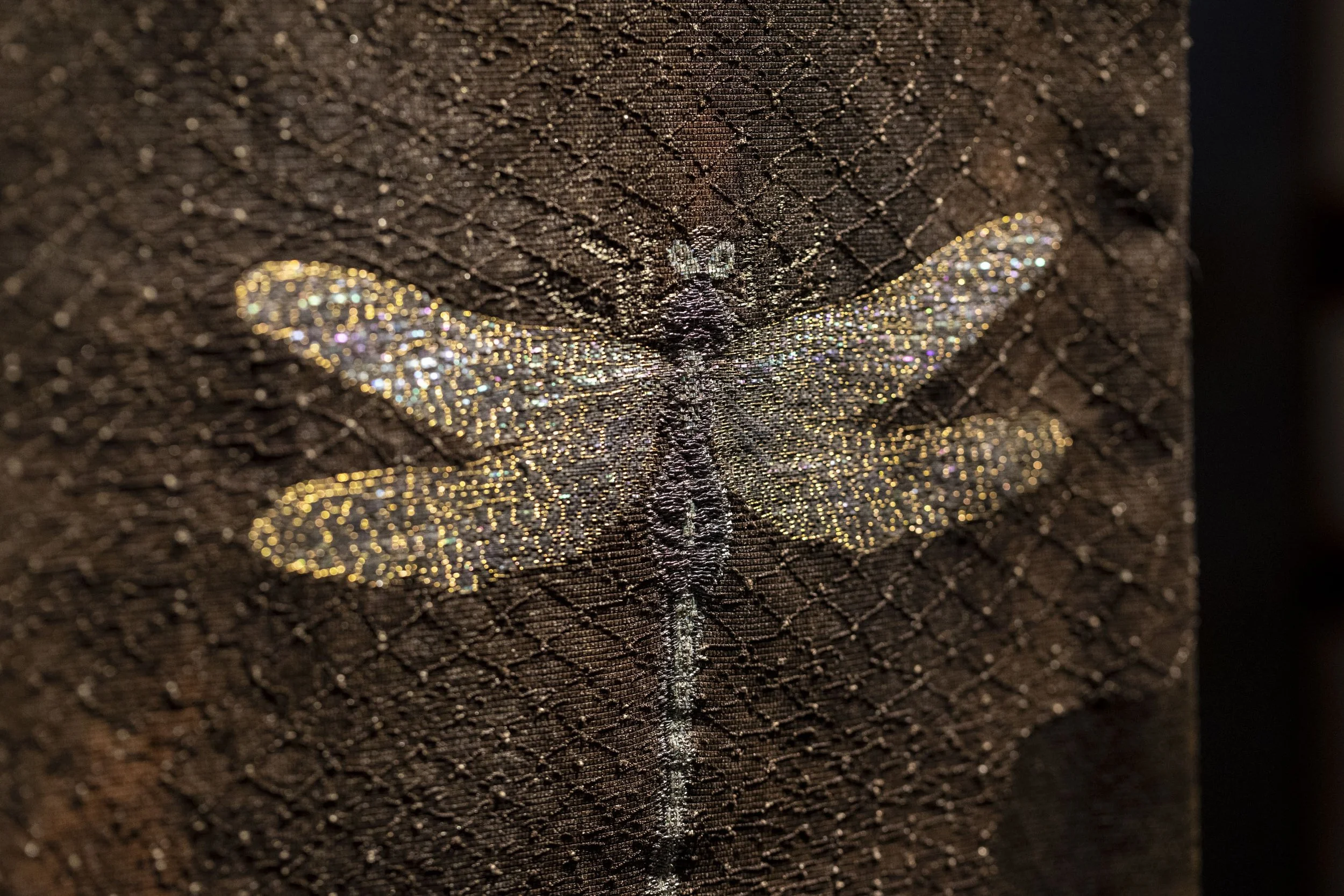
Dragonfly motif woven with gold, mother-of-pearl, and opal threads on an obi by Kondaya Genbei, Kyoto, Japan · 2026.
Curation: VV Interior Home by Valeria Viollaz
Photography: Kondaya Genbei
06 —What the Loom Remembers Kondaya Genbei · Obi House · Kyoto, Japan
Woven, not made
KONDAYA GENBEI — MUROMACHI, KYOTO
Some houses do not simply practice a craft. They carry it. For ten generations and more than 280 years, the name Genbei has passed from master to master in the Muromachi district of Kyoto — not as a title, but as a vow renewed with each obi that leaves the loom.
To weave here is not to produce. It is to offer. The current master speaks of his work not as something made for people, but as something woven for the gods — a presence invited to dwell within the thread itself, in silk drawn from the rare Koishimaru silkworm, in patterns born of the ancient Karaori technique. Seven of these works now rest in the permanent collection of London's Victoria & Albert Museum, quiet proof that devotion, sustained long enough, becomes its own form of permanence.
To hold a Kondaya Genbei obi is to hold ten generations of patience, folded into silk. It does not ask to be worn. It asks to be understood.
PROJECT CREDITS
Curation: VV Interior Home by Valeria Viollaz
Copywriter: Valeria Viollaz
Photography: CYCL · Sayoko Sugiyama · Marukyu Koyamaen · Hiroshi Aoki · Yoruya · Kondaya Genbei · Takayuki Yoshikawa
Design: Octupuslab
Coordination: Viollaz Group
Originally published in Chiswick Life, The Life Magazines — July 2026