
When Time Overflows
Glenda León · Tiempo Perdido II · La Cometa, Miami
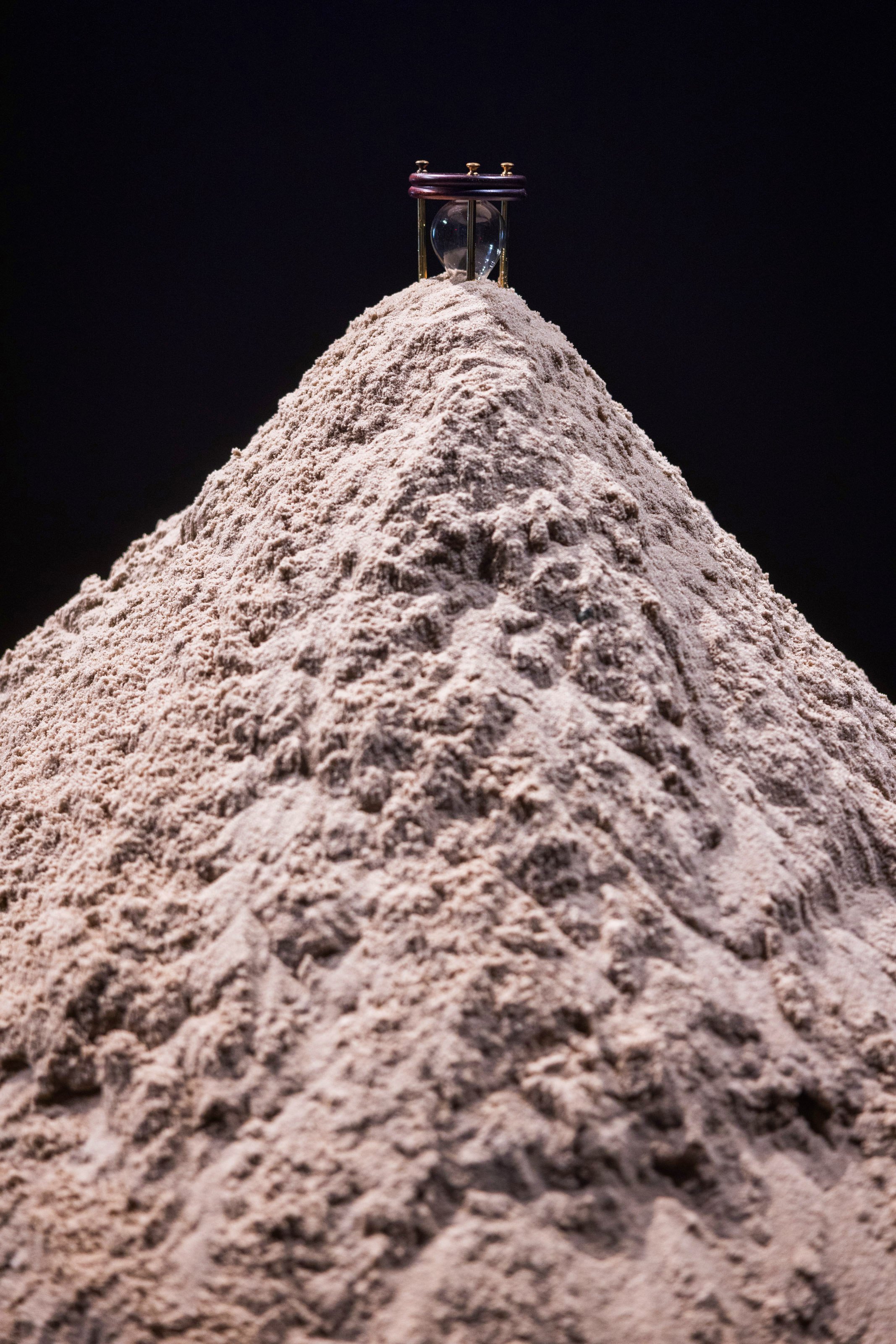
Glenda León · Tiempo Perdido II, 2013–2024 · Sand and Hourglass · Detail La Cometa, Miami · Photography: La Cometa Curation: VV Interior Home by Valeria Viollaz
There are works of art that do not ask to be interpreted. They ask to be stood before, in silence, until something inside you shifts.
Tiempo Perdido II is one of them.
A mountain of sand fills the room. At its summit — impossibly precise, impossibly small — an hourglass. Empty. The sand it once contained has not disappeared. It has become the mountain itself. What was meant to measure time has been overwhelmed by it. What was contained has overflowed into something monumental, pyramidal, irreversible.
Glenda León did not make a sculpture about time. She made time visible.
I encountered this work the way I encounter the objects I collect — not through research, but through recognition. That particular stillness that certain things carry when they have something true to say. The hourglass on the summit is not a symbol. It is evidence. The instrument failed, and in failing, revealed the only honest thing about time: it cannot be measured. It can only be lived, lost, or — if you are paying attention — felt.
This is precisely the question that has always guided my curatorial practice at VV Interior Home. Not what is beautiful, but what has passed through something real. The objects I select carry memory in their material — fire in clay, centuries in stone, hands in linen. They do not represent time. They hold it. And Glenda León's work does the same, at a scale that makes the body understand what the mind resists: that most of what we call our lives is sand, already fallen.
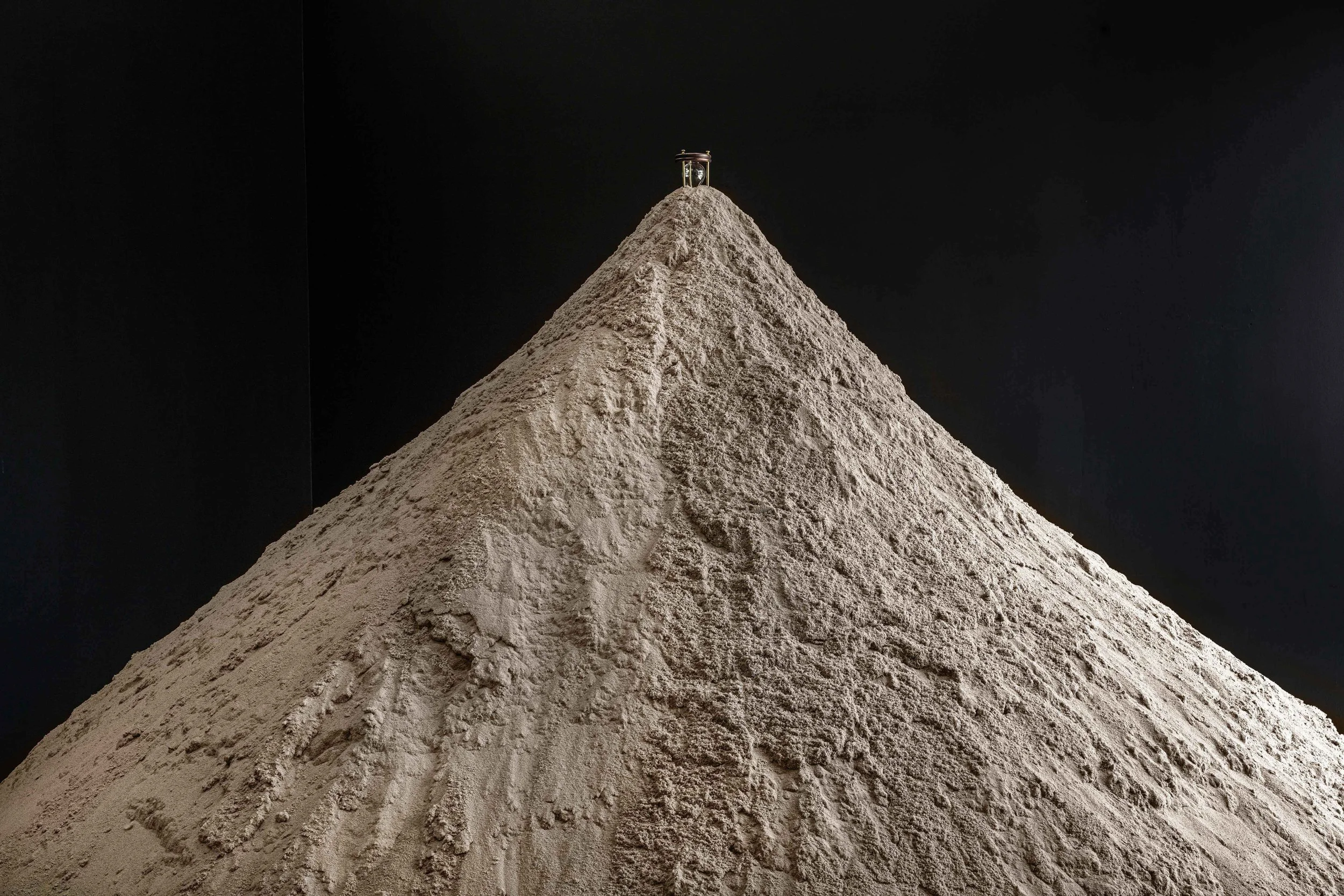
Glenda León · Tiempo Perdido II, 2013–2024 · Sand and Hourglass · Detail La Cometa, Miami · Photography: La Cometa Curation: VV Interior Home by Valeria Viollaz
Glenda León was born in Havana in 1976. She works between Havana and Madrid, and her practice moves across installation, drawing, photography and video — always in pursuit of the same threshold: the space between the visible and the invisible, sound and silence, the ephemeral and the eternal. She began her artistic life in ballet, and that discipline never left her work. There is always rhythm. There is always the awareness that a thing exists in time, and that time changes it.
Tiempo Perdido was first conceived in 2003, during a period of suffocating constraint — when the hourglass emerged not as a metaphor for time, but as a response to the experience of freedom running out. To replace cement with sand was not an aesthetic decision. It was an act of truthfulness. By 2013, the piece had become monumental. By 2024, when it was presented at La Cometa in Miami, it had lived long enough to carry its own history — a work about lost time that had itself accumulated time.
That is the kind of object I understand. That is the kind of artist I trust.
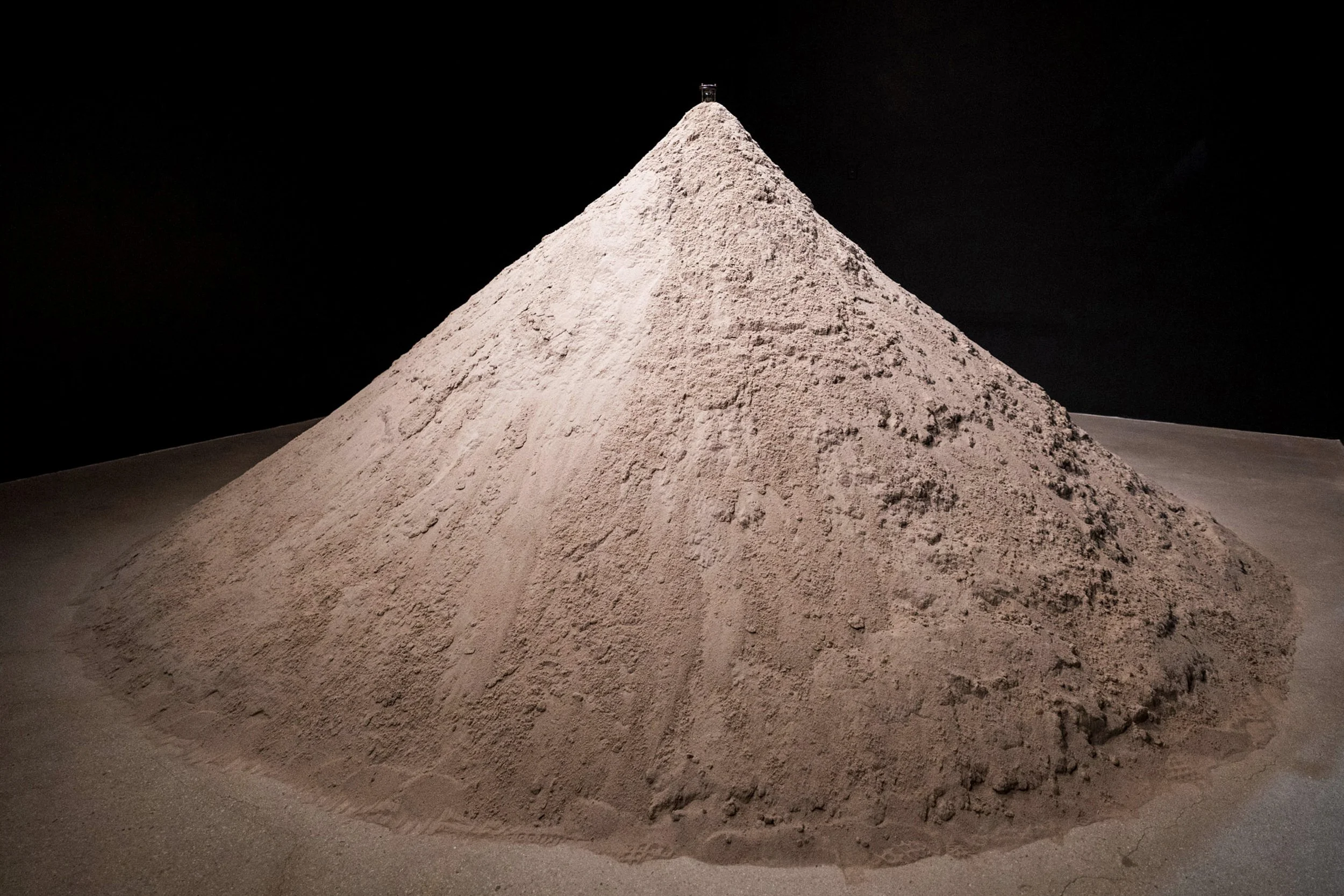
Glenda León · Tiempo Perdido II, 2013–2024 · Sand and Hourglass · 68⅞ × 177⅛ in. La Cometa, Miami · Photography: La Cometa Curation: VV Interior Home by Valeria Viollaz
Tiempo Perdido II does not mourn what is lost. It makes a monument of it — pyramidal, ancient in feeling, utterly contemporary in its silence. To stand before it is not to feel defeated by time. It is to understand, perhaps for the first time, that what we lose and what we build are made of the same material.
The sand does not disappear. It remains. In a different form, at a different scale, with a different meaning — but it remains.
This, ultimately, is what I look for in every object I bring into a space. Not permanence for its own sake. But the proof that something real occurred here. That time passed through this, and left a mark worth keeping.
— Valeria Viollaz Founder & Creative Director · VV Interior Home Lucerne, Switzerland
Glenda León · glenda-leon.com Tiempo Perdido II, 2013–2024 · Sand and Hourglass · 68⅞ × 177⅛ in. Exhibited at La Cometa · Miami · 2024–2025 Photography: La Cometa
Curation · VV Interior Home by Valeria Viollaz Coordination · Viollaz Group