
A Wedding Curation · Ippenburg Castle, Germany · 2019 ·
VV Interior Home by Valeria Viollaz
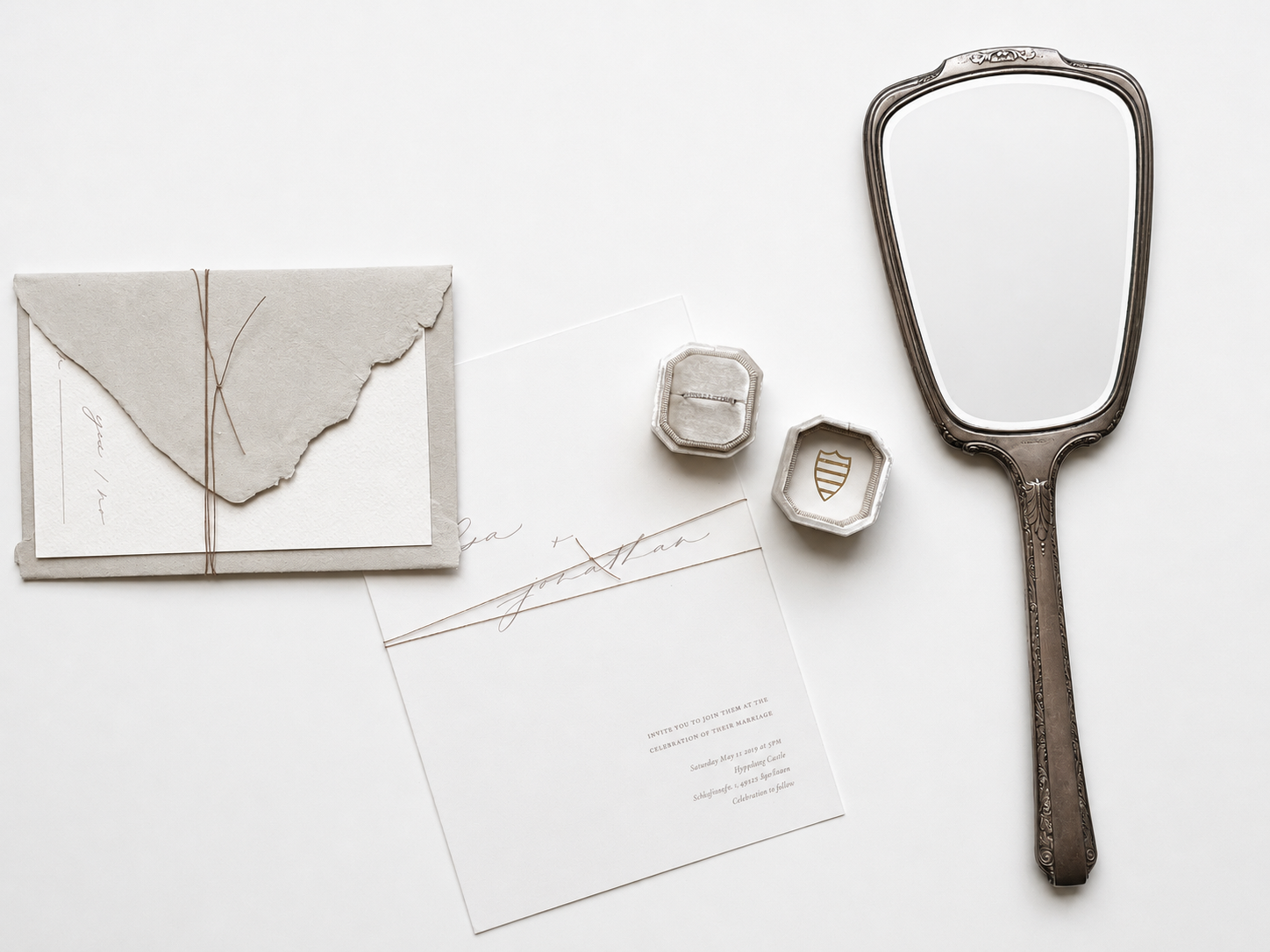
Victorian silver hand mirror, c. 1880–1920, alongside a wedding invitation by Lisa Brüning · Mille-Feuille Studio and The Mrs. Box · Ippenburg Castle, Germany · 2019. Curation: VV Interior Home by Valeria Viollaz · vvinteriorhome.com · Photography: Valeria Viollaz
There are objects that do not style a scene. They authorise it.
The hand mirror in this composition is Victorian — silver, engraved, its surface darkened by more than a century of time. It does not match the invitation beside it. It does not match the ring, nor the ivory velvet of The Mrs. Box, nor the gestural calligraphy that moves across the paper like breath. It belongs to an entirely different world.
And yet the composition holds. Not in spite of the mirror — because of it.
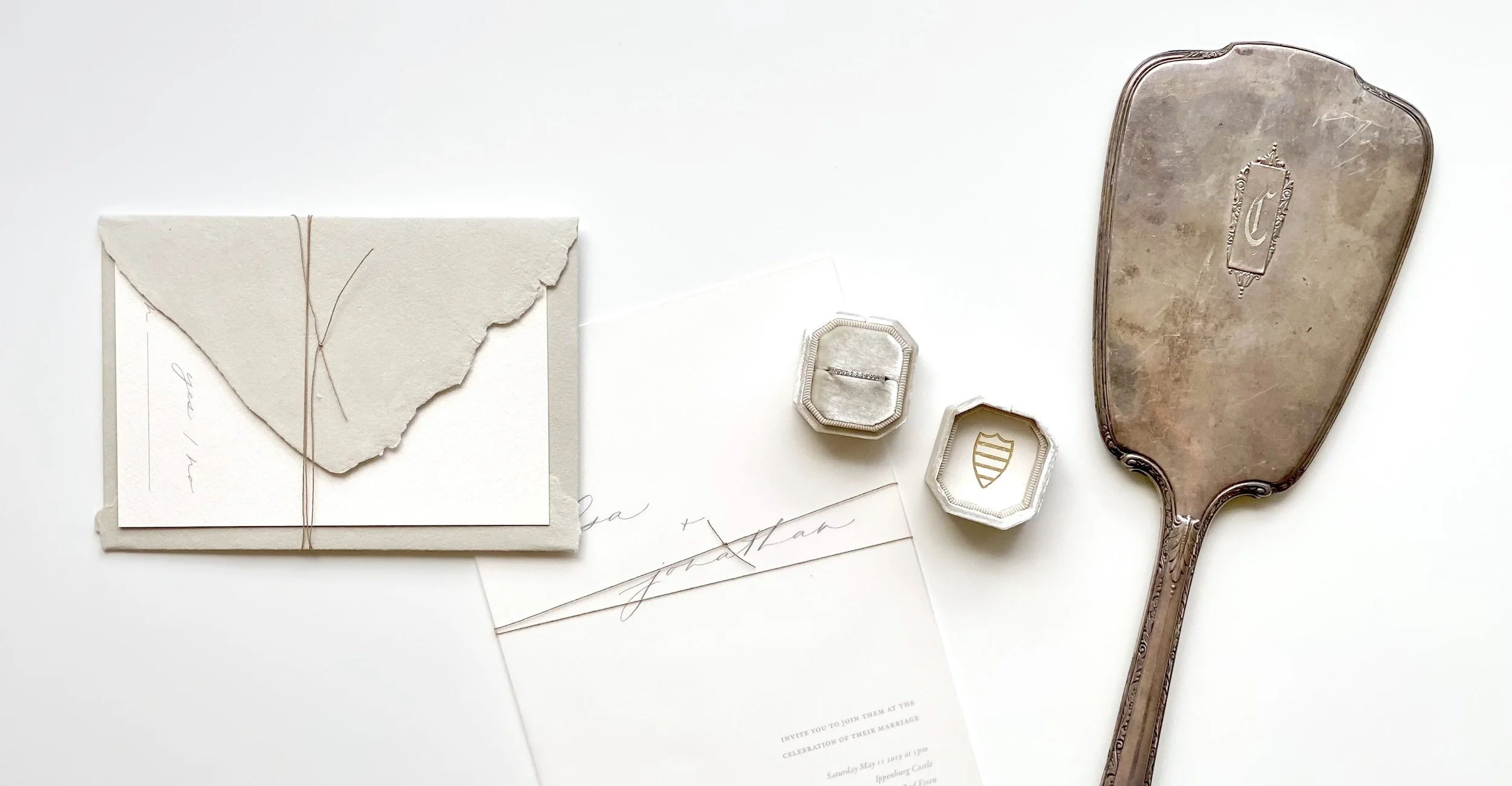
Engraved silver hand mirror, late Victorian or Edwardian period, c. 1880–1920 · Ippenburg Castle, Germany · 2019. Curation: VV Interior Home by Valeria Viollaz · vvinteriorhome.com · Photography: Valeria Viollaz
This is the question that has always guided the work of VV Interior Home: not which objects look well together, but what they say to one another. A Victorian mirror alongside a pavé diamond ring from Tiffany does not generate contradiction. It generates depth. Platinum catches light differently when the silver beside it has been accumulating its darkness for a hundred and forty years. The minimalism of the invitation reads with greater precision against the ornament of an engraved handle. The contemporary becomes more itself in the presence of the old.
The mirror dates to between 1880 and 1920 — the late Victorian or Edwardian period, when silversmithing was still a craft practised with the same seriousness as cabinetmaking or stone carving. The floral relief at the crown, the undulating form of the handle, the particular weight of the frame: these are not decorative decisions. They are the record of a craftsman who understood that an object held in the hand each morning must be worthy of that intimacy.
The ring is by Tiffany & Co. The box is by The Mrs. Box — its ivory velvet, its octagonal geometry, its quiet precision the ideal counterpoint to everything around it. The invitation belongs to Elsa and Jonathan, married on a Saturday in May at Ippenburg Castle, in northern Germany. The calligraphy, by Lisa Brüning of Mille-Feuille Studio, moves across the paper with a looseness that is, in fact, extremely controlled — the kind of gesture that takes years to appear spontaneous.
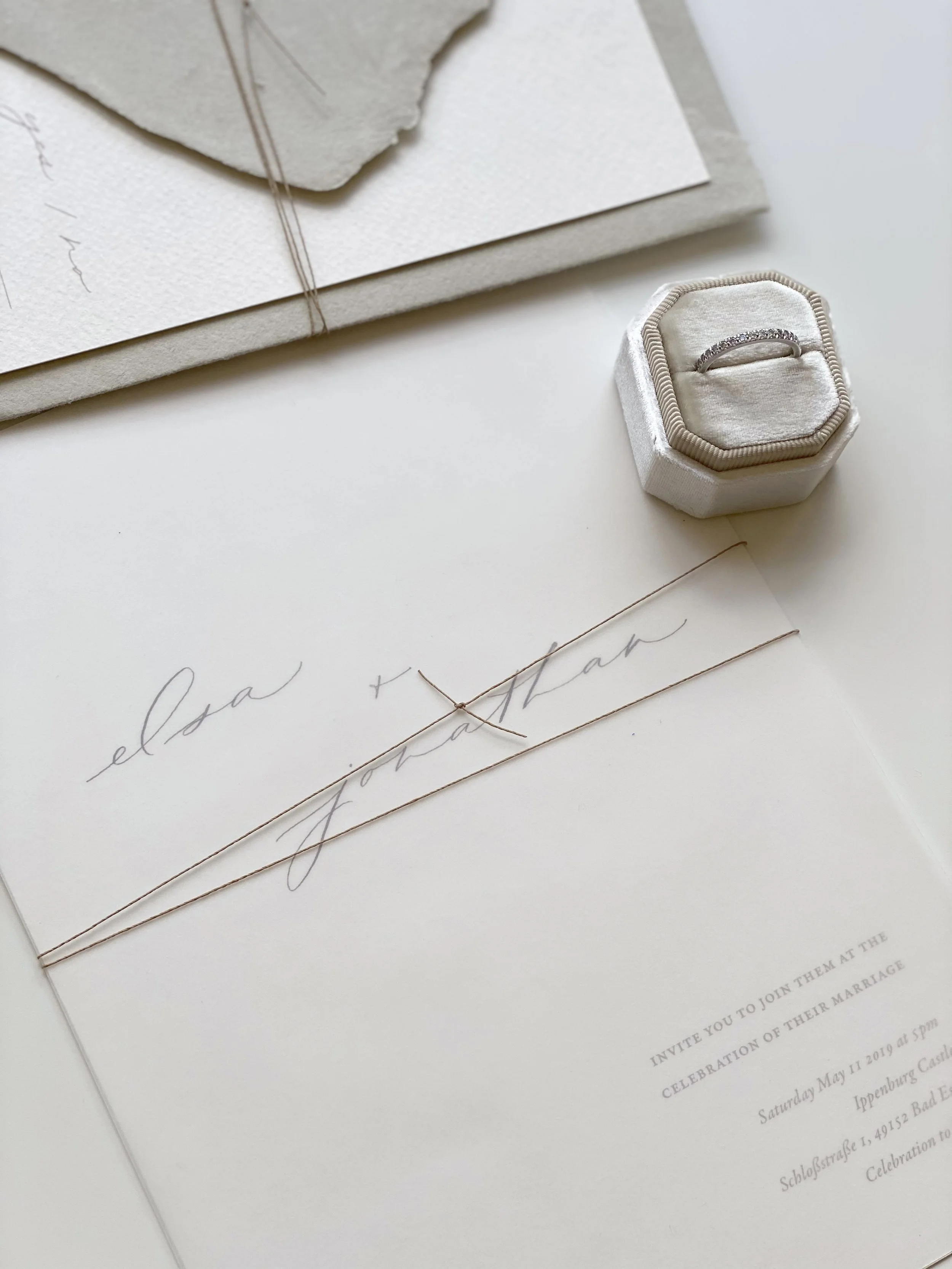
Tiffany & Co. pavé diamond ring · Zürich · The Mrs. Box, ivory velvet · Wedding invitation & letterpress calligraphy by Lisa Brüning · Mille-Feuille Studio · Ippenburg Castle, Germany · 2019.
Curation: VV Interior Home by Valeria Viollaz · vvinteriorhome.com Photography: Valeria Viollaz
Every element in this composition was chosen. Nothing arrived by accident.
That is the difference between styling and curation. Styling assembles. Curation argues — in silence, through placement, proportion, and the understanding that an object from 1890 and one from 2019 can hold a conversation, if someone has the patience to let them speak.
The most considered detail is always the one that contains time.
PROJECT CREDITS
Curation & Creative Direction · VV Interior Home by Valeria Viollaz · vvinteriorhome.com Photography · Valeria Viollaz Ring · Tiffany & Co. · Zürich · tiffany.com Ring Box · The Mrs. Box · themrsbox.com Calligraphy & Letterpress · Lisa Brüning · Mille-Feuille Studio · mille-feuille-studio.com Venue · Ippenburg Castle · Bad Essen, Germany · ippenburg.de