
On What a Poster Carries
A Curation · UNNA, Philippines · 1965–2026 · VV Interior Home by Valeria Viollaz
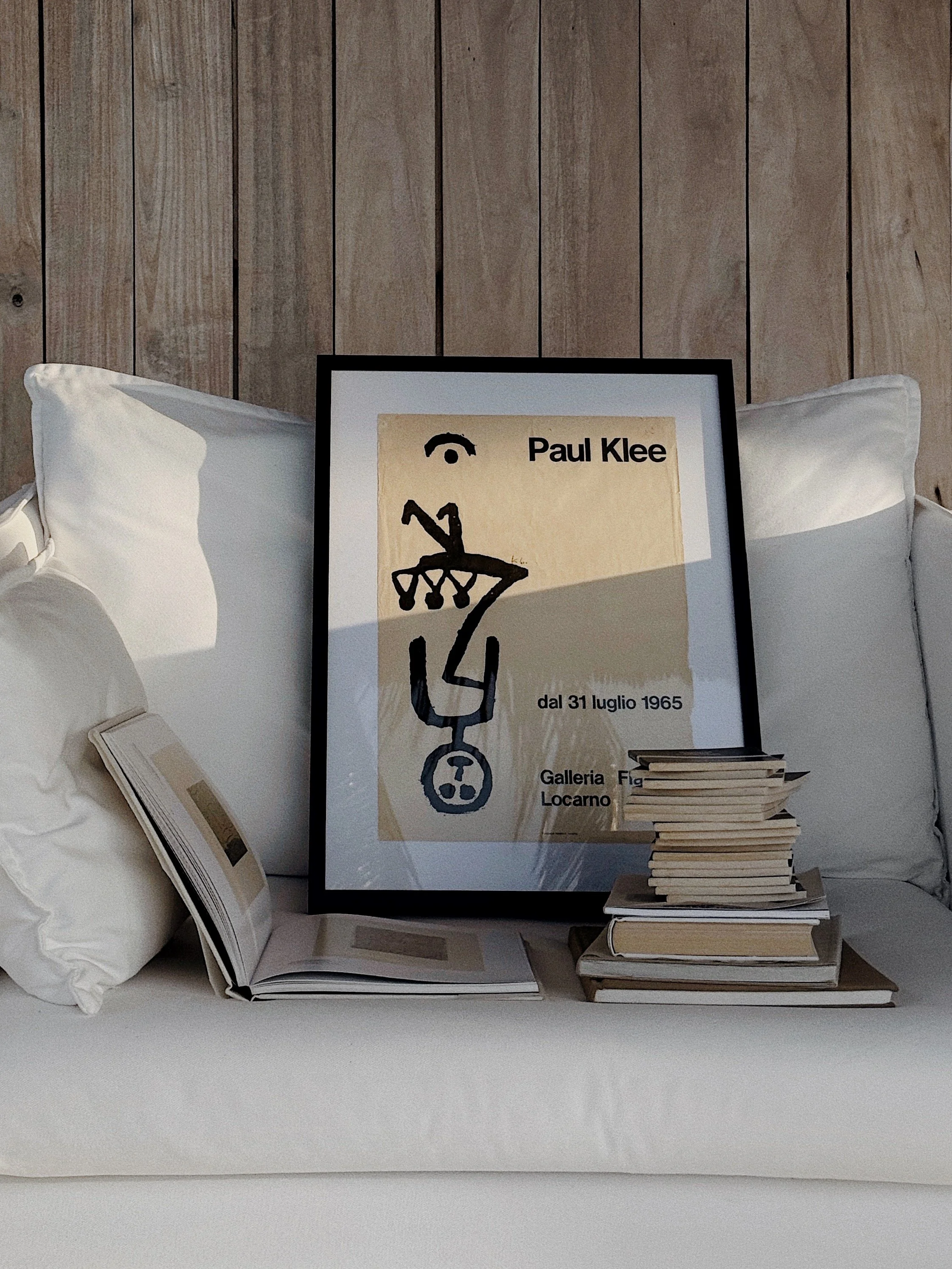
Paul Klee · Exhibition poster · Galleria Finamore, Locarno · 1965 · UNNA Project, Philippines · 2026. Curation: VV Interior Home by Valeria Viollaz · vvinteriorhome.com Photography: Vianca Soleil Roquero
There are objects that do not decorate a space. They locate it.
The poster in this photograph was printed in 1965, for an exhibition of Paul Klee's work at Galleria Finamore in Locarno — a small gallery in Ticino, the Swiss-Italian canton where Klee spent the last years of his life. Look for that exhibition in the standard catalogues and you will not find it. Look for the gallery and you will find it closed, the name gone. What remains is the poster itself: ochre ground, black line, a figure on a unicycle drawn with the economy of someone who had already said everything he needed to say. At some point, someone decided it deserved more than a drawer — it has been framed in black and matted in white, the kind of conservation usually reserved for things considered art rather than ephemera. That decision matters almost as much as the poster does: announcements like this one were never made to last. This one was made to.
That is how objects move through time. Not through institutions. Through attention.
The poster arrived in UNNA, a residential project in the Philippines, where VV Interior Home was brought in to curate this single piece — not as an artwork and not as a decorative gesture, but as an argument: that a space furnished with intention does not need everything in it to be new, rare, or expensive. It needs the right things, chosen well. A linen sofa, a stack of books left open at no particular page, and a poster printed sixty years ago in a city its new owners may never visit — these do not match. They converse.
Paul Klee was born in Münchenbuchsee, near Bern, in 1879, and spent his working life between Germany and Switzerland — teaching at the Bauhaus, building a visual language too personal to file under any movement. The two works from the Zentrum Paul Klee reproduced here make the point better than a biography could. In Architektur aus Variationen (1927), he treats a building elevation the way a composer treats a theme — not something to depict, but something to vary. In a childhood drawing of a clock, kept by the museum as evidence rather than curiosity, the same exacting eye is already at work, decades before Klee had a name for what he was doing. The Zentrum Paul Klee itself — designed by Renzo Piano, opened in 2005, home to more than 4,000 of his works — exists because that eye never stopped being exacting. To walk through it is to understand that Klee was not making images. He was building a language, one work at a time, over a lifetime.
The poster is not one of those works. It is a document — proof that on the 31st of July, 1965, someone in Locarno thought Klee's paintings mattered enough to invite people to come and look. What it carries is not the art. It is the conviction that the art mattered.
That conviction is what crossed the world.
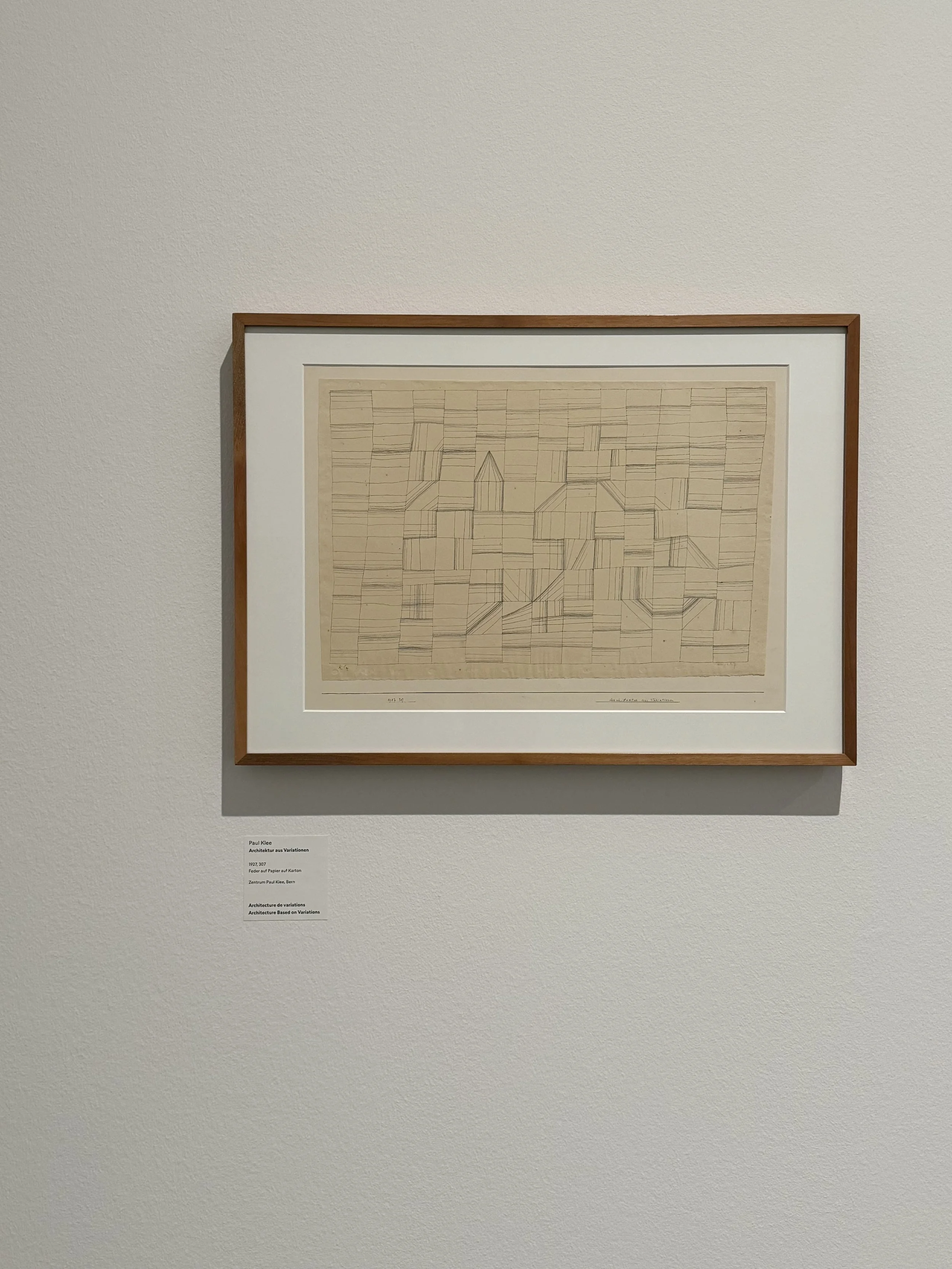
Paul Klee · Architektur aus Variationen · 1927 · Ink on paper on cardboard · Zentrum Paul Klee, Bern · 2026. Curation: VV Interior Home by Valeria Viollaz · vvinteriorhome.com · Photography: Valeria Viollaz
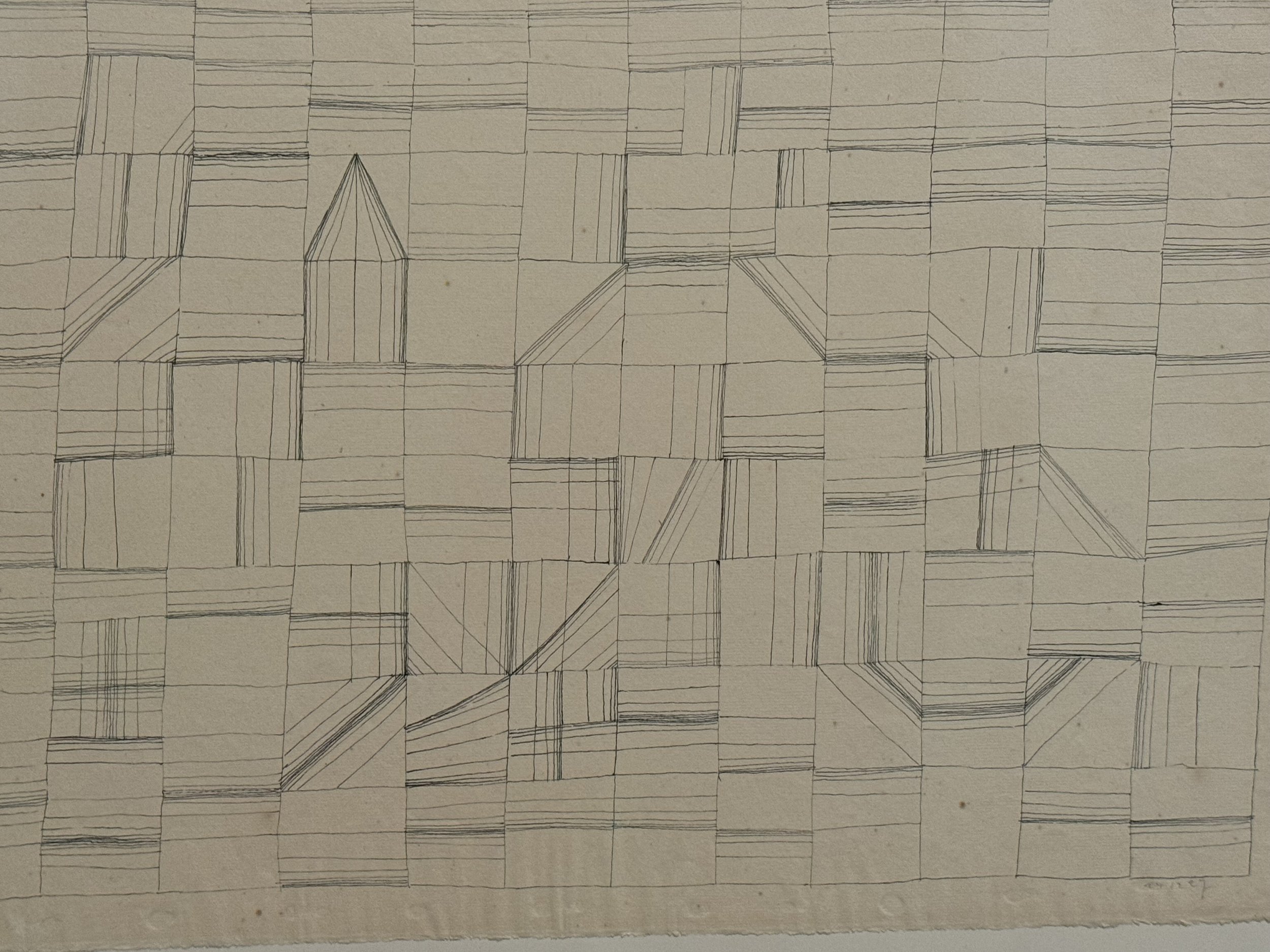
Paul Klee · Architektur aus Variationen · 1927 · Detail · Zentrum Paul Klee, Bern · 2026. Curation: VV Interior Home by Valeria Viollaz · vvinteriorhome.com · Photography: Valeria Viollaz
Within UNNA, VV Interior Home's role was specific: to find the right object for one wall, in one particular light, for one particular person — and to curate its placement so it could speak to whatever else was already in the room. The Klee poster did not travel to Manila because it matched the sofa. It travelled because it was the right object — chosen not for its origin or its market value, but for what it could say once it arrived.
The Locarno of 1965 and the Manila of 2026 share nothing. Except this poster. And the decision, fifty years on, to put it somewhere it could finally be seen.
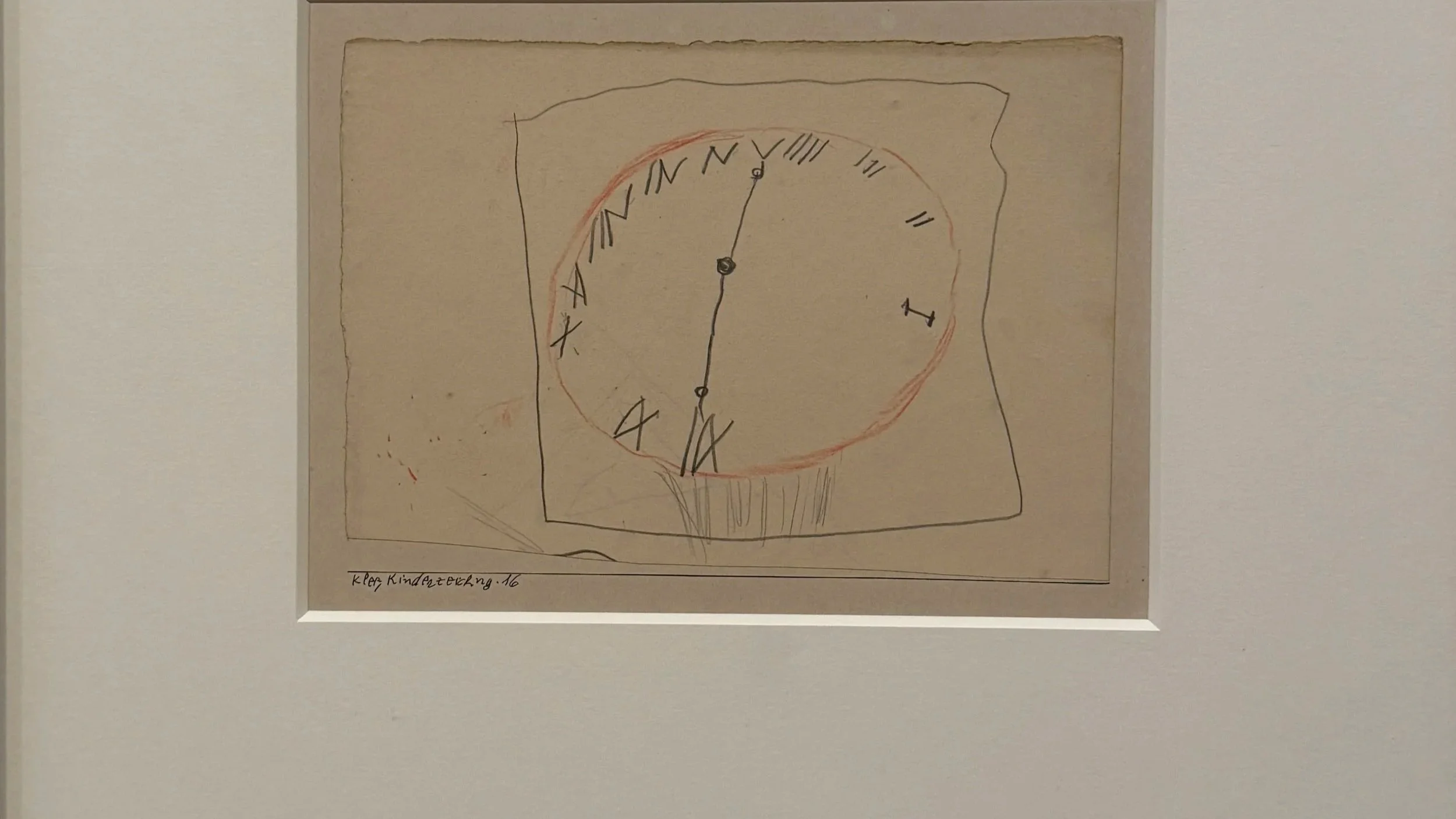
Paul Klee · Kinderzeichnung · Clock · Early work · Zentrum Paul Klee, Bern · 2026. Curation: VV Interior Home by Valeria Viollaz · vvinteriorhome.com · Photography: Valeria Viollaz
Curation: VV Interior Home by Valeria Viollaz · vvinteriorhome.com Photography: Vianca Soleil Roquero
PROJECT CREDITS
Poster Curation & Placement · VV Interior Home by Valeria Viollaz · vvinteriorhome.com
Photography · Vianca Soleil Roquero
Poster · Paul Klee · Galleria Finamore · Locarno · Switzerland · 1965
Project · UNNA · Philippines · 2026
Reference · Zentrum Paul Klee · Bern · Switzerland · zpk.org