What Remains
An Exhibition About the Memory of Materials and the Time That Objects Hold
There are objects that age. And there are objects that mature.
The difference does not lie in the time elapsed but in what that time does to the
material — whether it consumes it or deepens it. A travertine from the nineteen-
seventies is not an old travertine. It is a travertine that has accumulated presence. A
painting built through layers of diluted pigment does not represent a forest — it
contains one. A ceramic constructed over weeks, fired, reworked, fired again, is not a
decorative object. It is an object that knows what it cost to exist.
This is the question that gave origin to What Remains — the exhibition I will present at
The mep, Lucerne, Switzerland, in August 2025: what is it that remains when an object

has been made with real time, with honest material, with sustained intention?
The exhibition brings together works by artists from Spain, Japan and Switzerland —
three cultures with radically different traditions in their relationship to the object, to
material, and to space. What unites them is not a style or a generation but a shared
conviction: that beauty is not a surface effect but a consequence of integrity.
Carol Moreno arrives from Spain with Forest Reverie — a large-format painting of 245
× 170 cm built through successive layers of diluted pigment, washes, and interventions
that dissolve the boundary between abstraction and landscape. The work does not show
a forest. It constructs the experience of being inside one — that filtered light, that
atmospheric density, that sense that the space continues beyond what the eye can read.
It is the piece that gives emotional scale to everything around it.
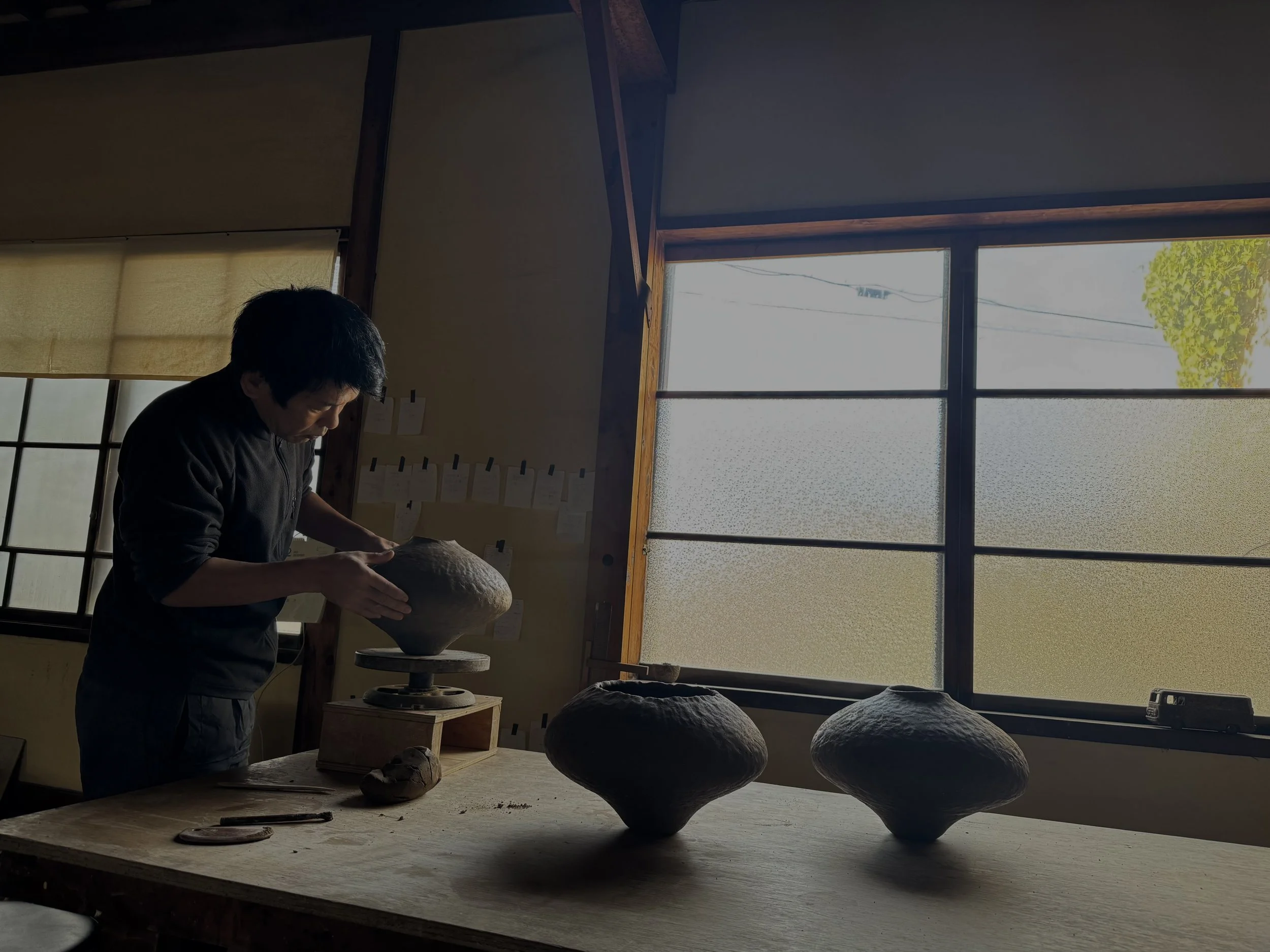
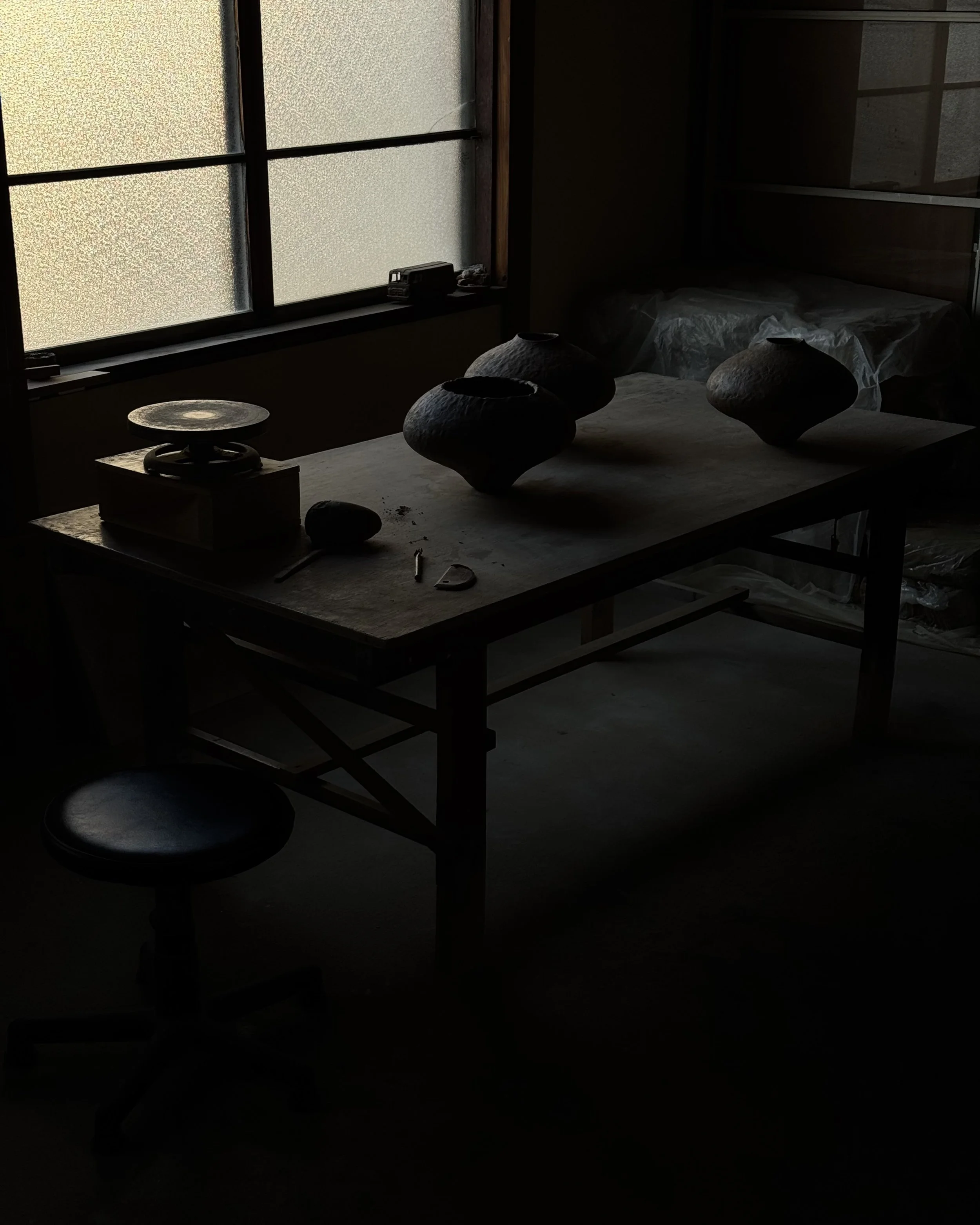
From Japan, Hiroshi Aoki brings his ceramics — pieces constructed with multiple types
of clay, glazed, fired, deliberately reworked after firing to expose what the heat left
beneath the surface. The result is a material that appears geological: mineral, tactile,
permanent. Aoki has worked since 2010 with a single concept — how memory and time
affect objects. His pieces do not illustrate that idea. They are it.
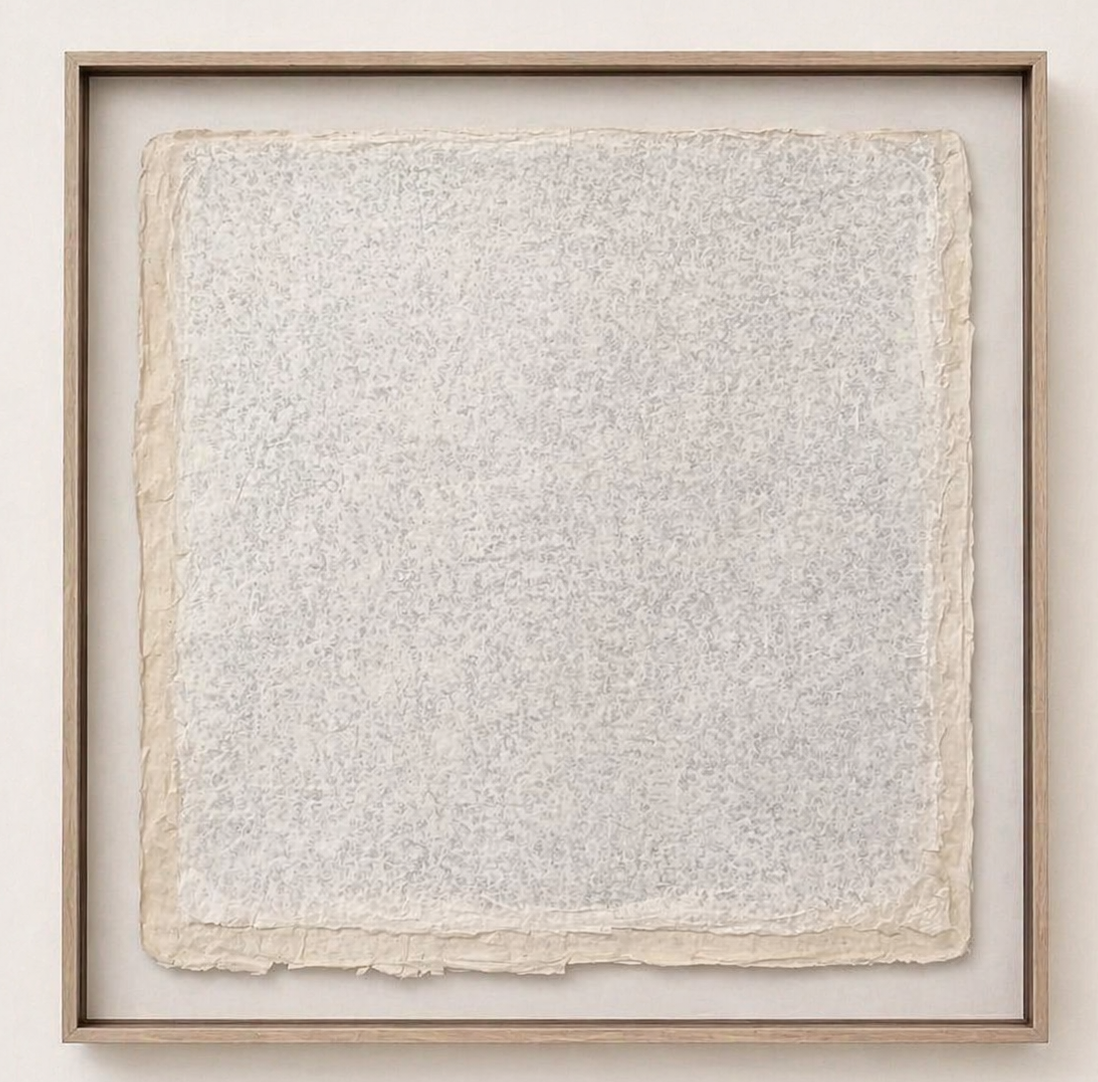
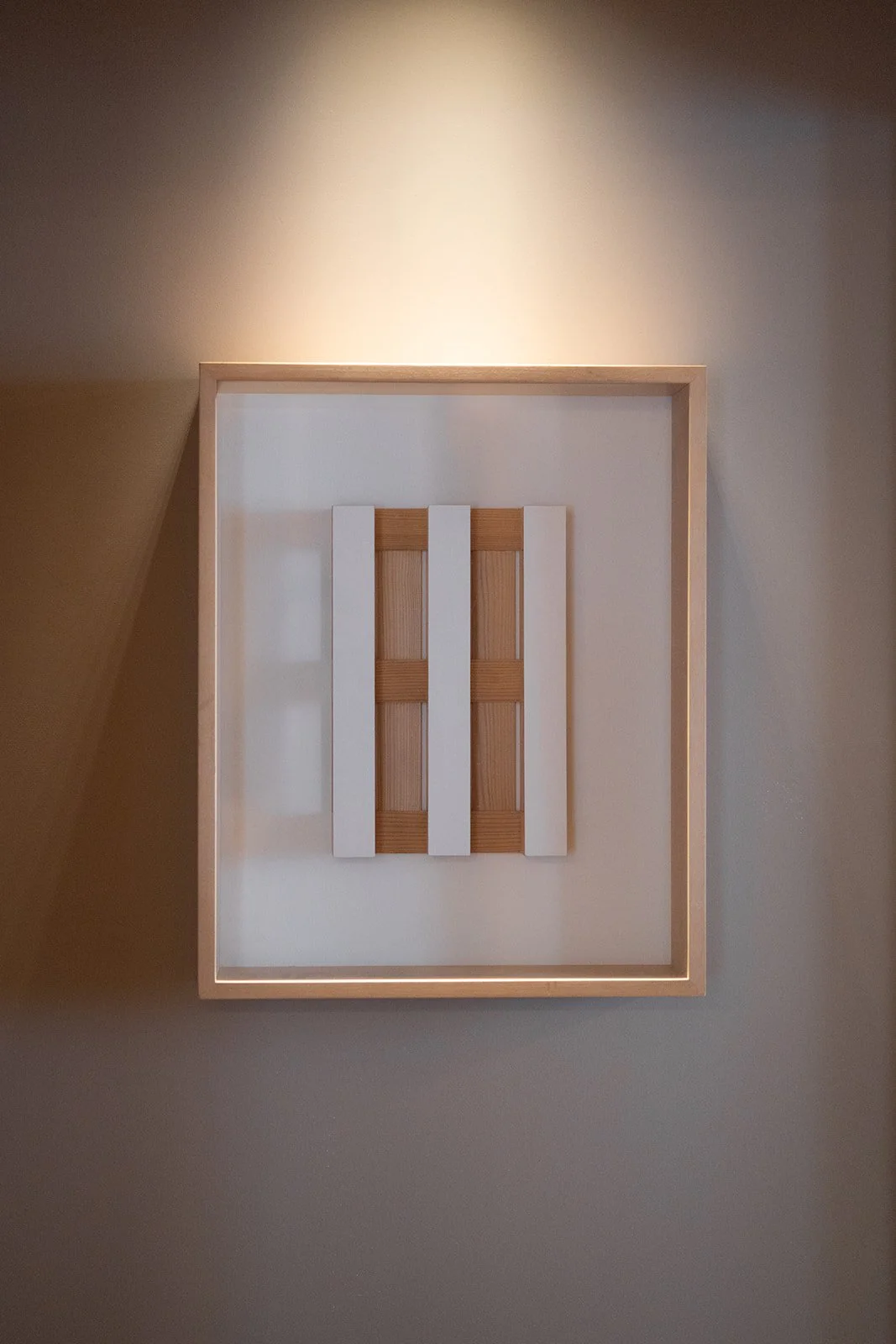
Switzerland is present through six works from private collection — works on paper, wall
objects and sculpture belonging to the tradition of Concrete Art and postwar European
minimalism. Karl Hügin, Emil Schwarz, Albert Rouillert, David Bürkle, Jan Hubertus
and Pierre Casè represent decades of Swiss artistic practice characterised by economy
of means, material honesty and the conviction that reduction is not a limitation but the
most direct path to presence.