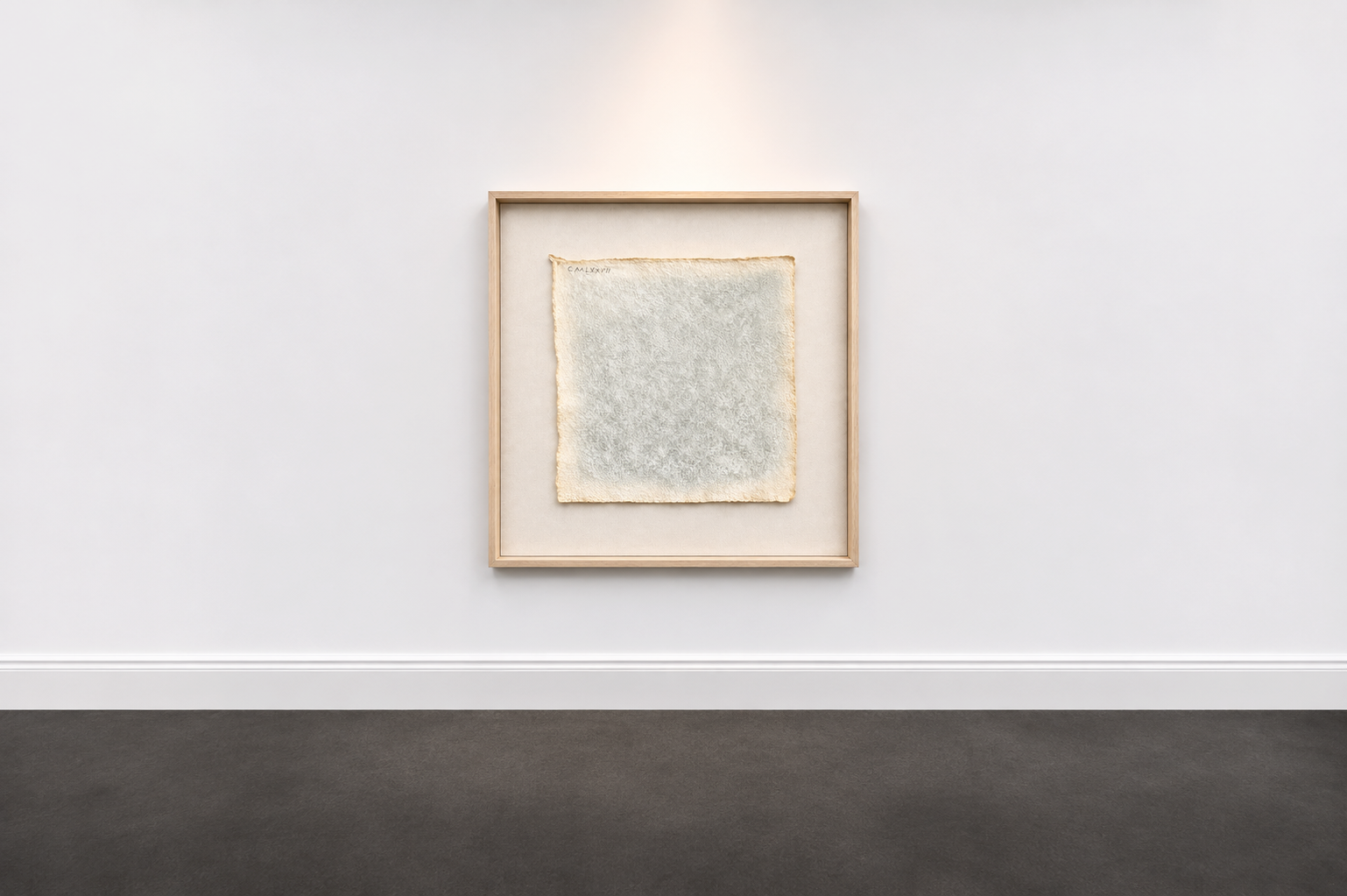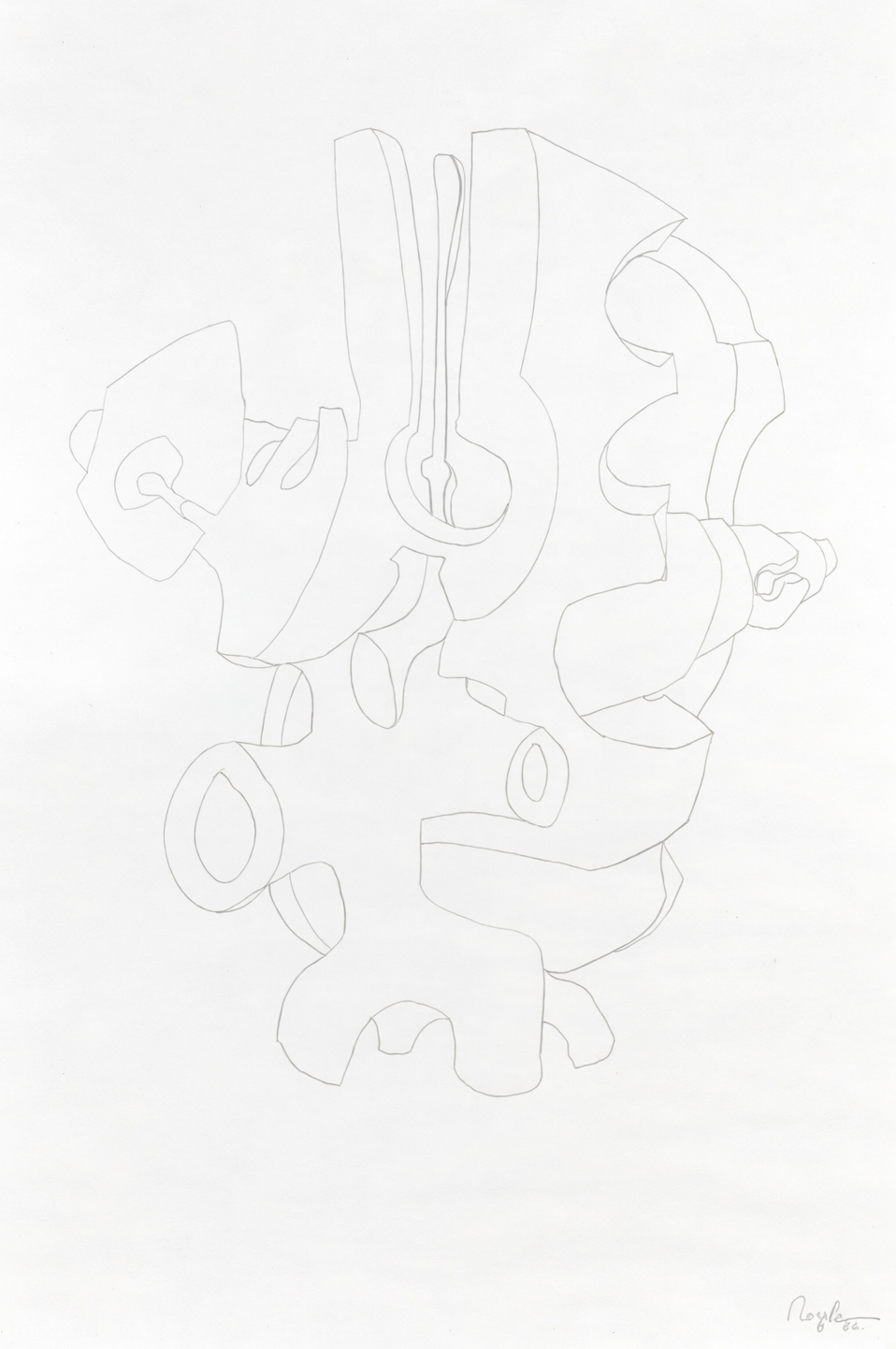
This large-format drawing by Swiss sculptor Albert Rouiller reads like a sculpture seen from within. Drawn in a single, continuous graphite line, interlocking volumes are cut, folded and joined into one suspended form, at once mechanical and organic.
There is no shading and no colour. Only line carries the weight, the depth and the turning of each surface. Openings, rings and notches appear like joints in stone or metal, as if the drawing were testing how the parts of a sculpture might hold together.
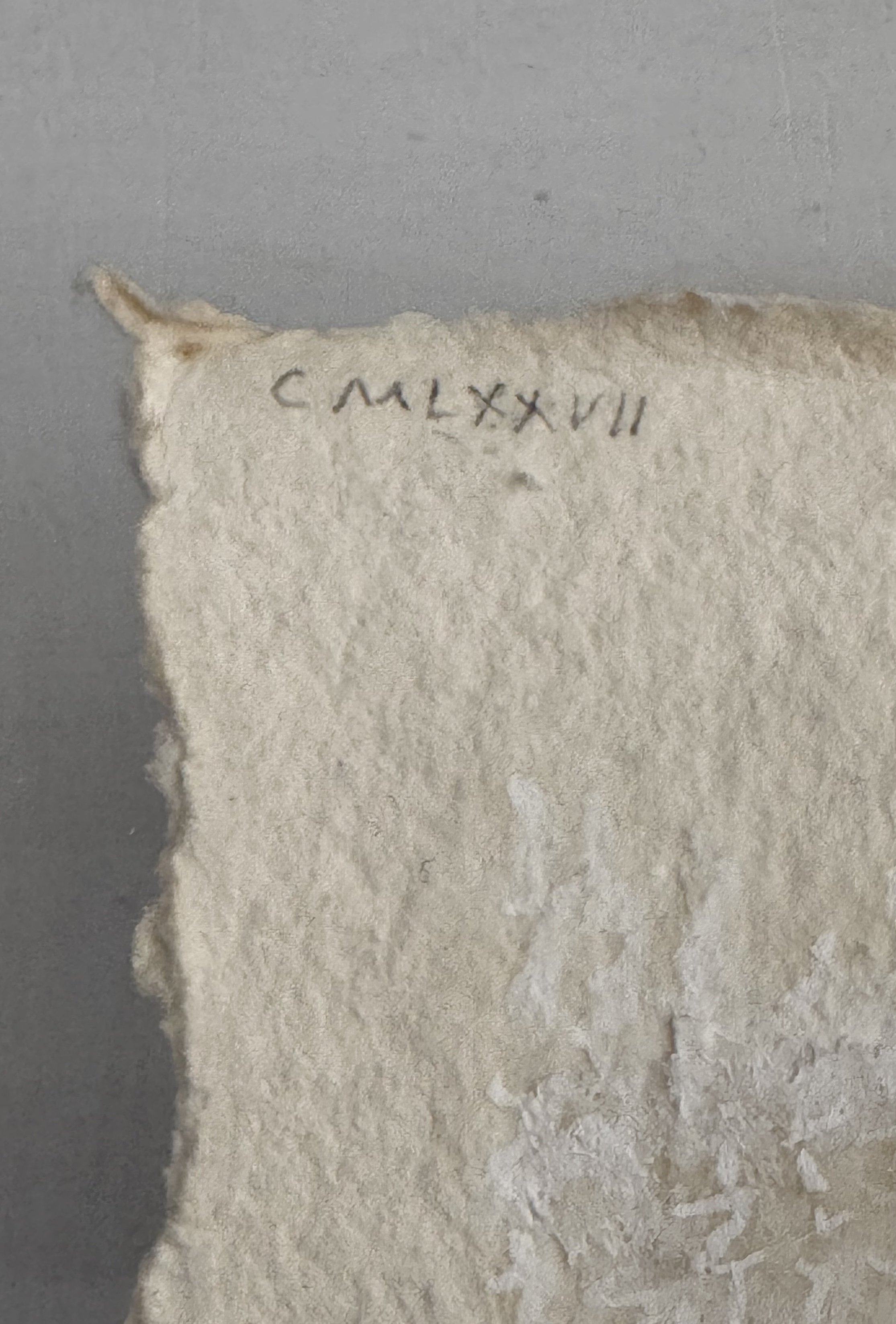
For Rouiller, who worked above all in stone and bronze, drawing was a way of thinking through form. This sheet, signed and dated 1986, offers a rare and intimate view into that process: the sculptor's hand before the material.
The work will be exhibited in What Remains, an exhibition curated by Valeria Viollaz at The mep, Lucerne, from 7 November to 2 December 2026.
Artist: Albert Rouiller, 1938–2000, Switzerland
Technique: Graphite on paper
Measurements: 65 × 48 cm
Year: 1986, signed and dated lower right
Condition: Please enquire
Exhibited: What Remains · The mep, Lucerne · 7 November – 2 December 2026
About the Artist
Albert Rouiller (1938–2000) was a Swiss sculptor born in Geneva, where he studied at the École des Beaux-Arts under Max Weber and Henri König. Working first in stone and, from 1962, increasingly in bronze and other metals, he created numerous monumental public sculptures in Switzerland, Spain and Thailand. His work received four Kiefer-Hablitzel prizes and two Swiss federal fine arts grants in the 1960s. From 1988 he divided his life between Geneva and Mallorca.