
These are antique pieces and are sold as such. Although VV does its best to highlight major flaws, minor imperfections should be expected reflecting the age and previous use of the piece.
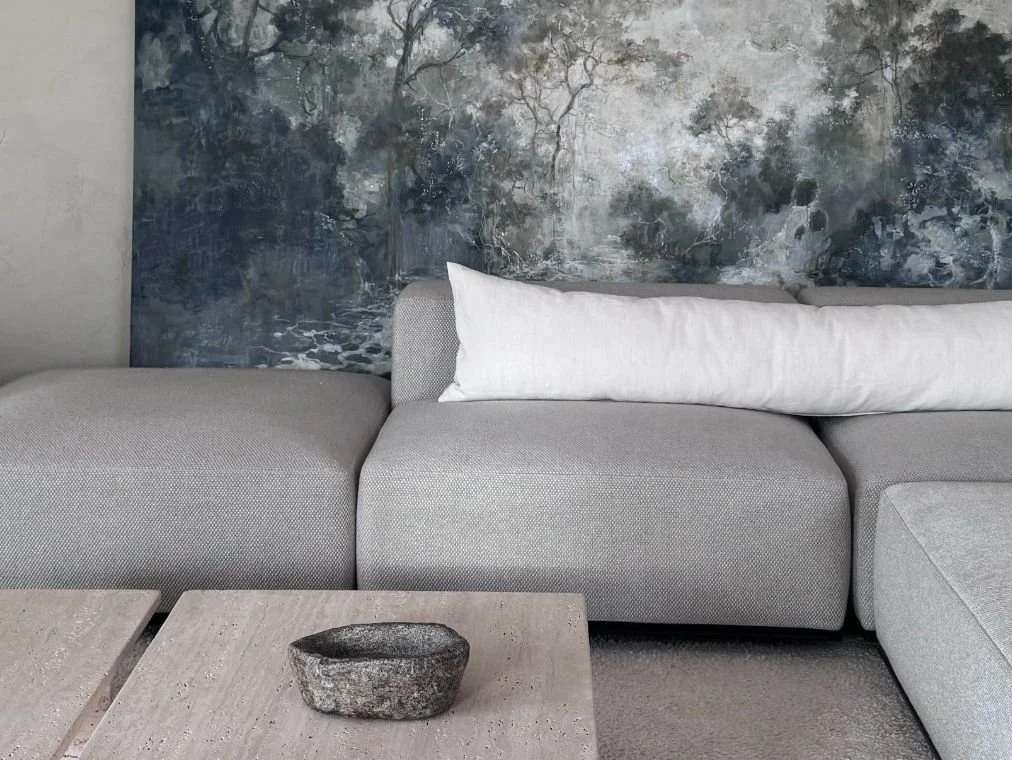
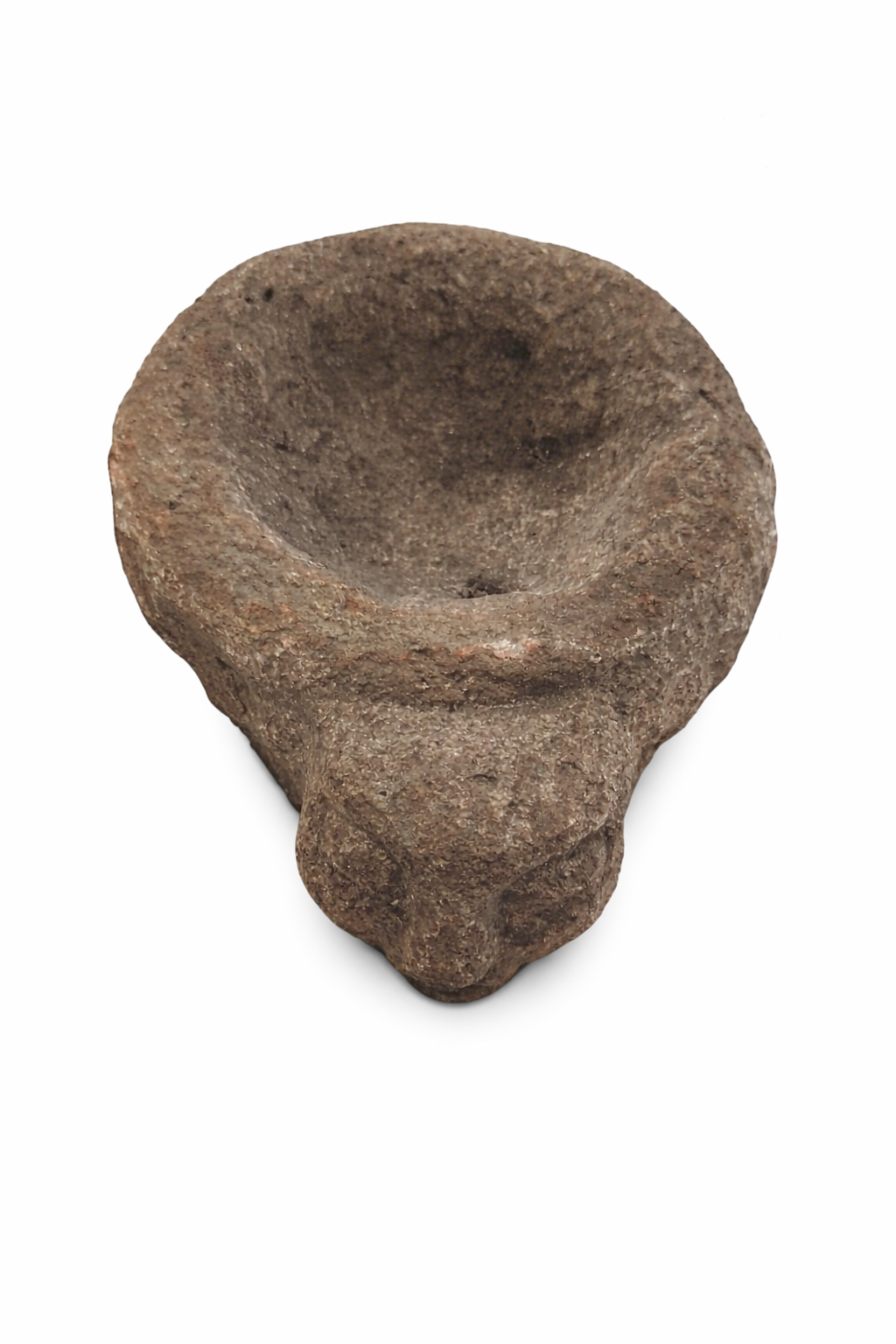
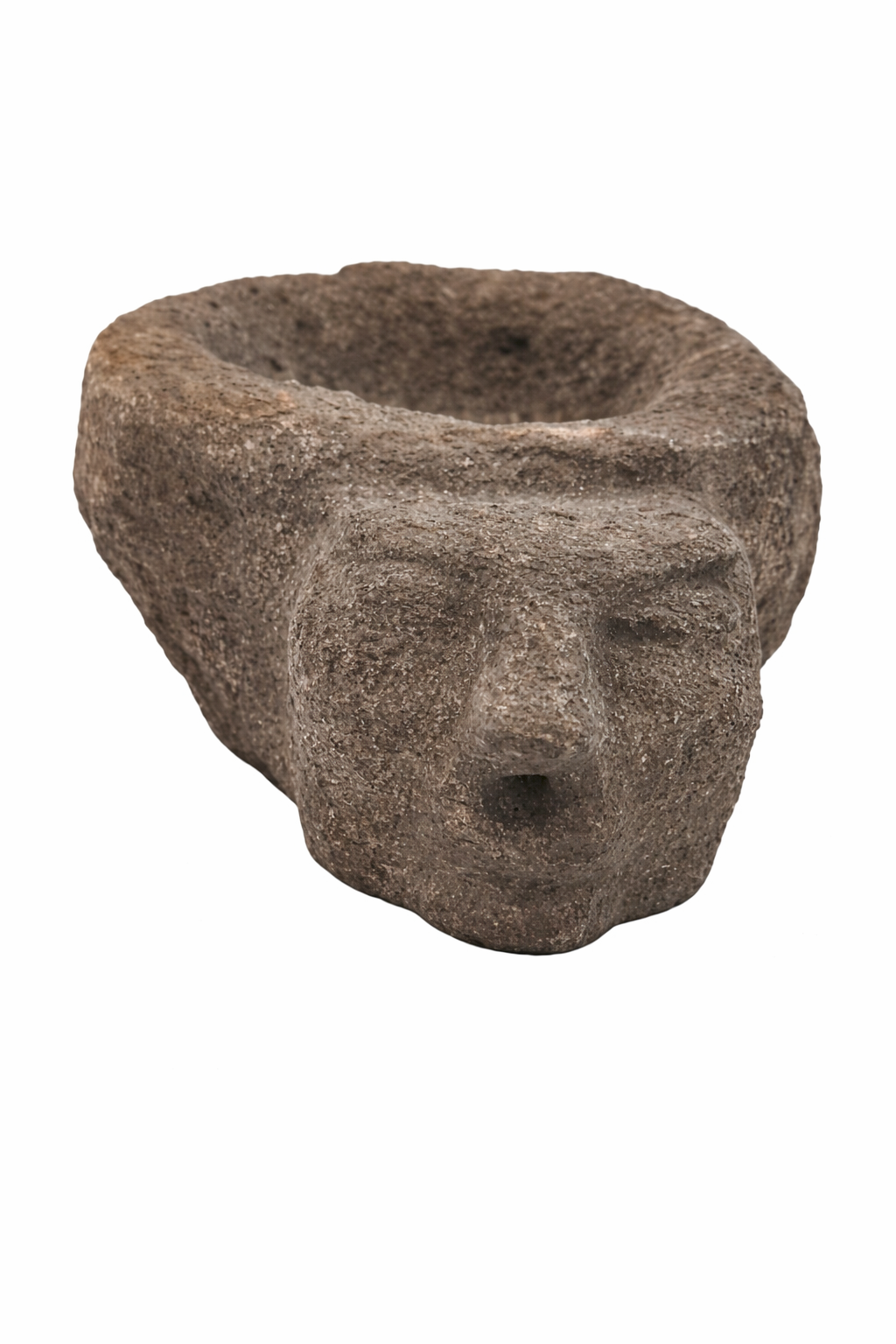
A stone object carved from solid rock, of uncertain date and origin, presenting a massive block with a recessed upper cavity in the form of a mortar and a schematic anthropomorphic representation integrated into one of its faces. The piece features simplified facial elements — eyes, a prominent nose, and mouth — carved directly into the stone mass.
The surface displays natural and uniform wear consistent with prolonged use and long-term exposure. Within the mortar bowl, traces of dark material are visible. The object retains a coherent patina with no evidence of modern intervention.
Provenance According to the vendor, discovered in Narón, Galicia, Spain, inside a long-abandoned residence. Earlier provenance is unknown. No documentary record accompanies the piece.
Condition Very good for age. Weathered surface consistent with extended use and exposure. No structural breaks or apparent restorations observed.
Note The morphological combination of a functional vessel and an anthropomorphic face is unusual and of ethnographic interest. The object's precise cultural and chronological attribution has not been established. Further specialist study would be required for a more definitive assessment.
A stone object carved from solid rock, of uncertain date and origin, presenting a massive block with a recessed upper cavity in the form of a mortar and a schematic anthropomorphic representation integrated into one of its faces. The piece features simplified facial elements — eyes, a prominent nose, and mouth — carved directly into the stone mass.
The surface displays natural and uniform wear consistent with prolonged use and long-term exposure. Within the mortar bowl, traces of dark material are visible. The object retains a coherent patina with no evidence of modern intervention.
Provenance According to the vendor, discovered in Narón, Galicia, Spain, inside a long-abandoned residence. Earlier provenance is unknown. No documentary record accompanies the piece.
Condition Very good for age. Weathered surface consistent with extended use and exposure. No structural breaks or apparent restorations observed.
Note The morphological combination of a functional vessel and an anthropomorphic face is unusual and of ethnographic interest. The object's precise cultural and chronological attribution has not been established. Further specialist study would be required for a more definitive assessment.
These are antique pieces and are sold as such. Although VV does its best to highlight major flaws, minor imperfections should be expected reflecting the age and previous use of the piece.