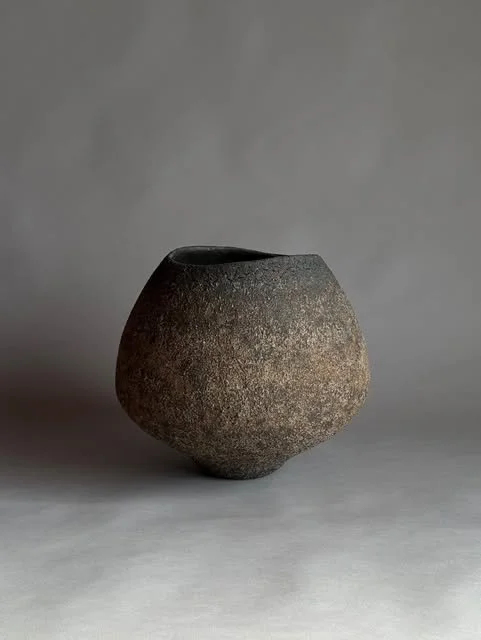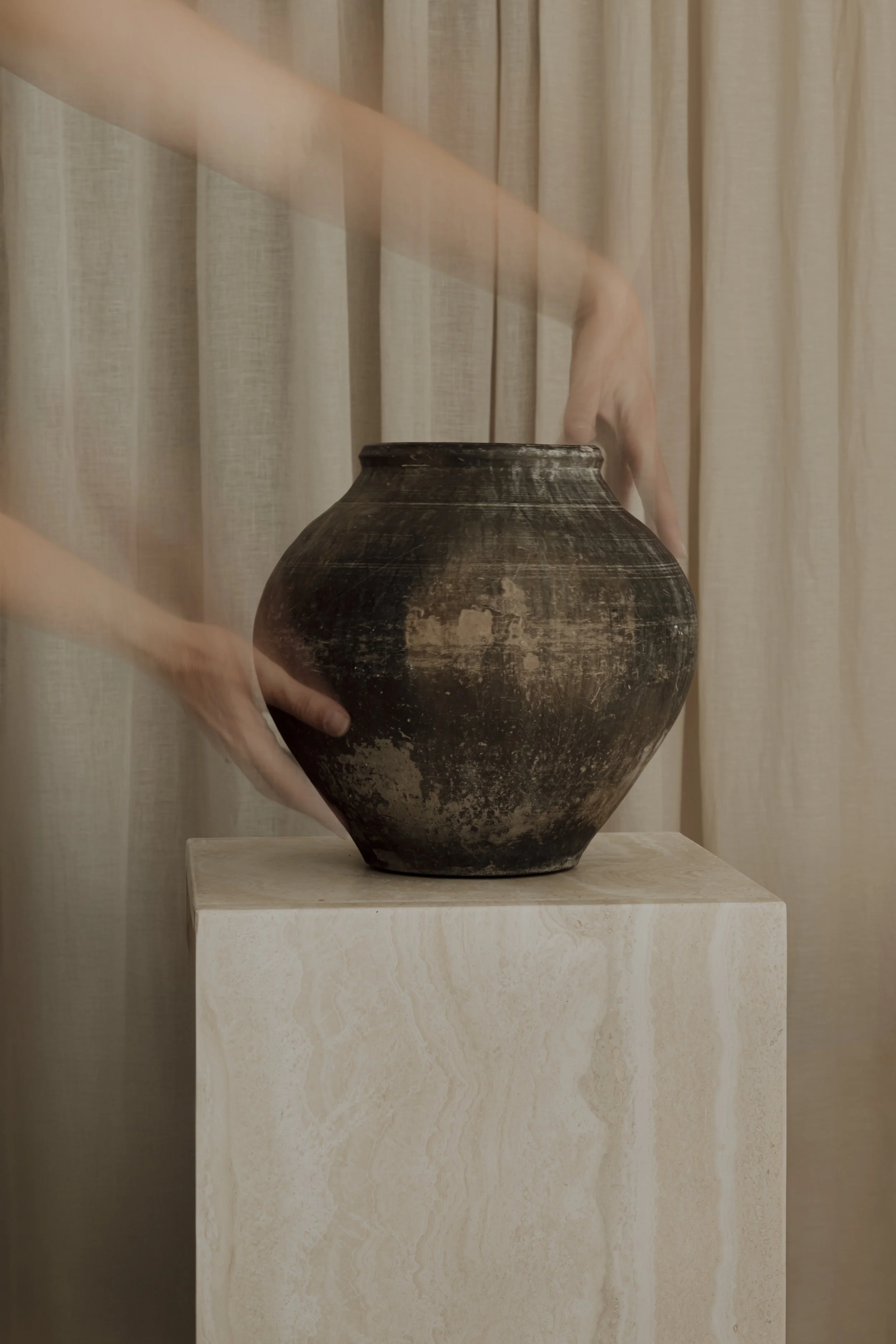
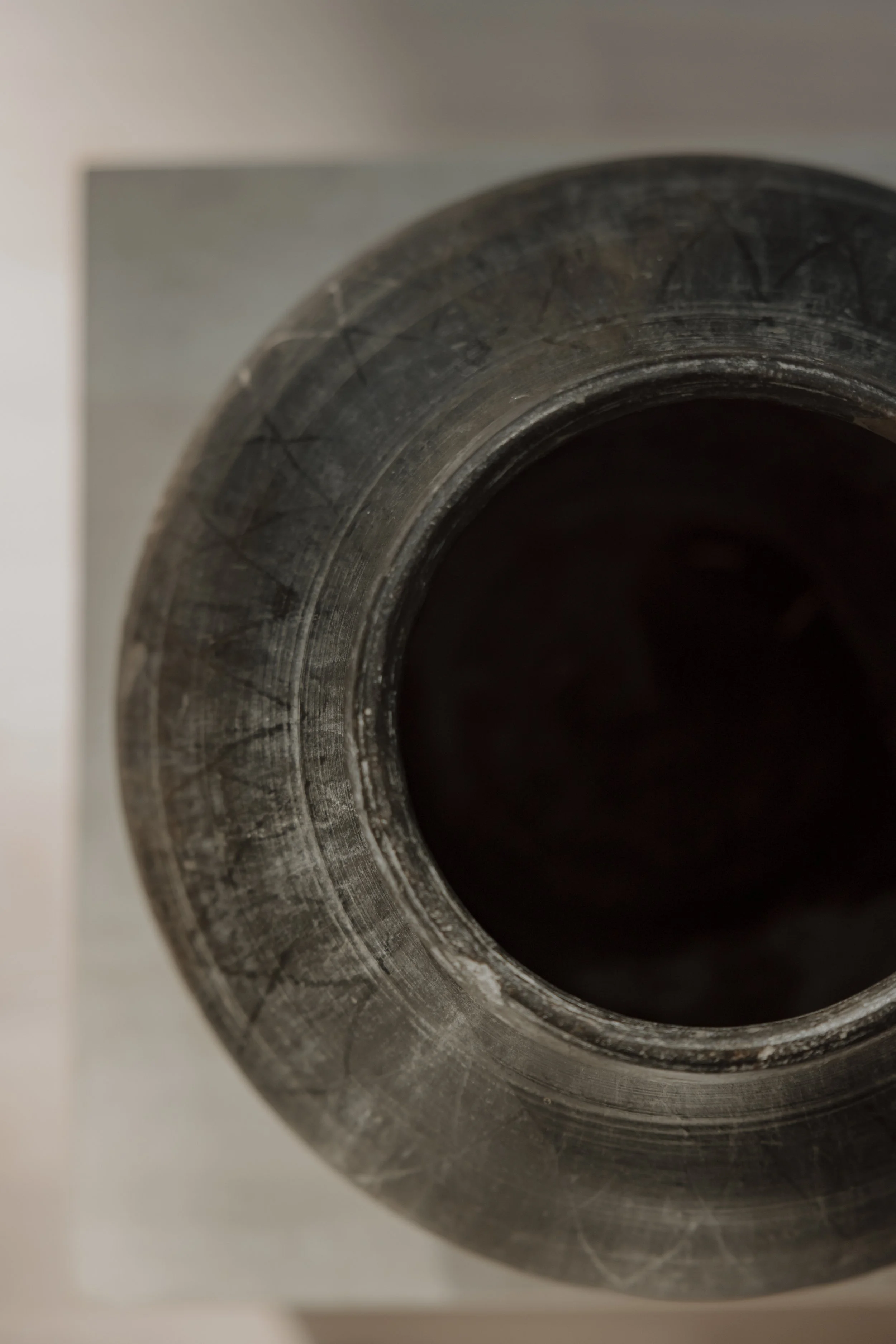

This antique vessel, probably originating from Nepal and dating to the late 19th century, is a rare example of hand-shaped smoke-fired earthenware from a tradition where function and material presence were never separate concerns.
Formed by hand from local earthen clay and fired through a smoke process that produces its characteristic deep matte surface, the piece carries the marks of its making with complete authenticity. The rounded silhouette — wide body, raised neck, open mouth — reflects a formal intelligence developed over generations of craft practice, where the vessel's geometry was determined not by design intention alone but by the physical properties of the clay and the demands of daily use.
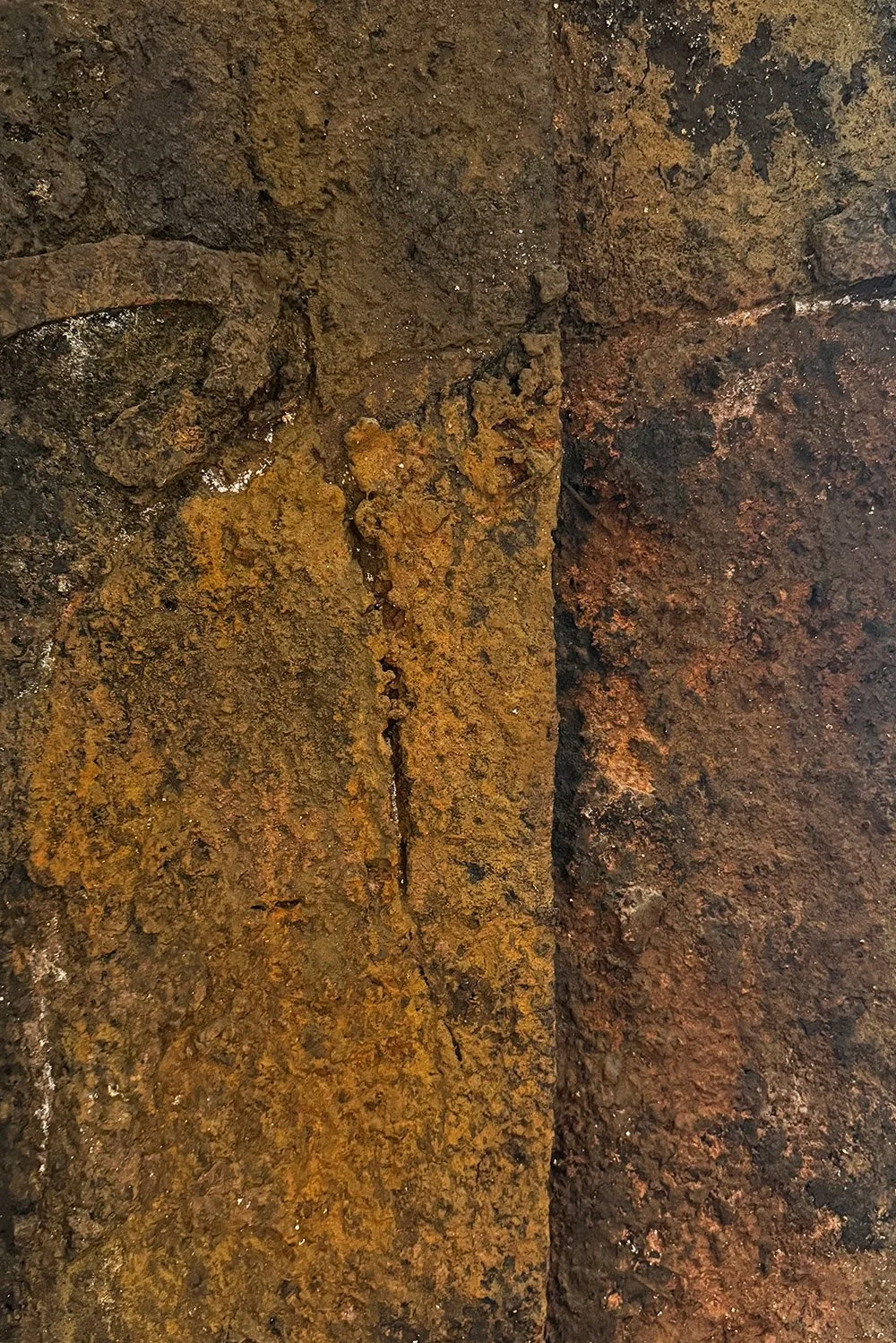
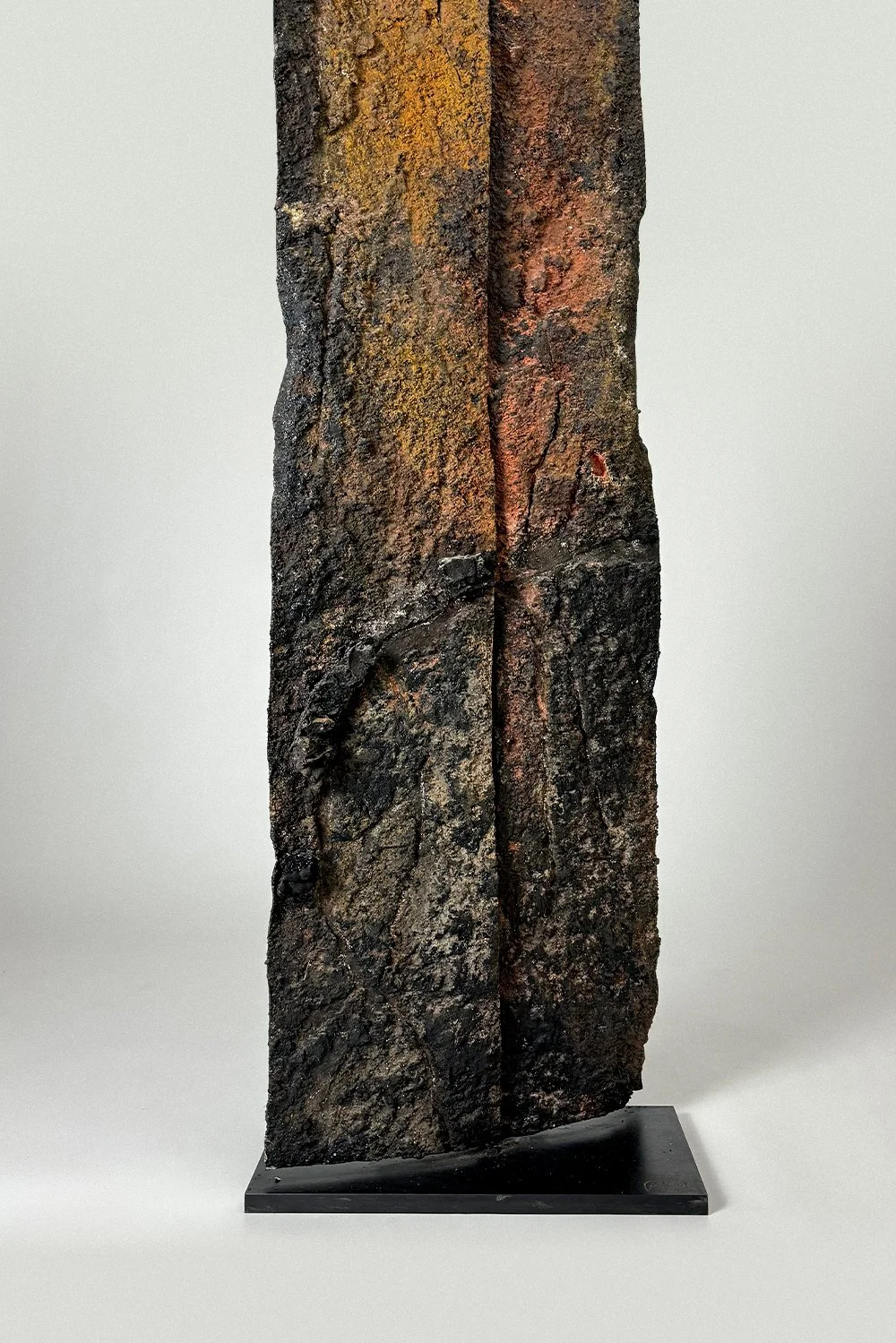
The surface reveals what time does to honest material: mineral deposits, gentle abrasions, and an organic patina formed through decades of use. Charcoal and warm earth tones intermingle across the surface — not as decoration but as evidence. Once used to hold water or grain, the piece carries the memory of domestic ritual and the enduring dialogue between human hands and natural material.
A vessel that has crossed from function into object — and from object into presence.
Origin: Probably Nepal Period: Late 19th century Technique: Hand-shaped, smoke-fired earthenware Measurements: Approx. 40 × 45 cm Condition: Consistent with age — mineral deposits and natural patina intact
This antique vessel, probably originating from Nepal and dating to the late 19th century, is a rare example of hand-shaped smoke-fired earthenware from a tradition where function and material presence were never separate concerns.
Formed by hand from local earthen clay and fired through a smoke process that produces its characteristic deep matte surface, the piece carries the marks of its making with complete authenticity. The rounded silhouette — wide body, raised neck, open mouth — reflects a formal intelligence developed over generations of craft practice, where the vessel's geometry was determined not by design intention alone but by the physical properties of the clay and the demands of daily use.
The surface reveals what time does to honest material: mineral deposits, gentle abrasions, and an organic patina formed through decades of use. Charcoal and warm earth tones intermingle across the surface — not as decoration but as evidence. Once used to hold water or grain, the piece carries the memory of domestic ritual and the enduring dialogue between human hands and natural material.
A vessel that has crossed from function into object — and from object into presence.
Origin: Probably Nepal Period: Late 19th century Technique: Hand-shaped, smoke-fired earthenware Measurements: Approx. 40 × 45 cm Condition: Consistent with age — mineral deposits and natural patina intact