These are antique pieces and are sold as such. Although VV does its best to highlight major flaws, minor imperfections should be expected reflecting the age and previous use of the piece.
The body endures, even when the form is incomplete.
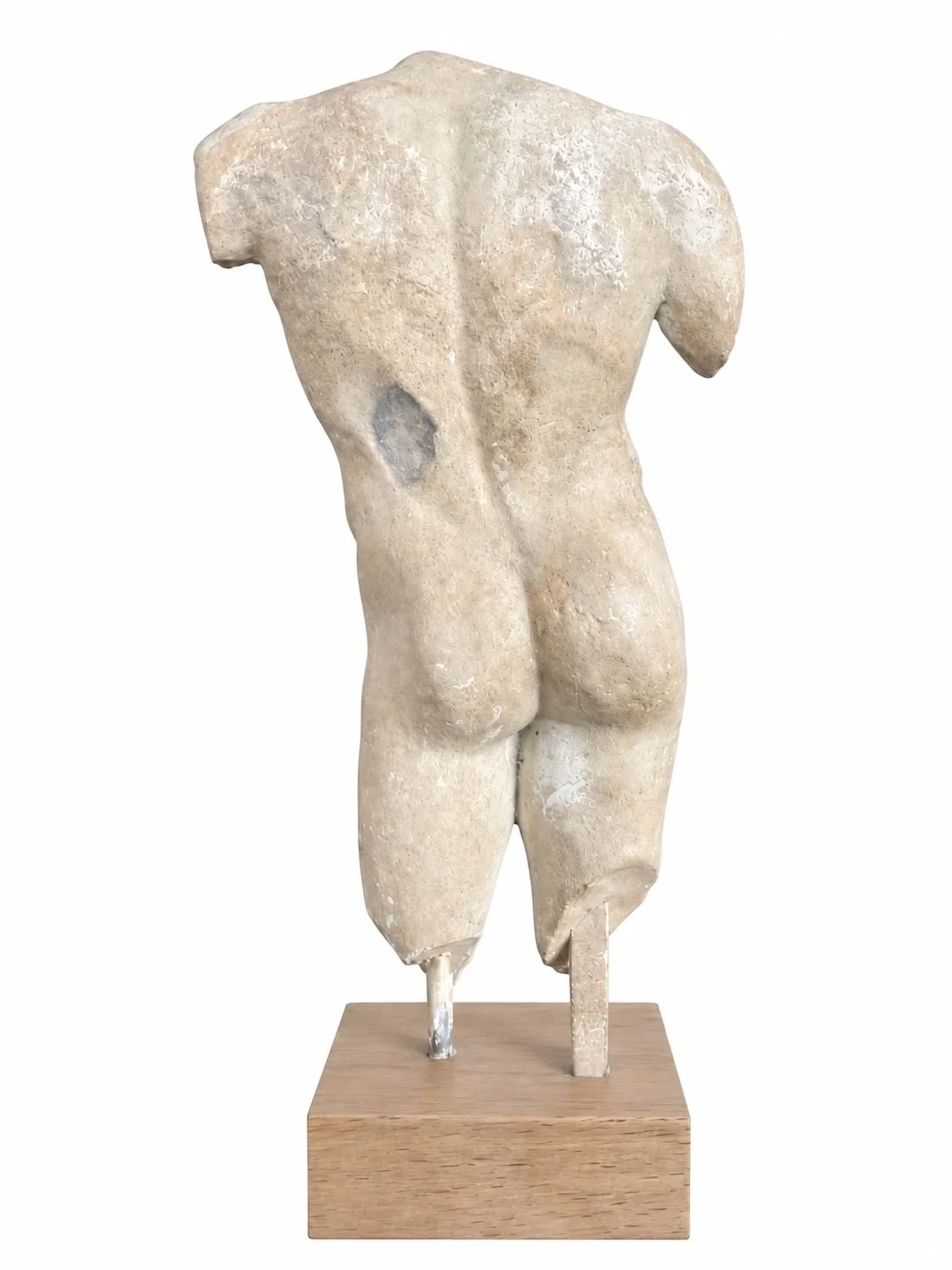
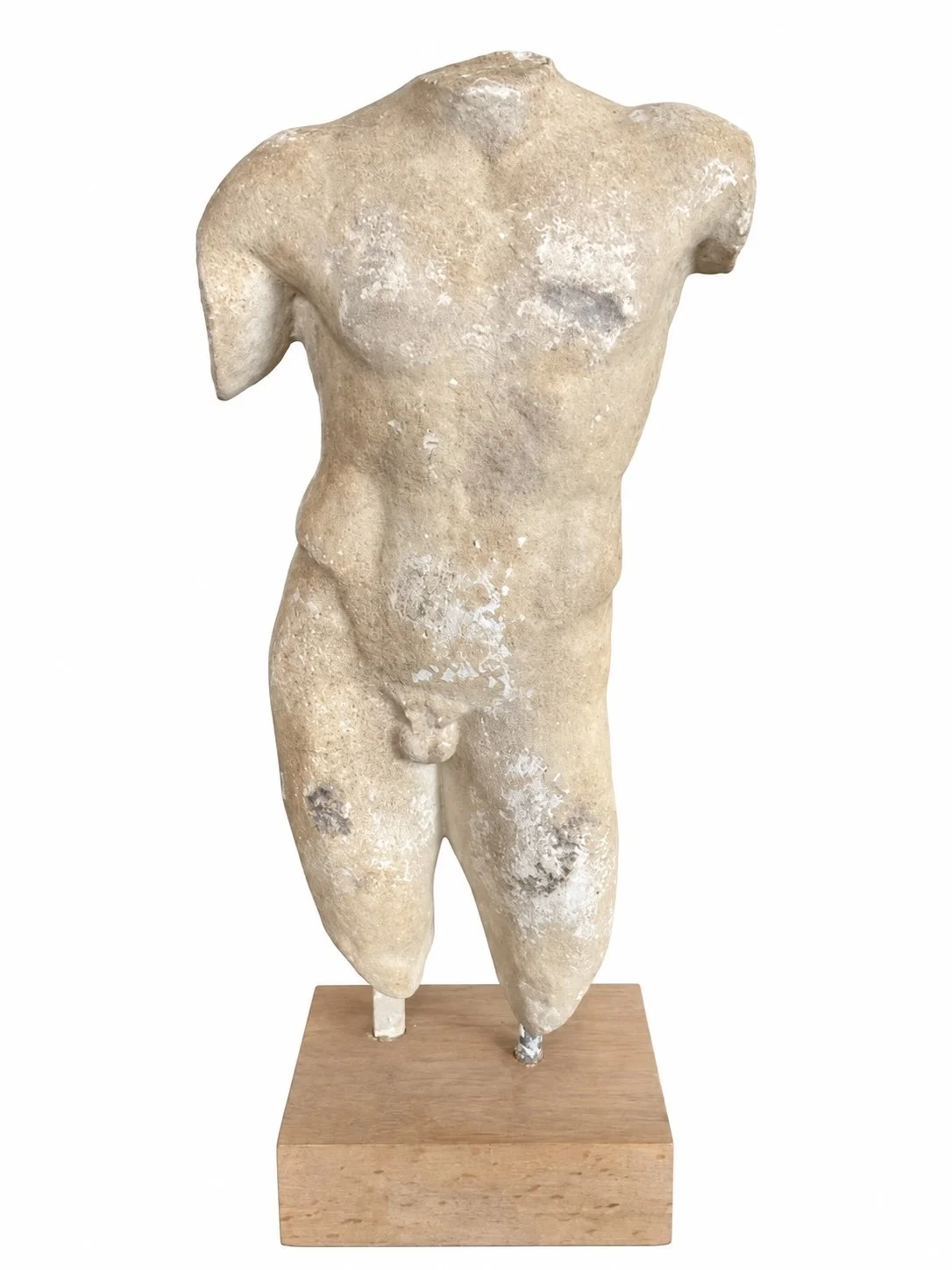
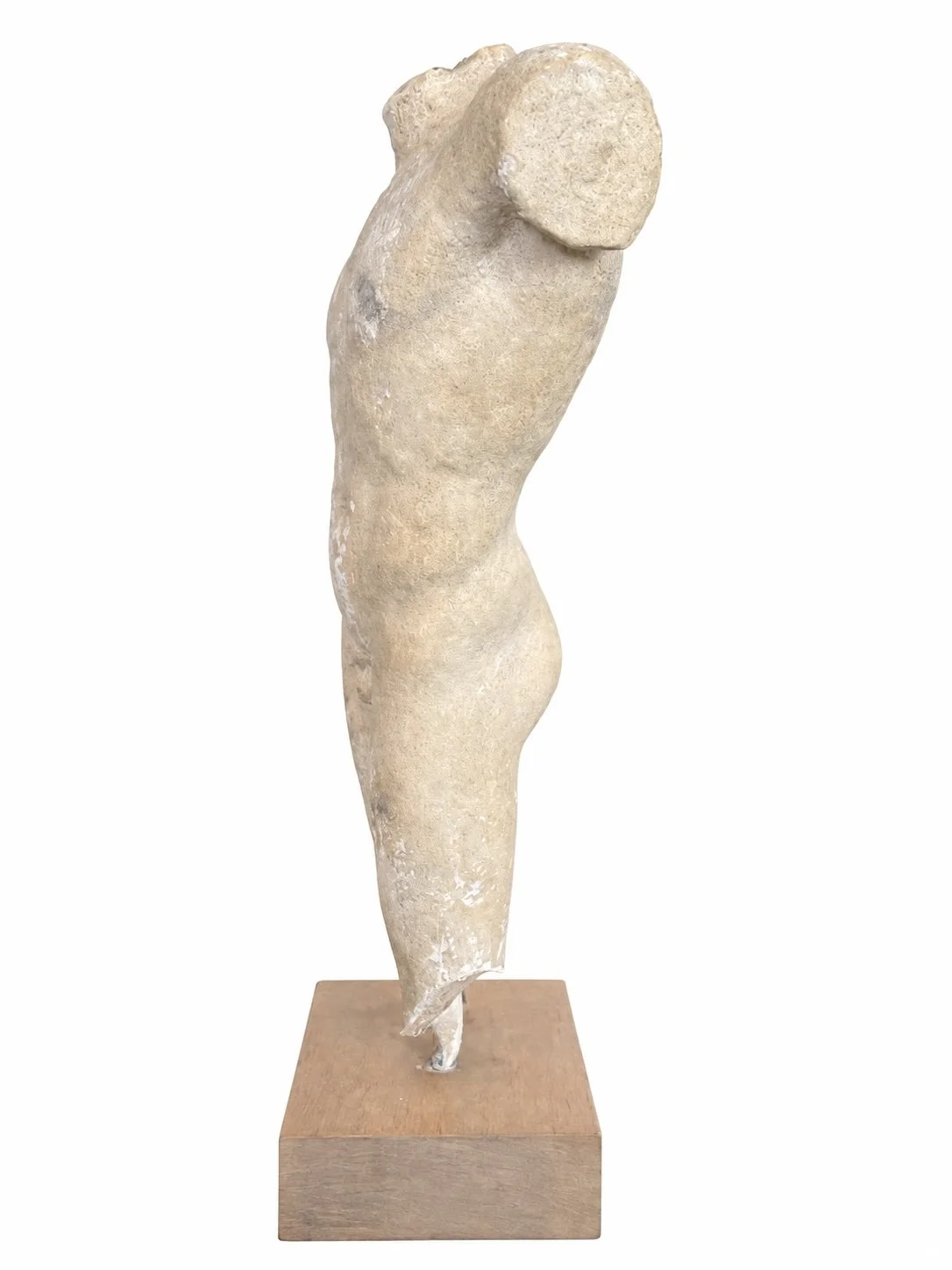
This classical-inspired male torso sculpture captures the enduring language of the human form through its fragmented silhouette. Without a head or complete limbs, the figure retains the quiet strength of its proportions, the subtle movement of its anatomy, and a sculptural presence that extends far beyond its intimate scale.
The softly weathered surface — in mineral tones of ivory, sand, and muted grey — reveals an irregular texture and visible markings that lend depth and character to the piece. Light moves across the contours of the torso, accentuating its anatomical details and inviting observation from every angle.
Standing approximately 20 cm high and mounted on a rectangular natural wooden base, the sculpture creates a dialogue between classical figurative traditions and contemporary interiors. Its modest dimensions make it equally compelling on a bookshelf, a console, or as part of a thoughtfully curated art collection.
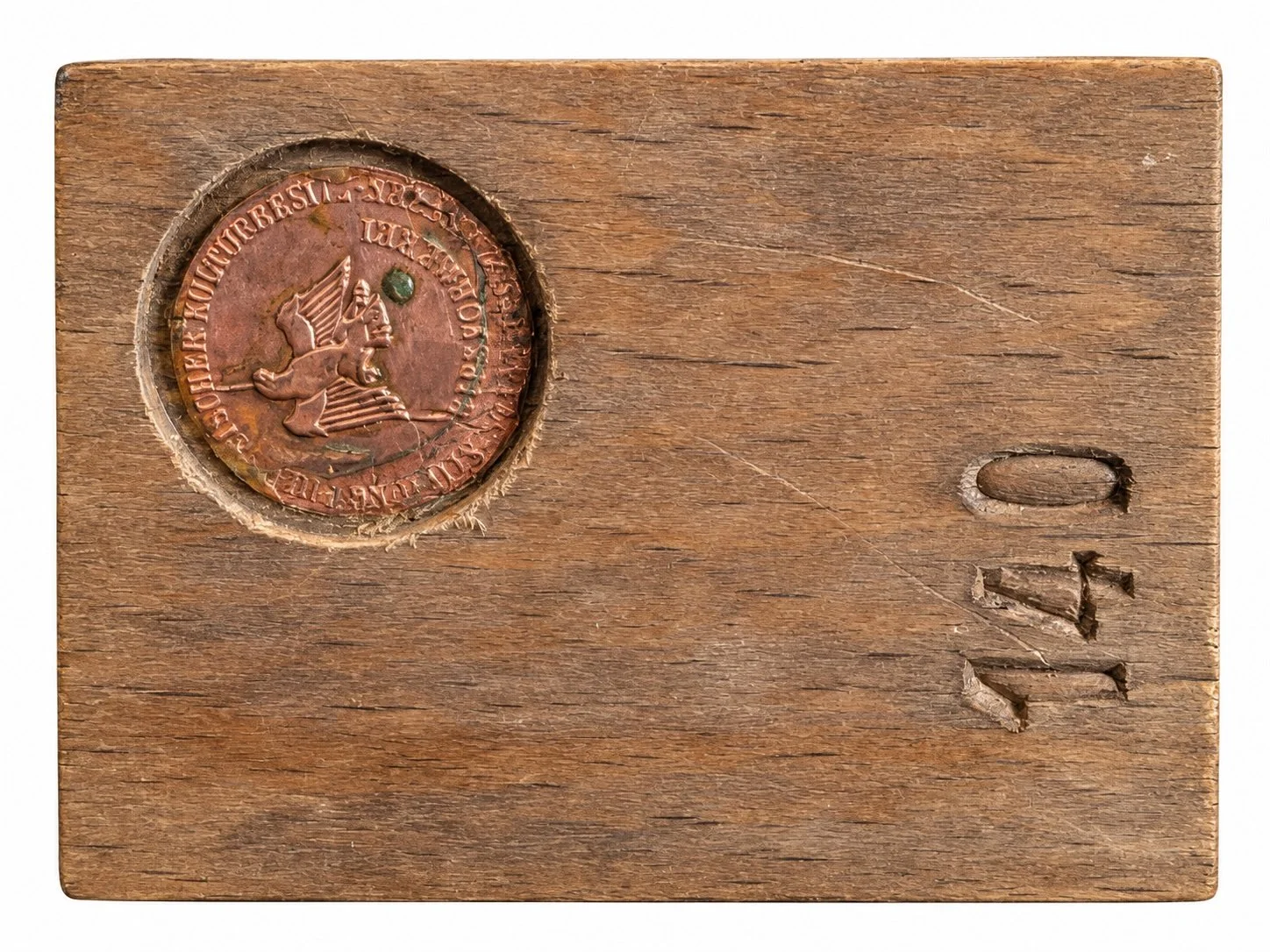
A circular metal medallion, featuring a relief figure and surrounding inscription, is embedded beneath the wooden base. Its origin and significance remain unidentified, offering an intriguing detail within the object's material history without establishing a definitive attribution.
The sculpture retains visible surface variations, irregularities, and signs of wear that contribute to its individual character. Preserved in its existing condition, these details are part of the object's visual identity.
This piece is sold in its present condition. VV Interior Home makes every effort to document significant imperfections; however, variations and signs of previous use should be expected.
Origin: Unknown
Period: Undocumented
Medium: Ceramic, according to the original seller; unverified
Base: Natural wood with embedded metal medallion
Measurements: Approx. 20 cm high
Condition: Weathered appearance with visible surface variations, irregularities, and signs of wear.
These are antique pieces and are sold as such. Although VV does its best to highlight major flaws, minor imperfections should be expected reflecting the age and previous use of the piece.