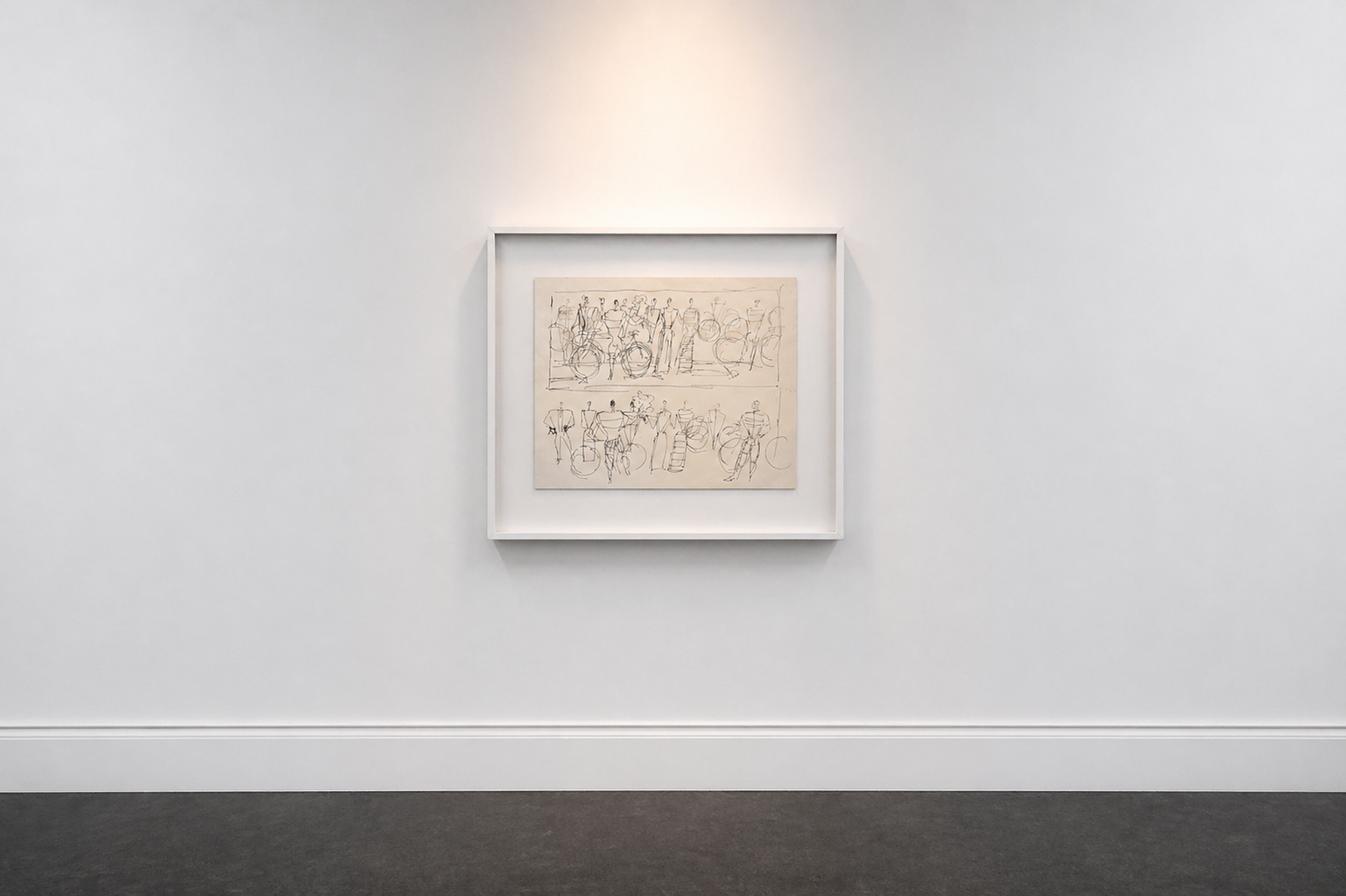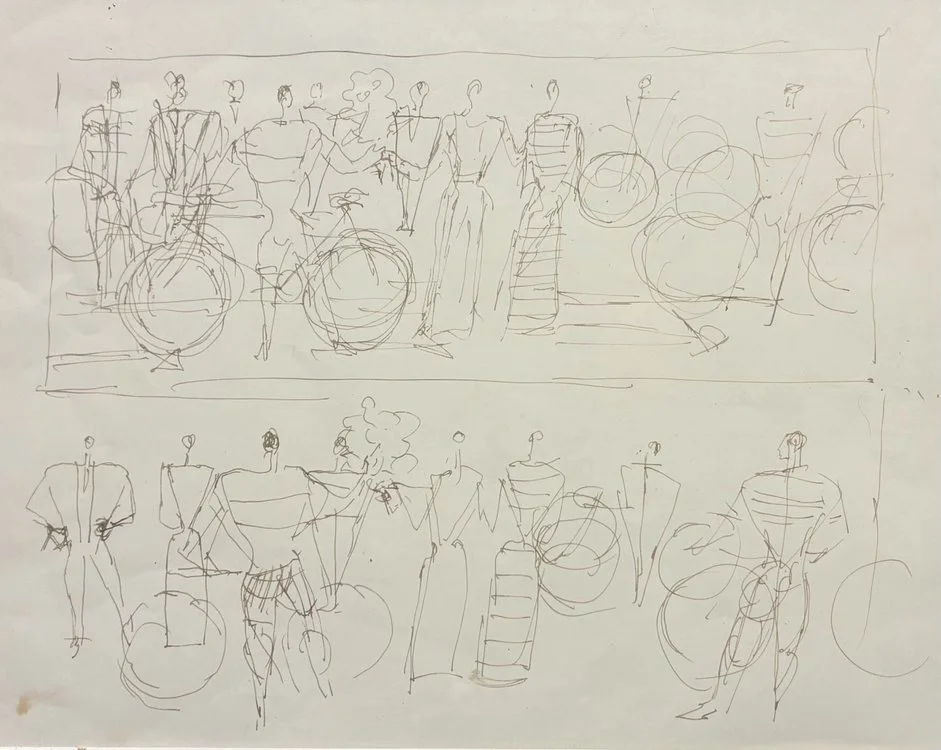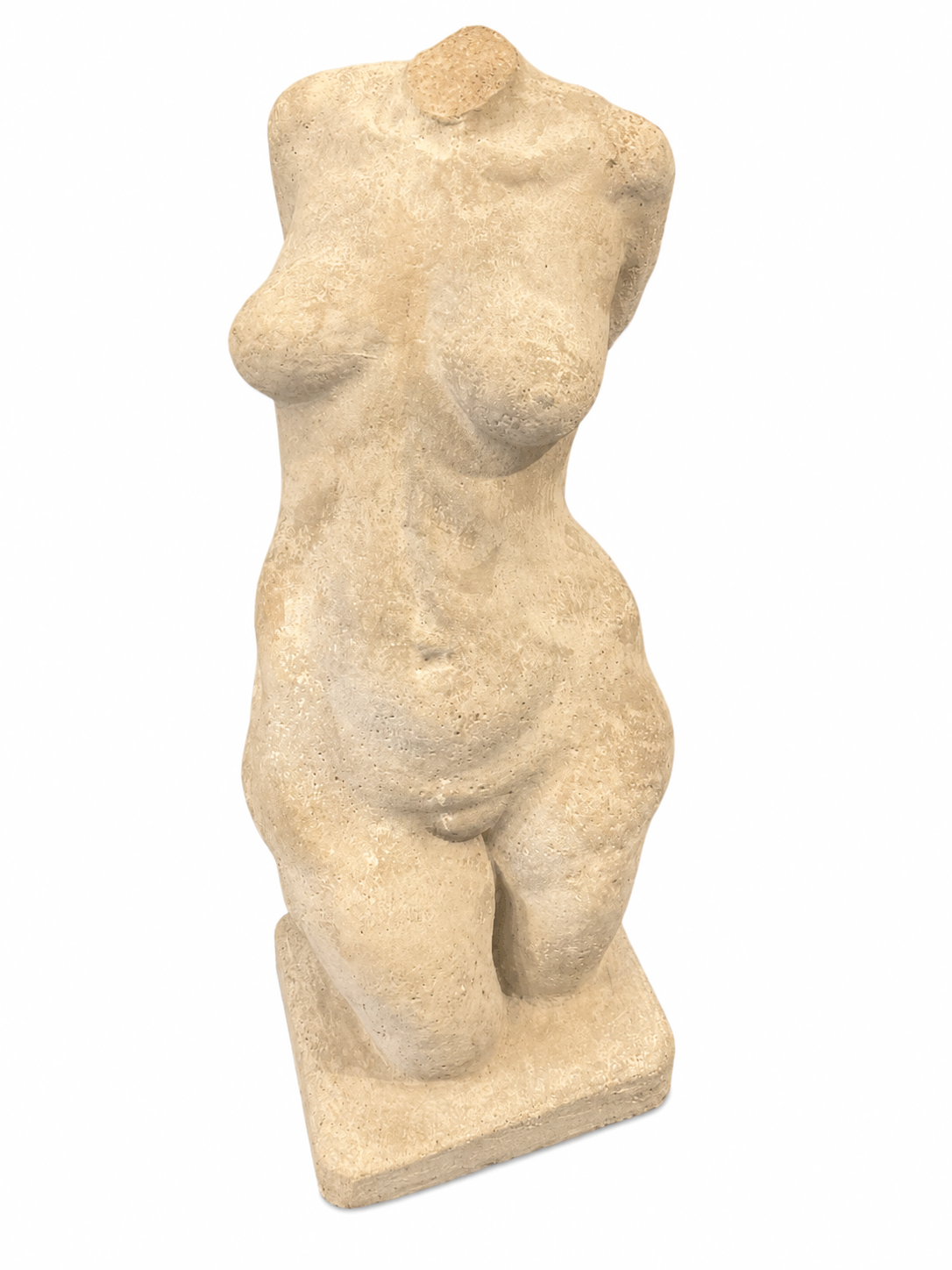
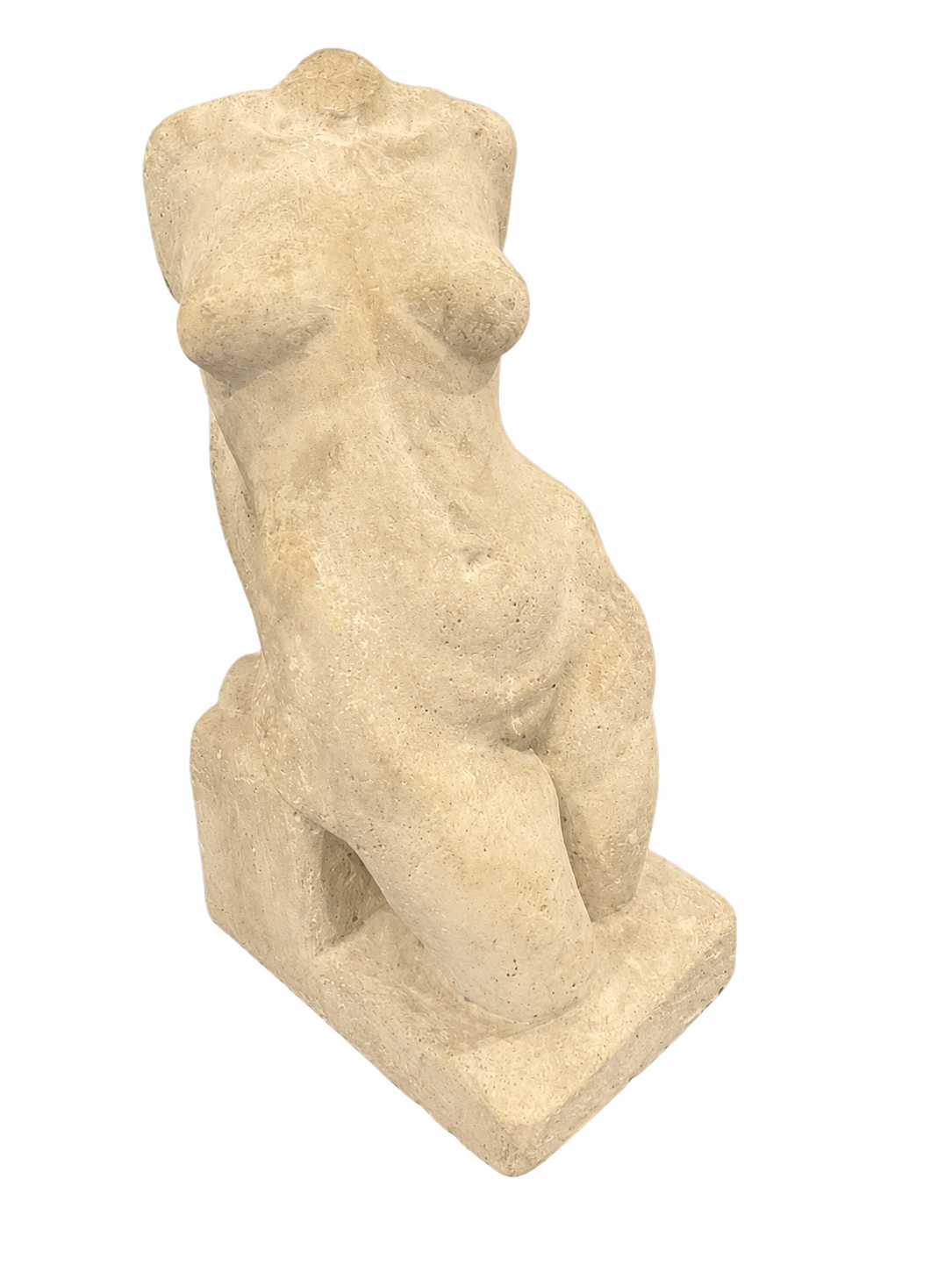
A figure that needs no face to speak. Carved in natural stone, this female torso draws on the long tradition of the classical fragment — the body rendered incomplete not by accident, but as a formal and philosophical choice.
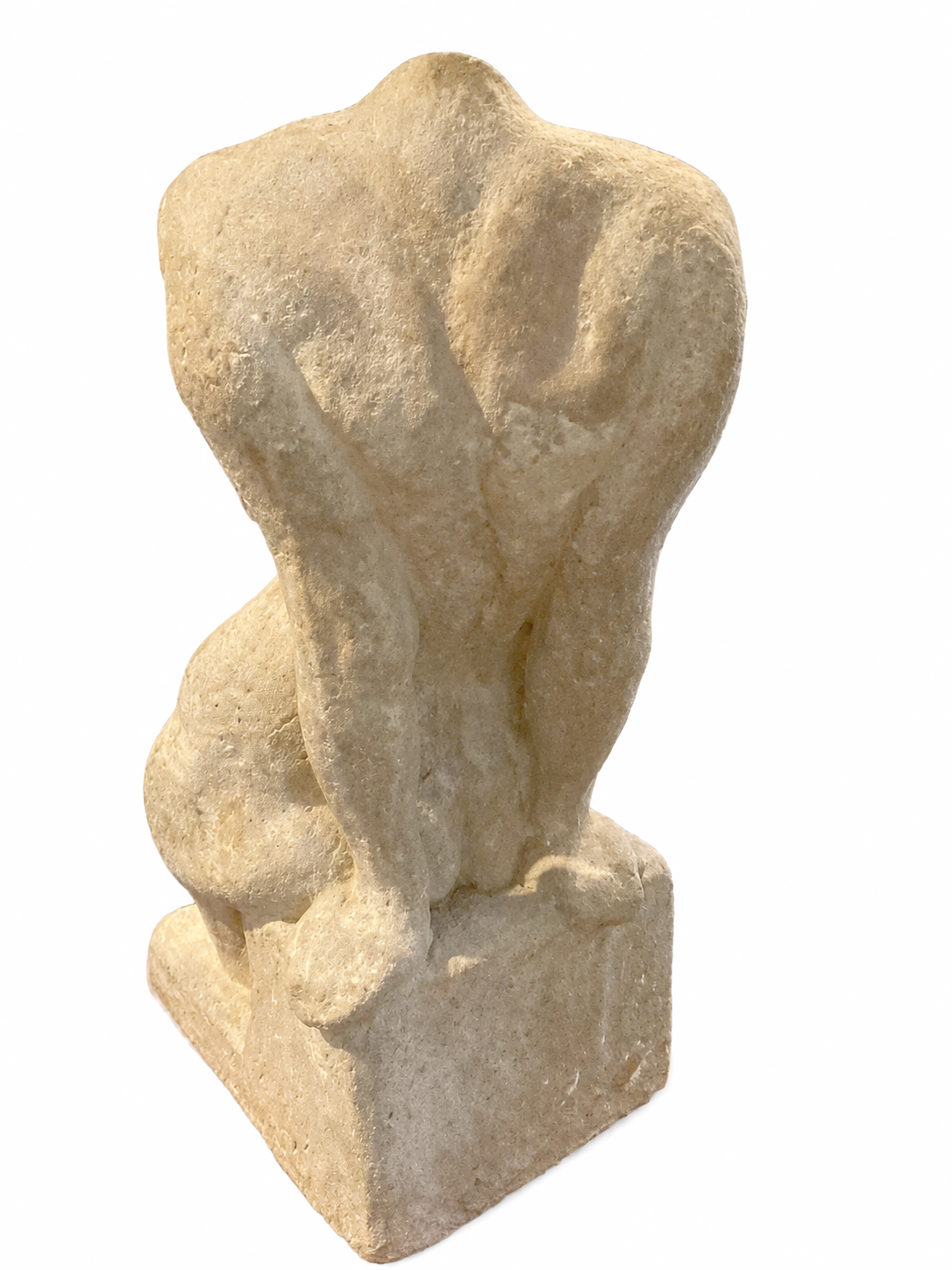
The sculpture rests on an integrated square base and presents a slightly turned posture, generating a quiet dynamism that shifts with the viewer's position. The porous, warm texture of the stone — somewhere between travertine and limestone — absorbs light rather than reflecting it, lending the piece an earthy, grounded presence. Every surface carries the memory of the hand that shaped it.
The exact origin remains unknown, but the quality of the carving, the formal typology, and the material character suggest European production from the mid-twentieth century — likely emerging from an artisanal or academic workshop tradition. The form itself echoes the influence of classical antiquity filtered through a modern sensibility: neither reproduction nor abstraction, but something held between the two.
A work that speaks with equal ease to minimalist interiors, Mediterranean spaces, and collections rooted in the history of the human form.
Origin: Europe, unknown Period: c. 1960s–1970s Medium: Natural stone Measurements: 20 × 15 × 37 cm
A figure that needs no face to speak. Carved in natural stone, this female torso draws on the long tradition of the classical fragment — the body rendered incomplete not by accident, but as a formal and philosophical choice.
The sculpture rests on an integrated square base and presents a slightly turned posture, generating a quiet dynamism that shifts with the viewer's position. The porous, warm texture of the stone — somewhere between travertine and limestone — absorbs light rather than reflecting it, lending the piece an earthy, grounded presence. Every surface carries the memory of the hand that shaped it.
The exact origin remains unknown, but the quality of the carving, the formal typology, and the material character suggest European production from the mid-twentieth century — likely emerging from an artisanal or academic workshop tradition. The form itself echoes the influence of classical antiquity filtered through a modern sensibility: neither reproduction nor abstraction, but something held between the two.
A work that speaks with equal ease to minimalist interiors, Mediterranean spaces, and collections rooted in the history of the human form.
Origin: Europe, unknown Period: c. 1960s–1970s Medium: Natural stone Measurements: 20 × 15 × 37 cm