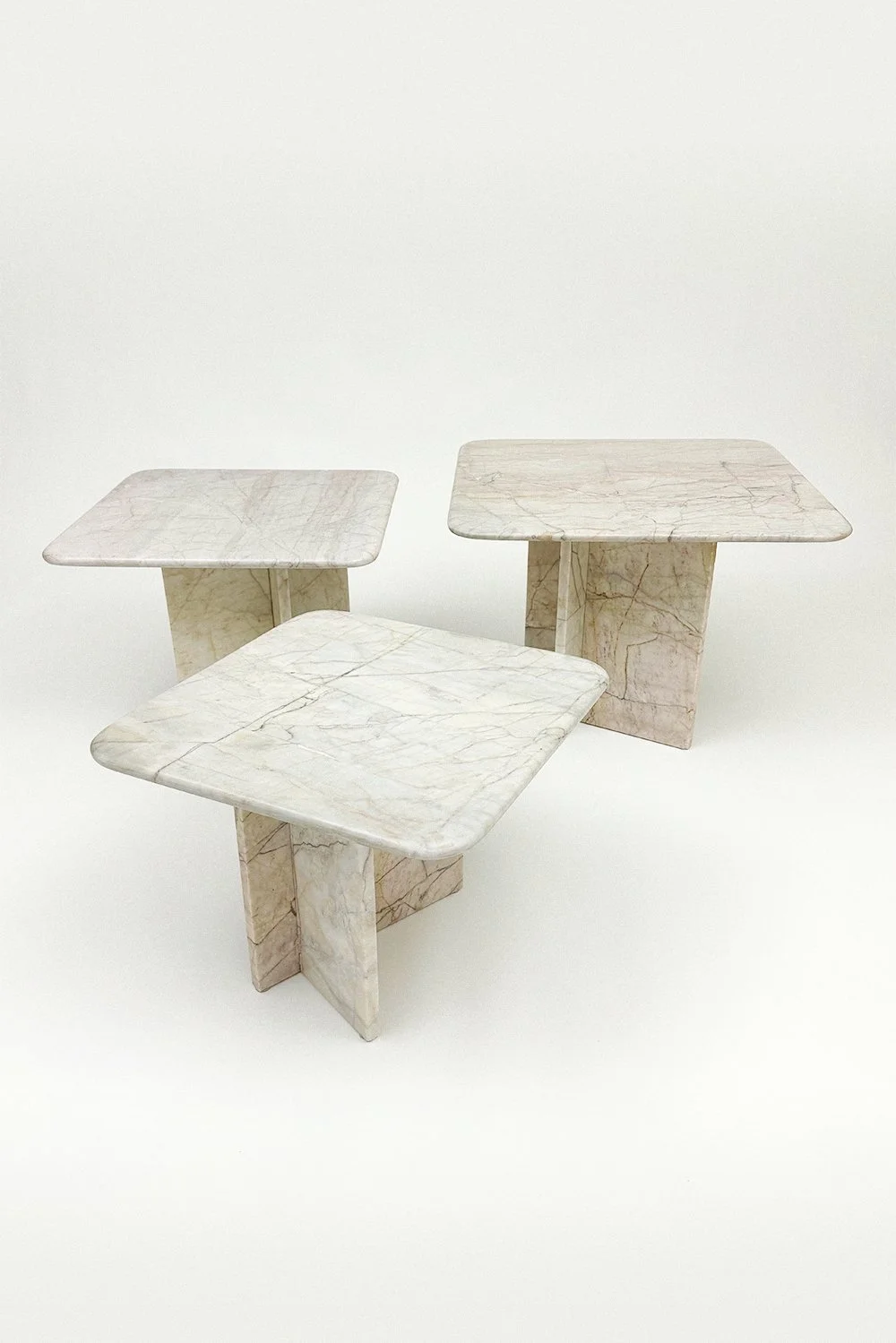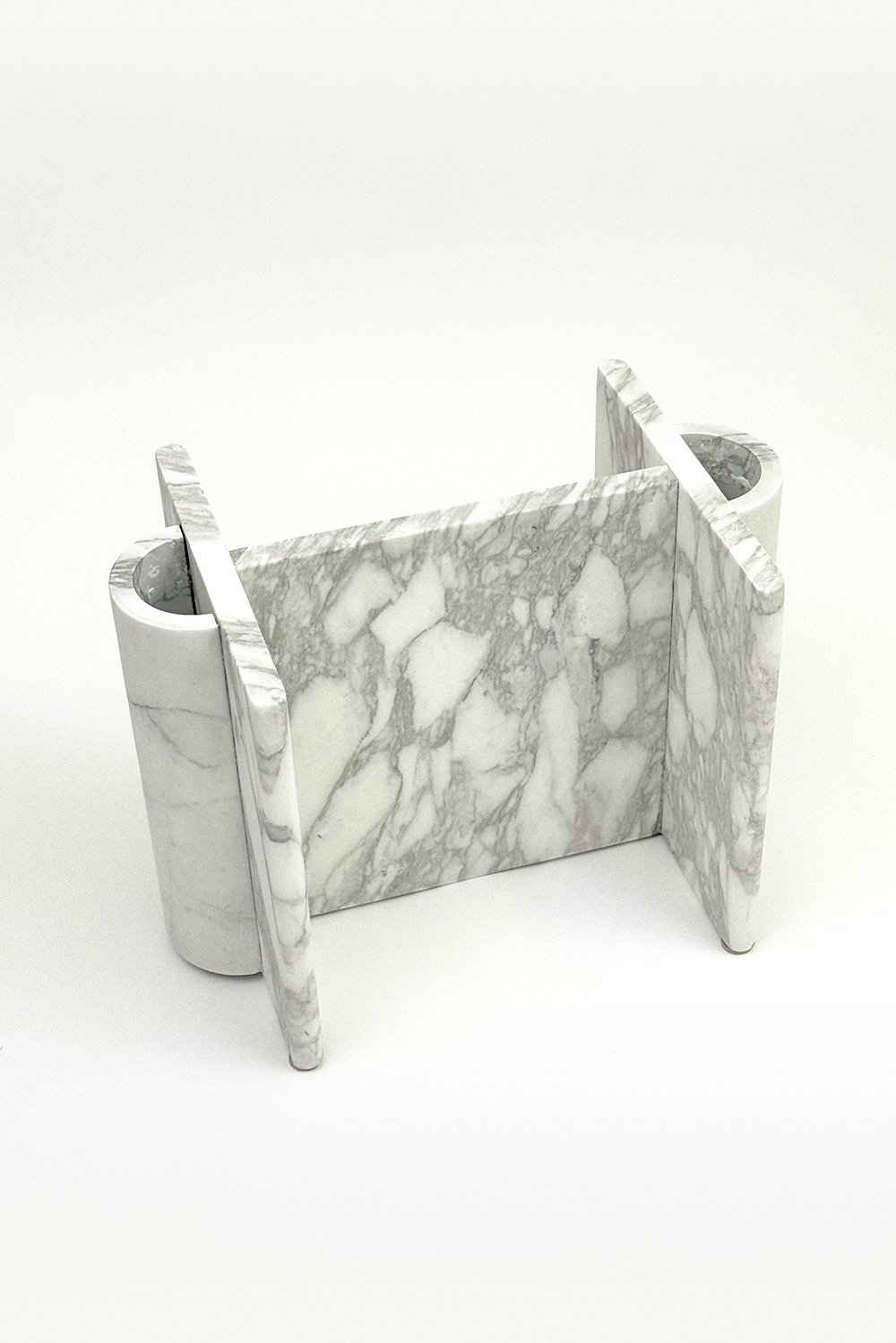

These are antique pieces and are sold as such. Although VV does its best to highlight major flaws, minor imperfections should be expected reflecting the age and previous use of the piece.
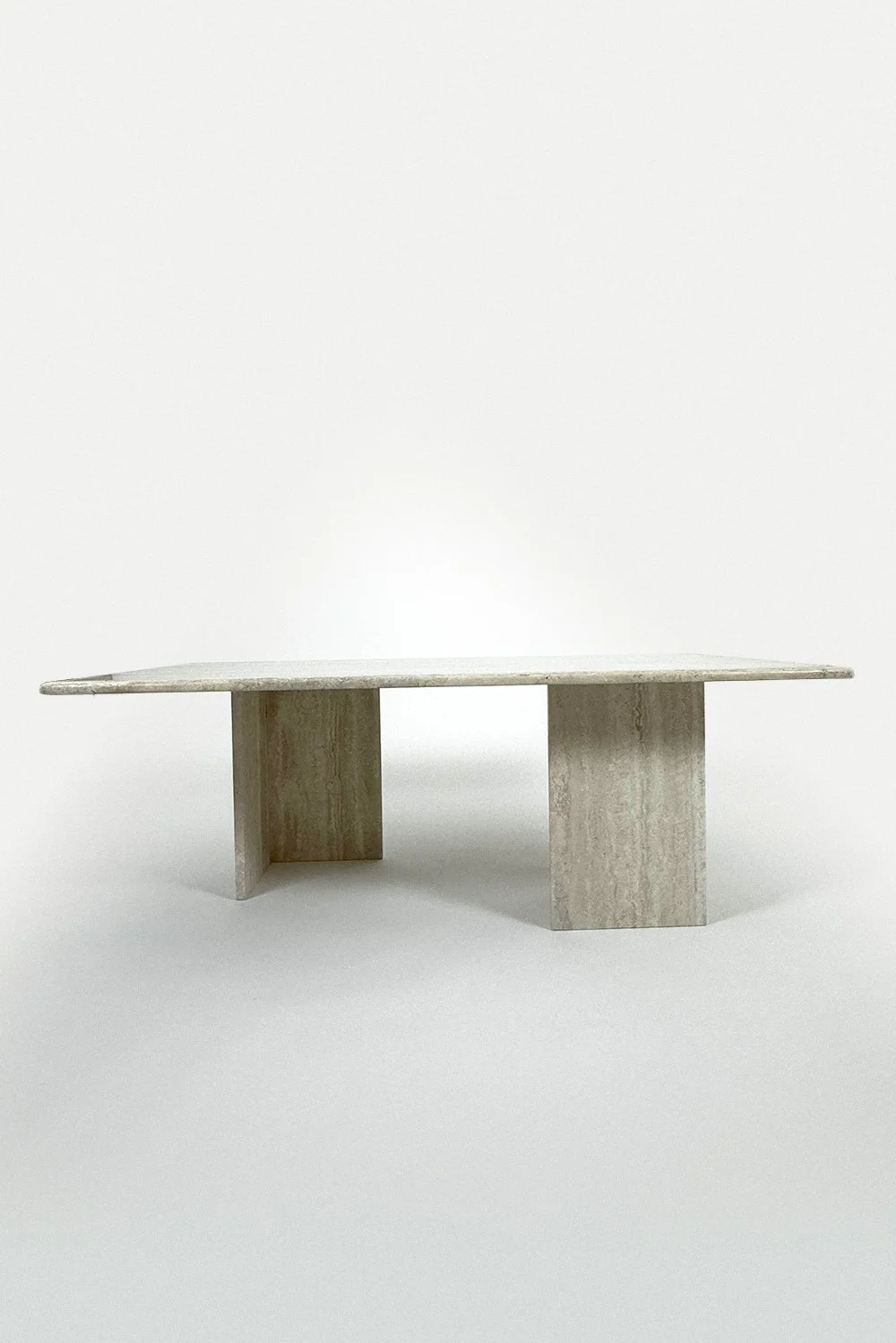
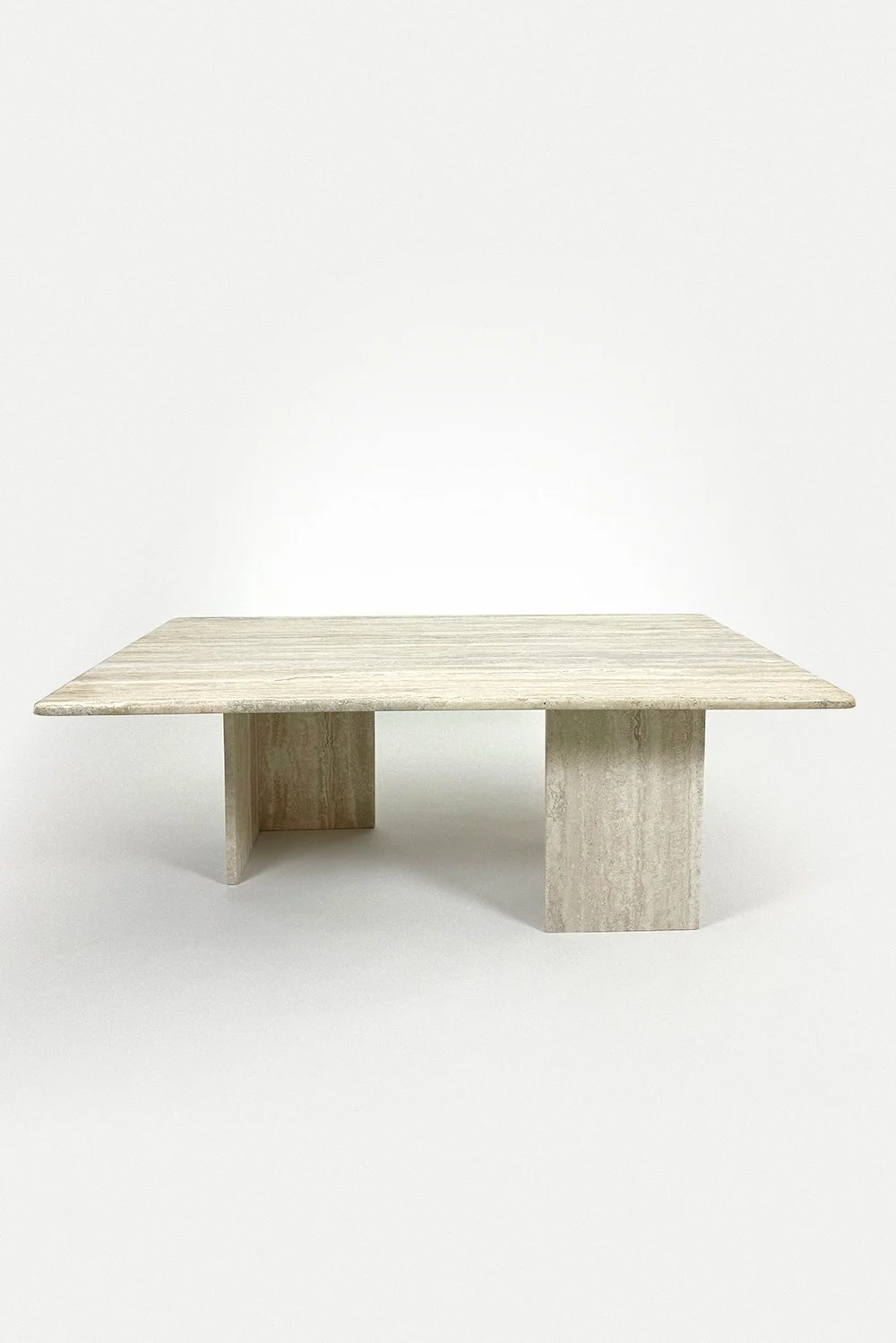
This iconic Metafora coffee table, designed by Massimo and Lella Vignelli for Casigliani in the late 1970s, stands as a definitive masterpiece of Italian modern design. Conceived as a dialogue between geometry, material, and architecture, the table transcends conventional furniture to become a sculptural statement of enduring relevance.
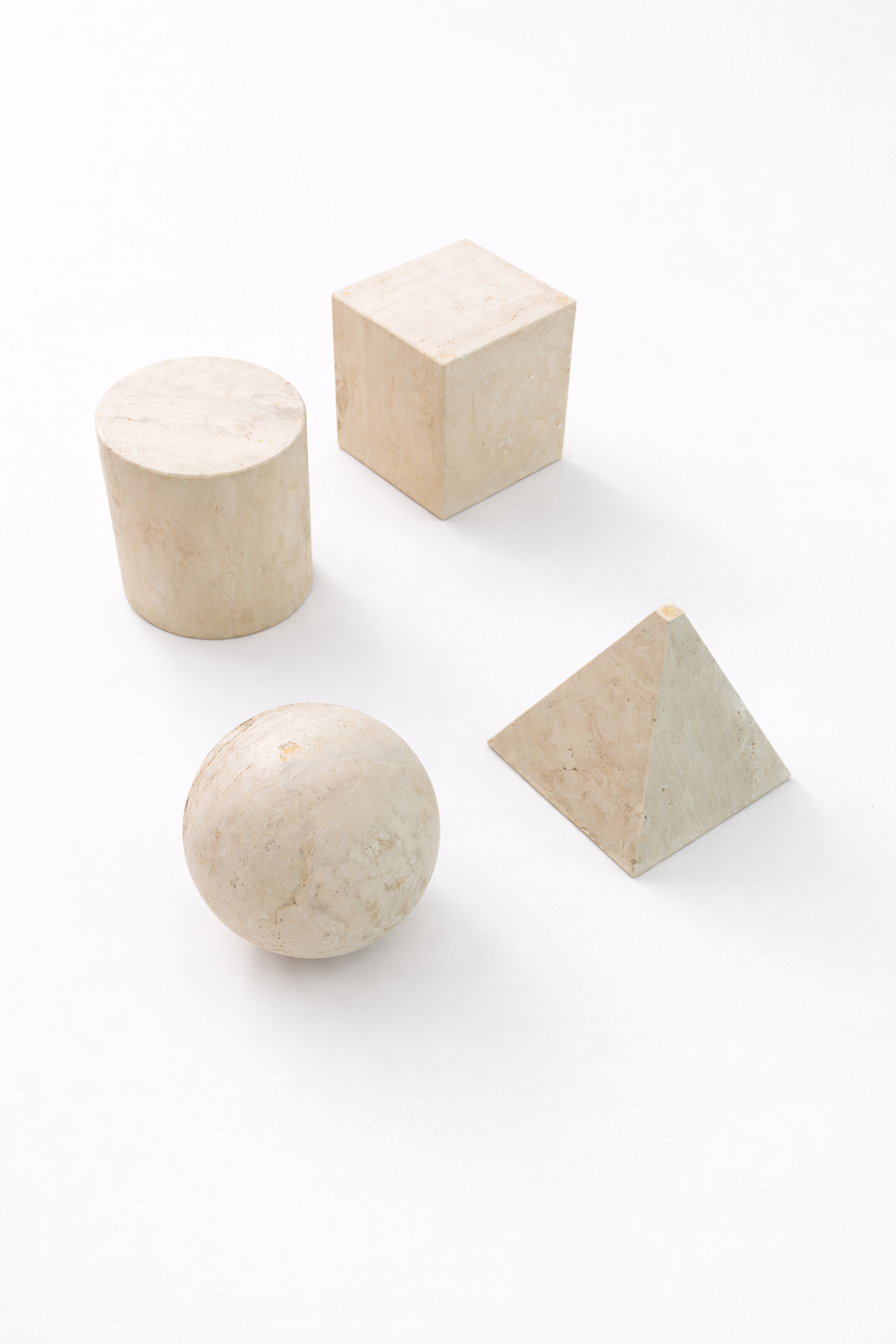
Executed in solid travertine with a glass top, the table is supported by four monumental geometric forms—a cube, sphere, cylinder, and pyramid—each functioning as both structural element and symbolic volume. Together, they create a powerful yet perfectly balanced composition that reflects the Vignellis’ rigorous design philosophy, where clarity, proportion, and intellectual discipline guide every decision.
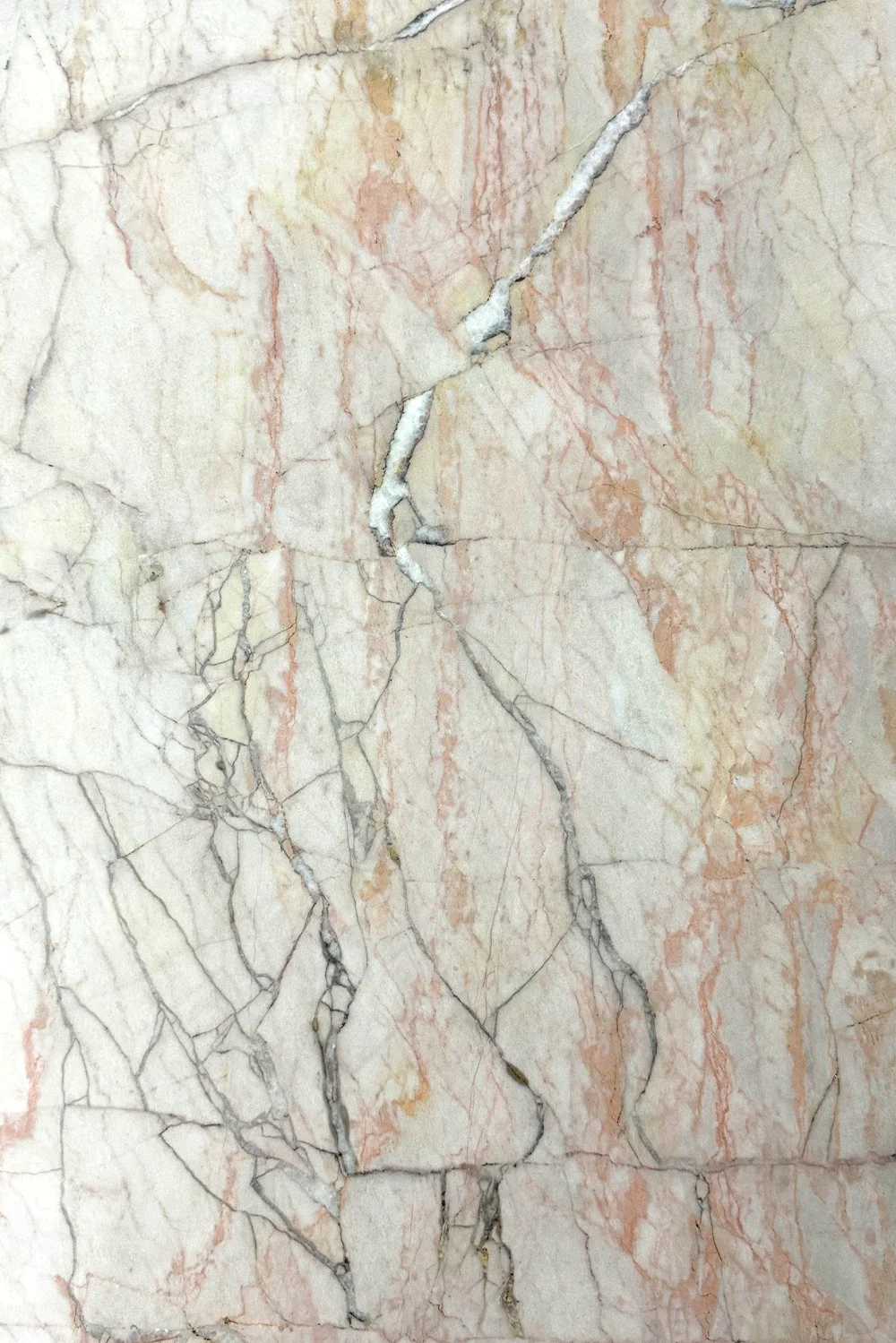
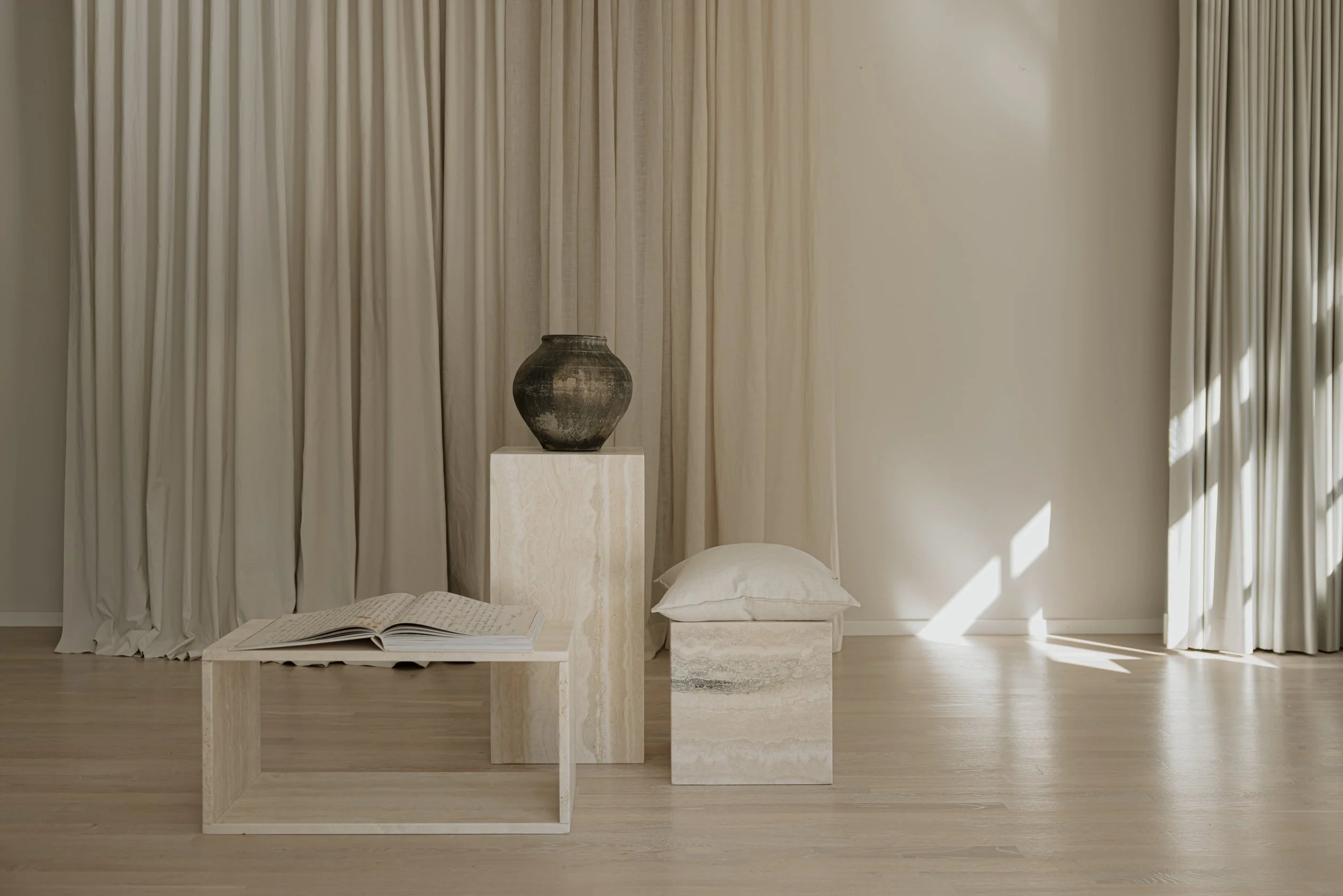
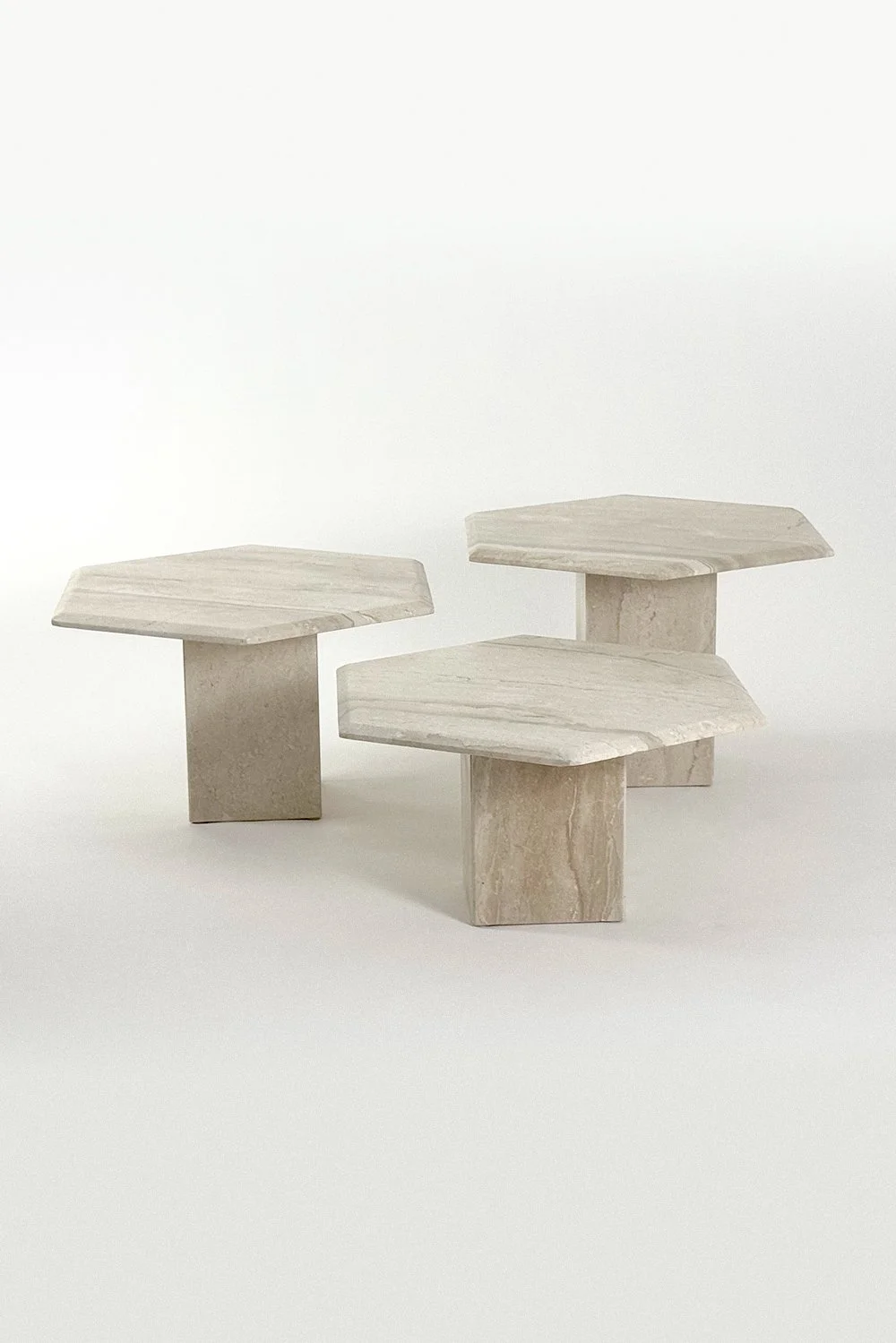
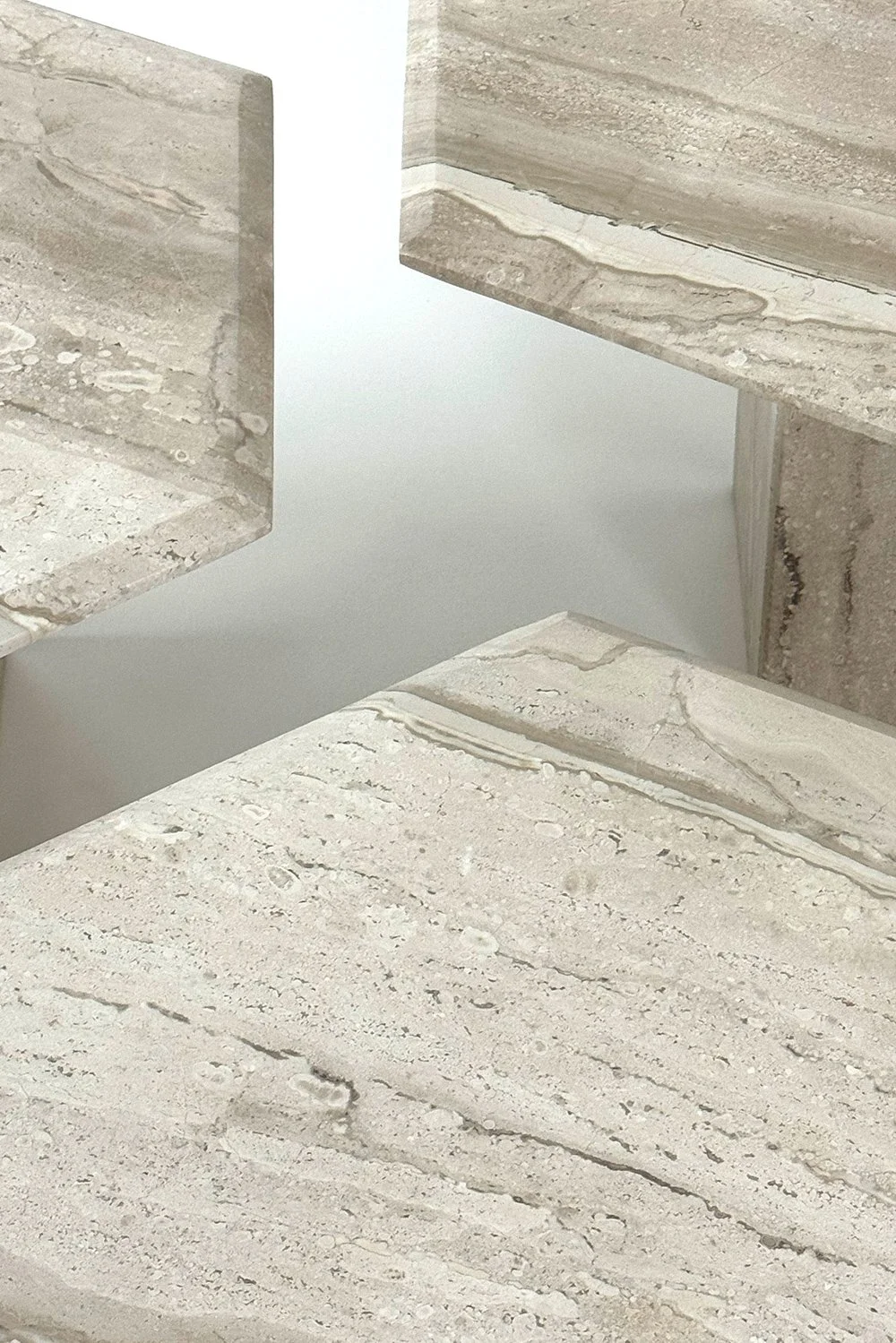
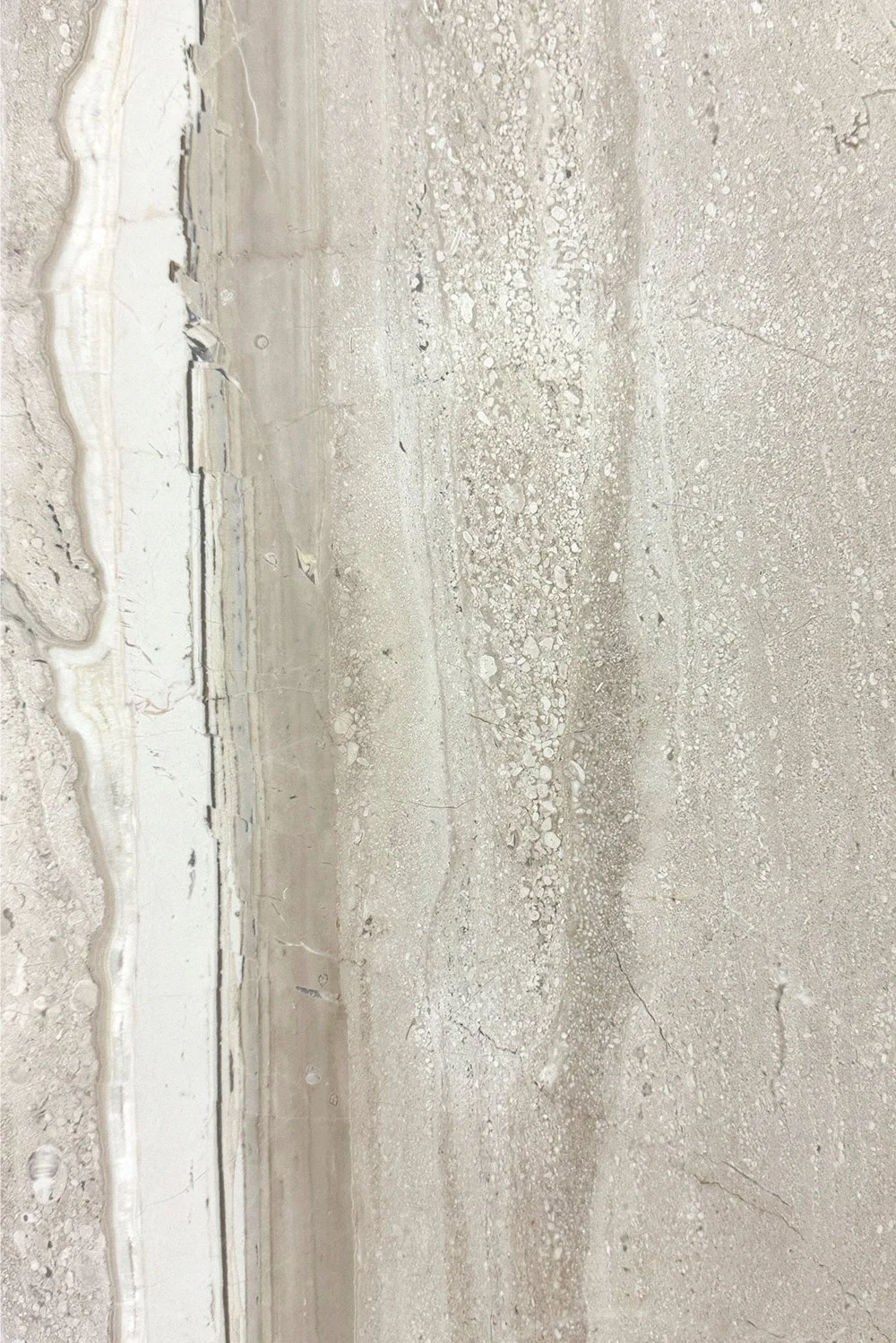
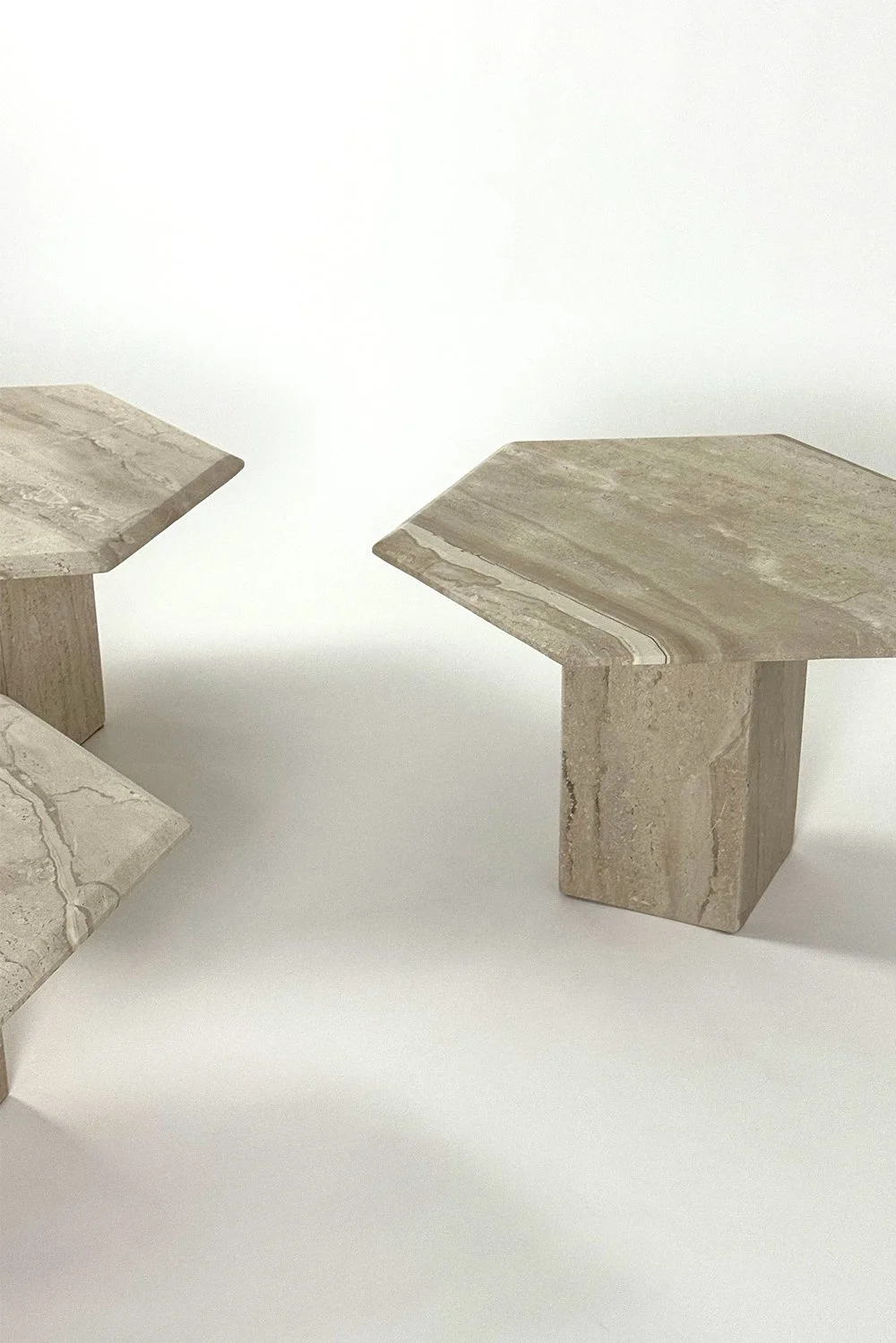
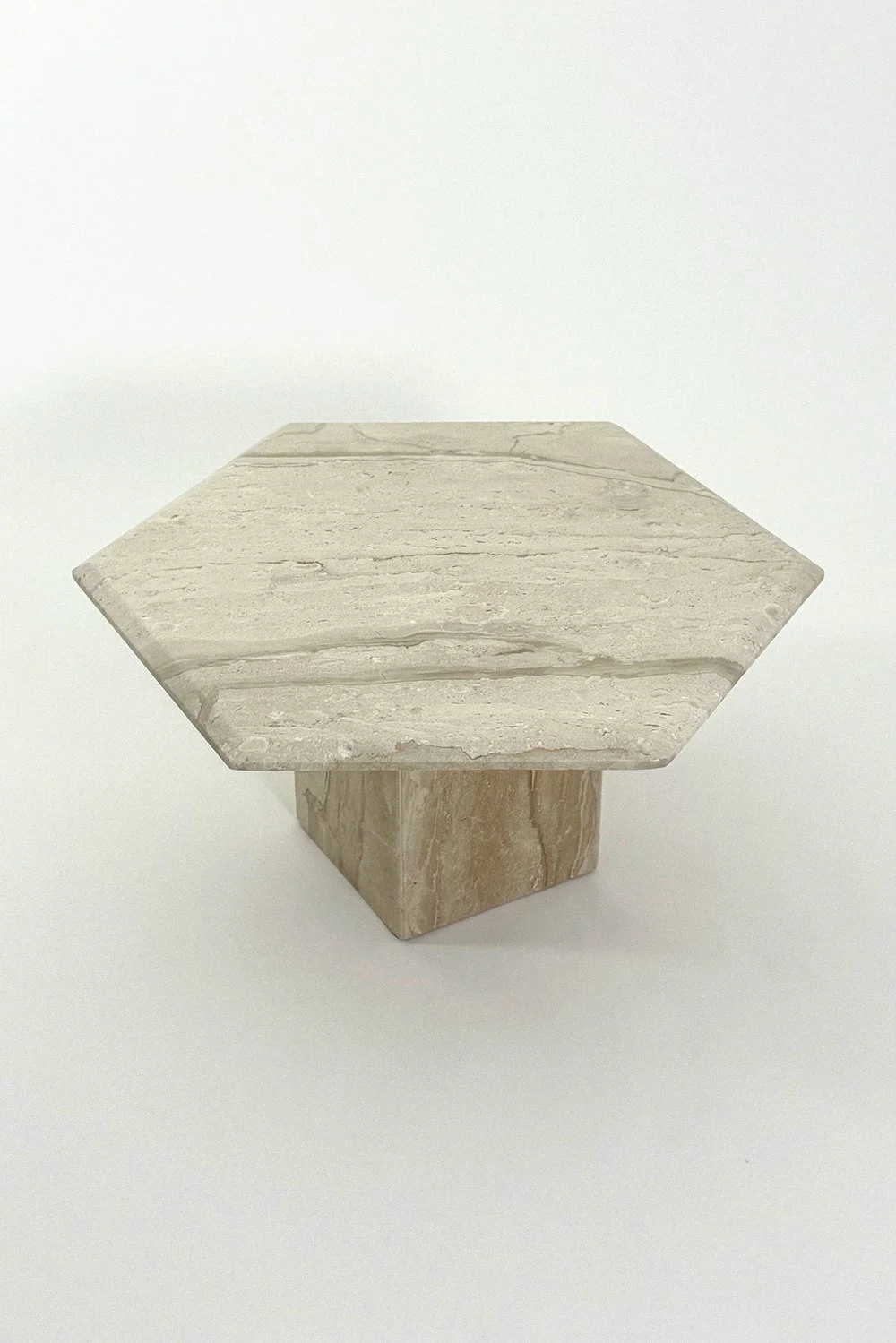
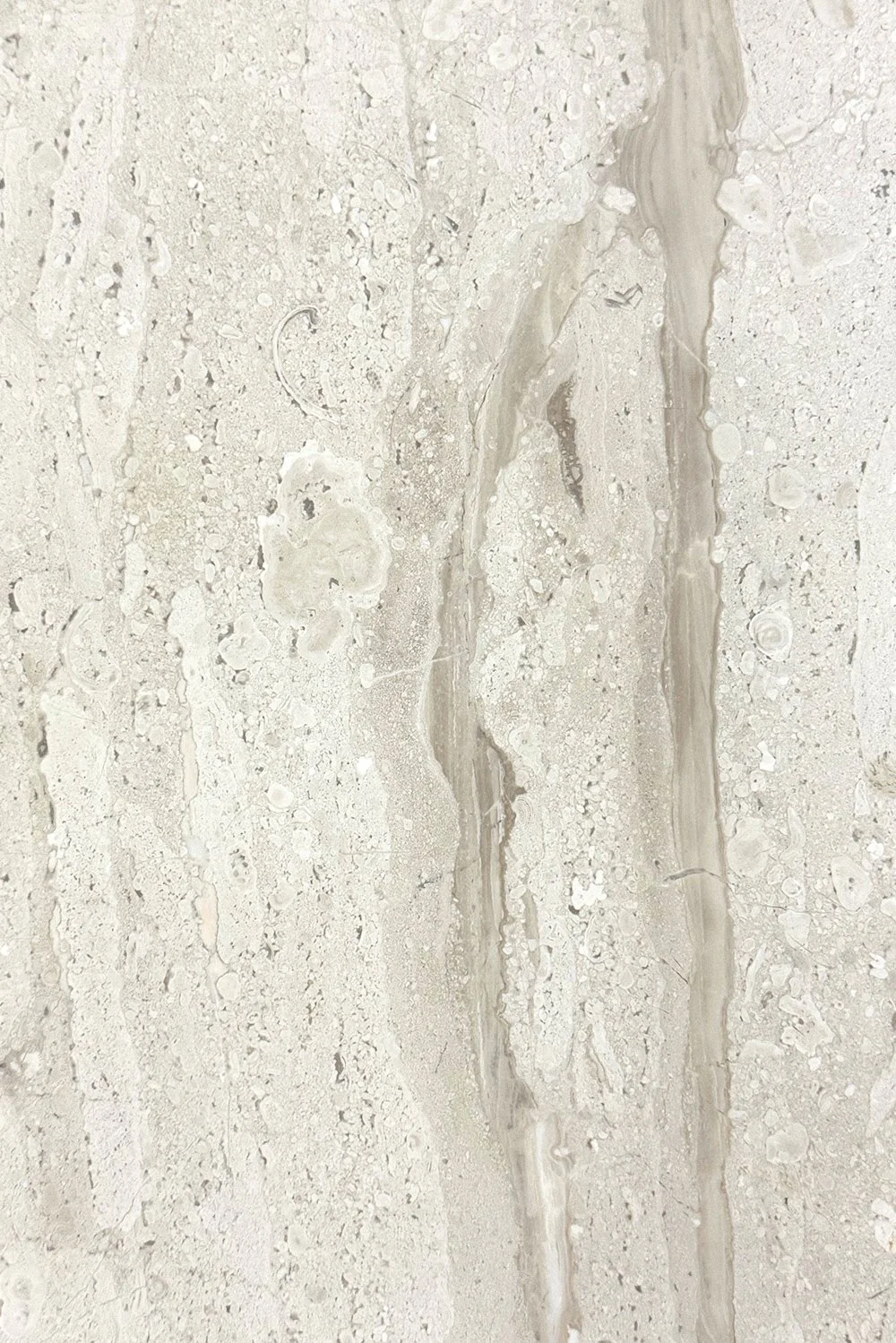
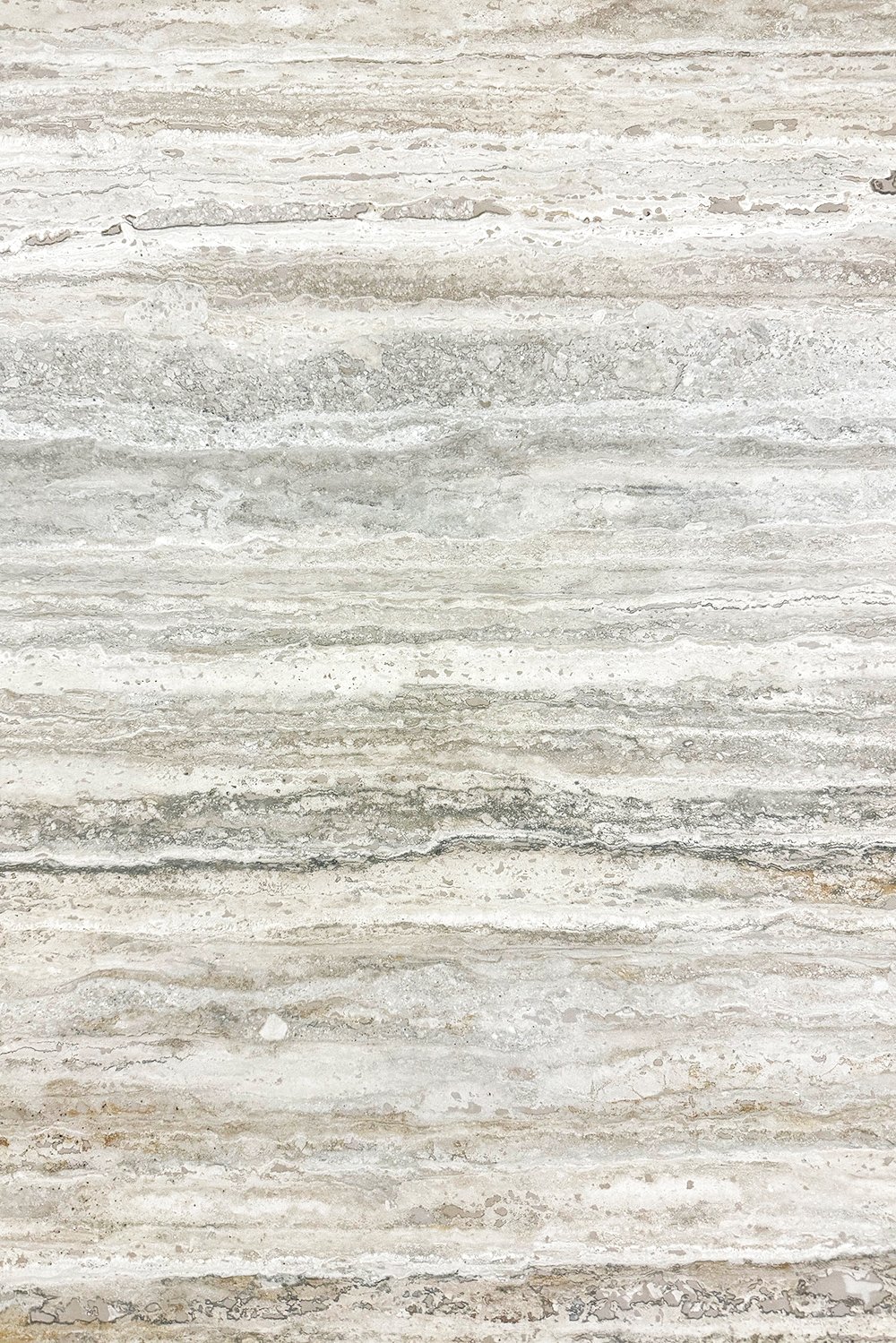
The travertine surfaces display subtle ivory and warm beige tonalities, animated by natural veining and fossil markings that lend depth and individuality to each element. This organic texture contrasts elegantly with the table’s strict geometric language, resulting in a piece that is at once architectural and tactile, minimalist yet expressive.
Widely recognized as a landmark of 20th-century design, the Metafora table is highly sought after on the international collectible market. It appeals to architects, collectors, and curators who value furniture as conceptual art—objects that embody permanence, material honesty, and historical significance.
Measurements:
Glass top: 100 × 100 cm
Height: 32 cm
Travertine thickness: 3 cm
About Travertine:
Revered since antiquity, travertine has been a cornerstone of architectural history, prized for its natural luminosity, durability, and timeless elegance. Its distinctive veining and subtle tonal variations ensure that no two pieces are ever identical. In the realm of collectible design, travertine represents authenticity and permanence—qualities that resonate deeply with contemporary collectors seeking sculptural works that transcend trends and endure across generations.
This iconic Metafora coffee table, designed by Massimo and Lella Vignelli for Casigliani in the late 1970s, stands as a definitive masterpiece of Italian modern design. Conceived as a dialogue between geometry, material, and architecture, the table transcends conventional furniture to become a sculptural statement of enduring relevance.
Executed in solid travertine with a glass top, the table is supported by four monumental geometric forms—a cube, sphere, cylinder, and pyramid—each functioning as both structural element and symbolic volume. Together, they create a powerful yet perfectly balanced composition that reflects the Vignellis’ rigorous design philosophy, where clarity, proportion, and intellectual discipline guide every decision.
The travertine surfaces display subtle ivory and warm beige tonalities, animated by natural veining and fossil markings that lend depth and individuality to each element. This organic texture contrasts elegantly with the table’s strict geometric language, resulting in a piece that is at once architectural and tactile, minimalist yet expressive.
Widely recognized as a landmark of 20th-century design, the Metafora table is highly sought after on the international collectible market. It appeals to architects, collectors, and curators who value furniture as conceptual art—objects that embody permanence, material honesty, and historical significance.
Measurements:
Glass top: 100 × 100 cm
Height: 32 cm
Travertine thickness: 3 cm
About Travertine:
Revered since antiquity, travertine has been a cornerstone of architectural history, prized for its natural luminosity, durability, and timeless elegance. Its distinctive veining and subtle tonal variations ensure that no two pieces are ever identical. In the realm of collectible design, travertine represents authenticity and permanence—qualities that resonate deeply with contemporary collectors seeking sculptural works that transcend trends and endure across generations.
These are antique pieces and are sold as such. Although VV does its best to highlight major flaws, minor imperfections should be expected reflecting the age and previous use of the piece.