These are antique pieces and are sold as such. Although VV does its best to highlight major flaws, minor imperfections should be expected reflecting the age and previous use of the piece.
Stone does not negotiate. It simply endures.
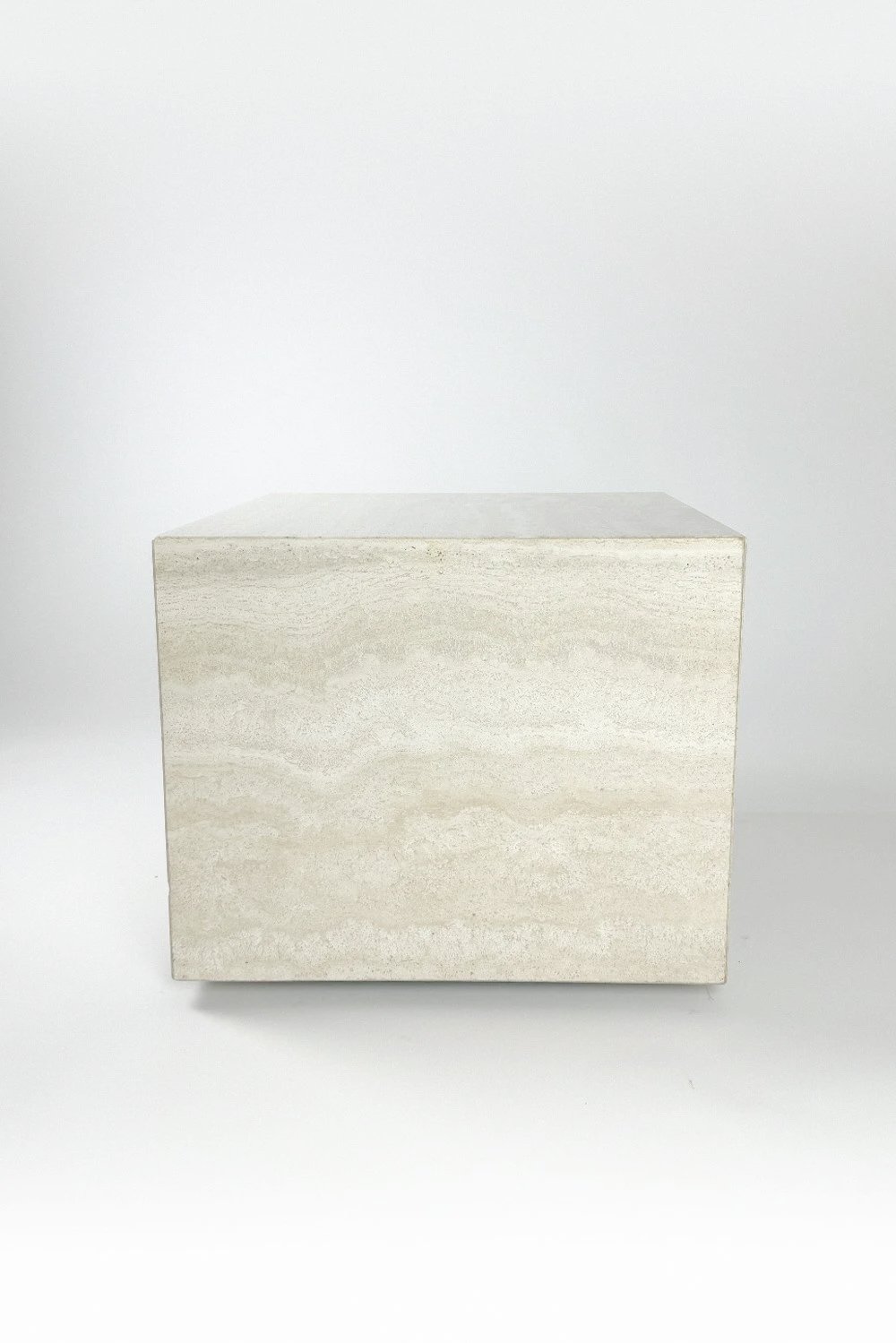
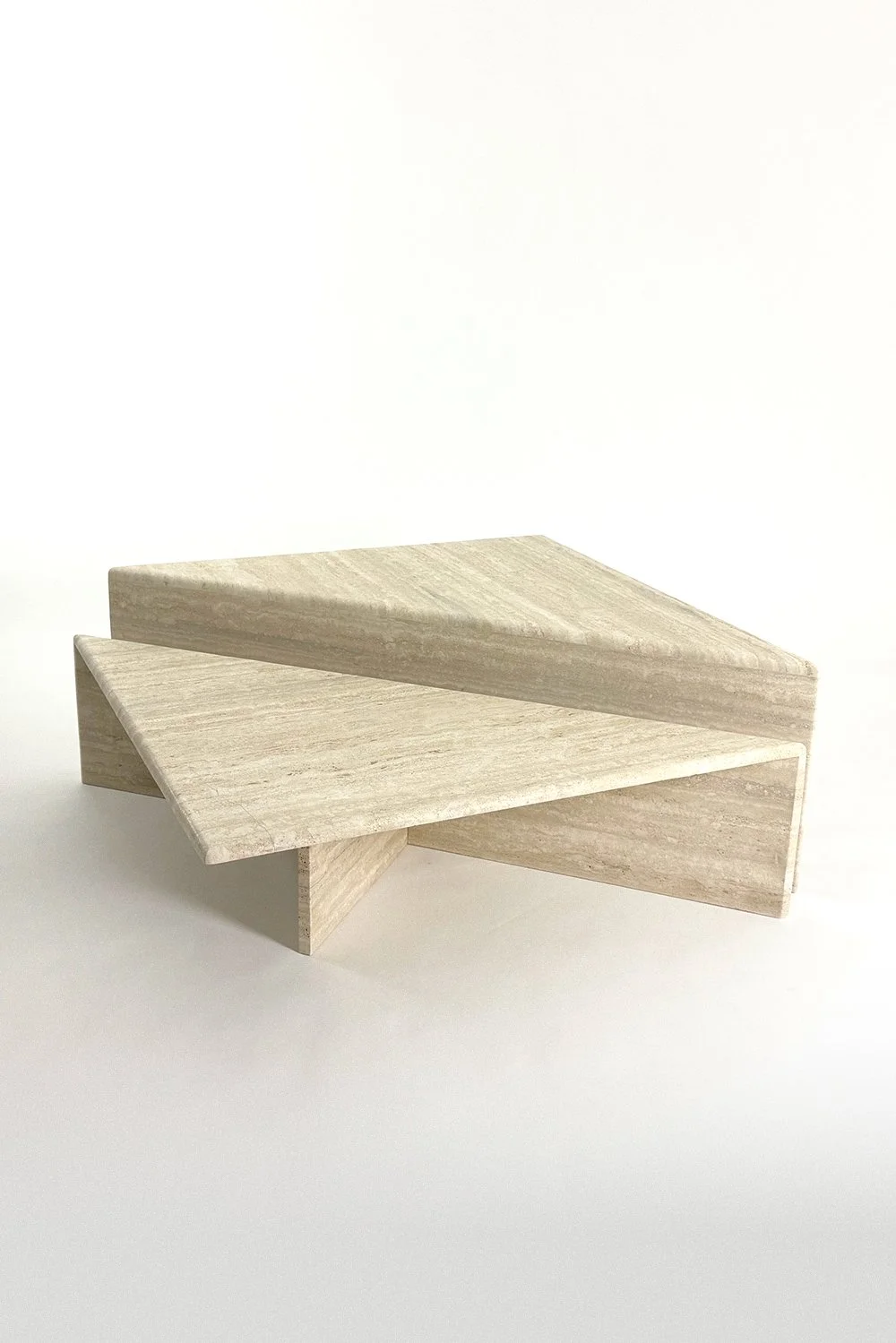
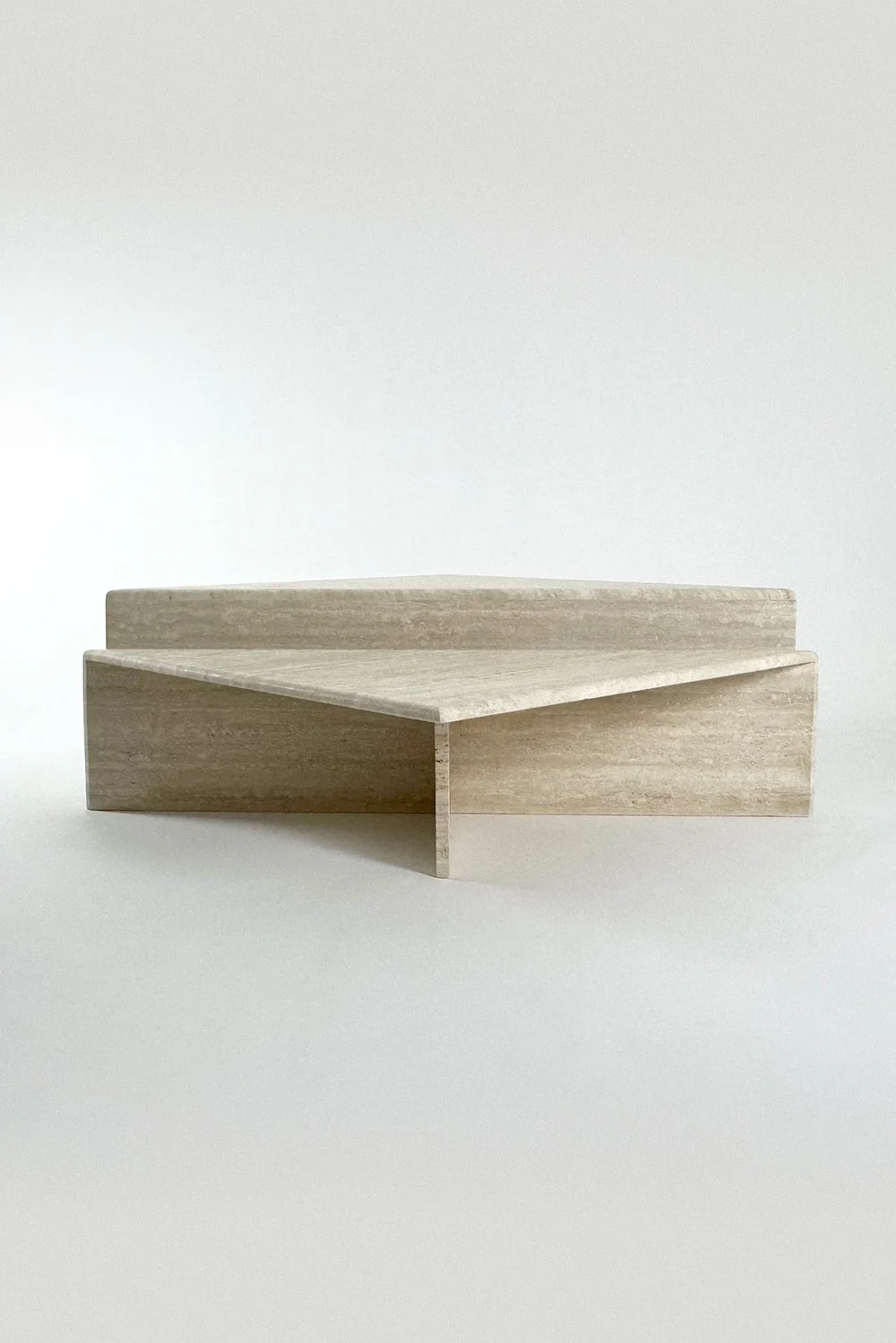
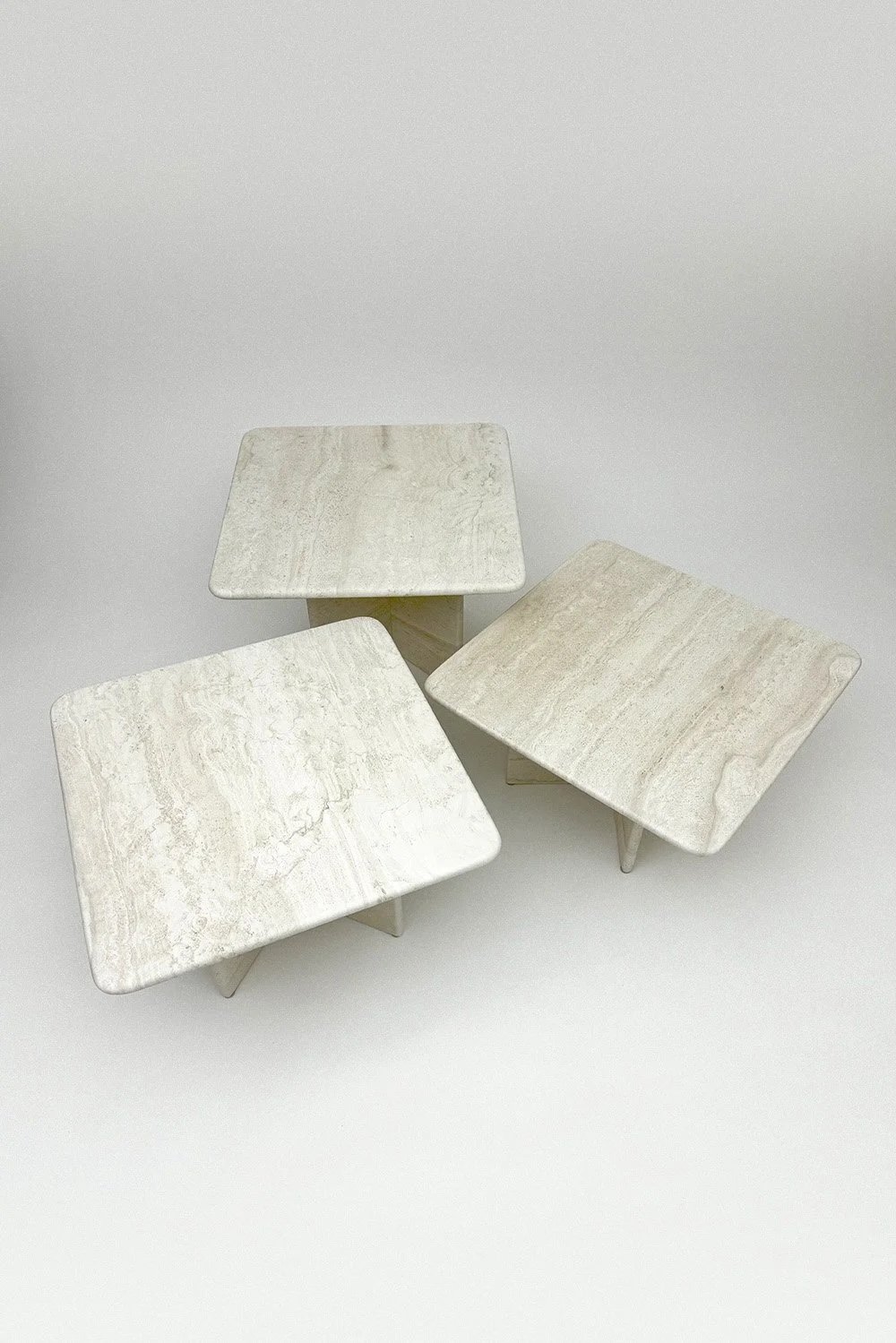
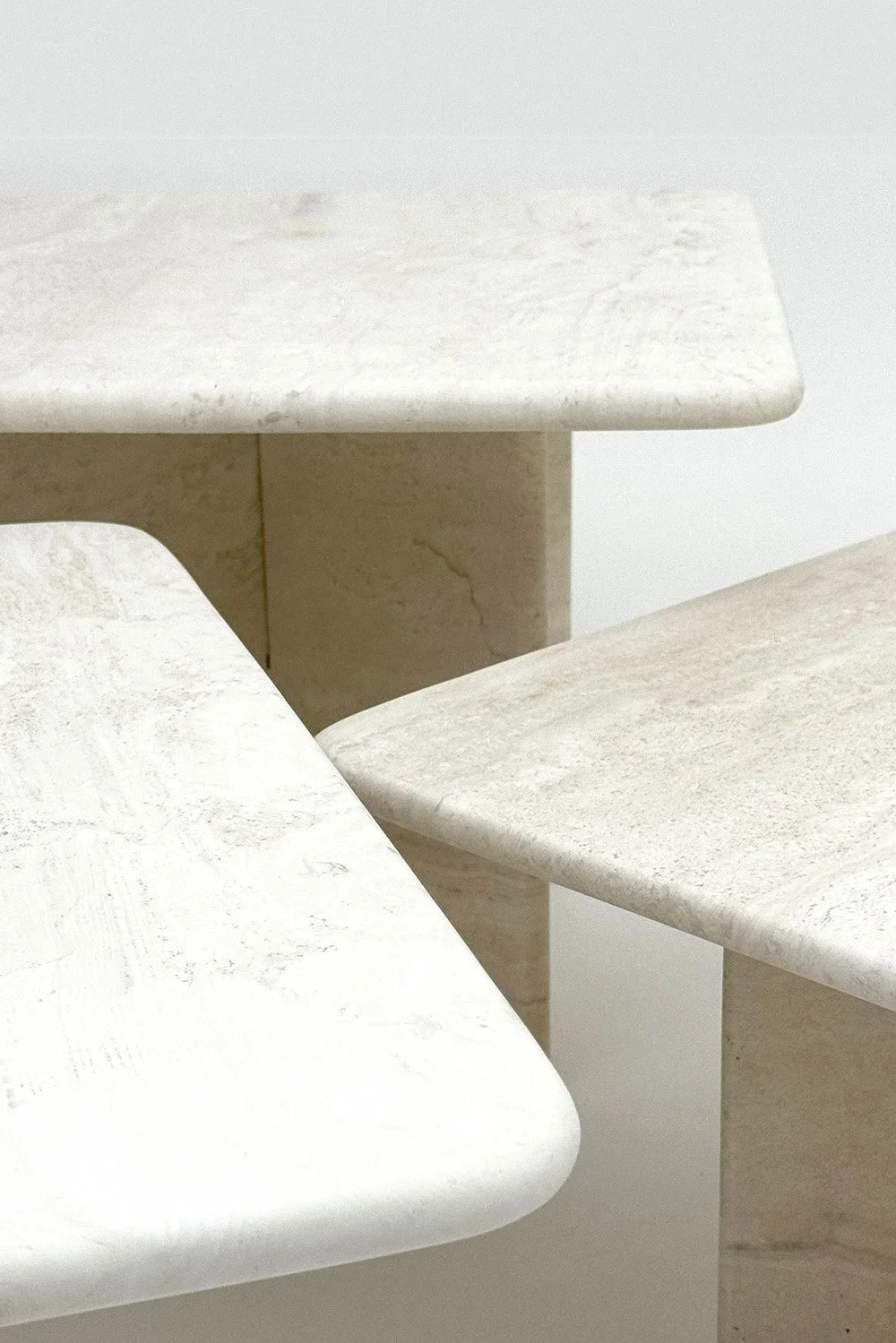
This set of three Italian travertine side tables represents one of the most coherent expressions of the material ng a graduated sequence that is as considered in its proportions as it is effortless in its presence.
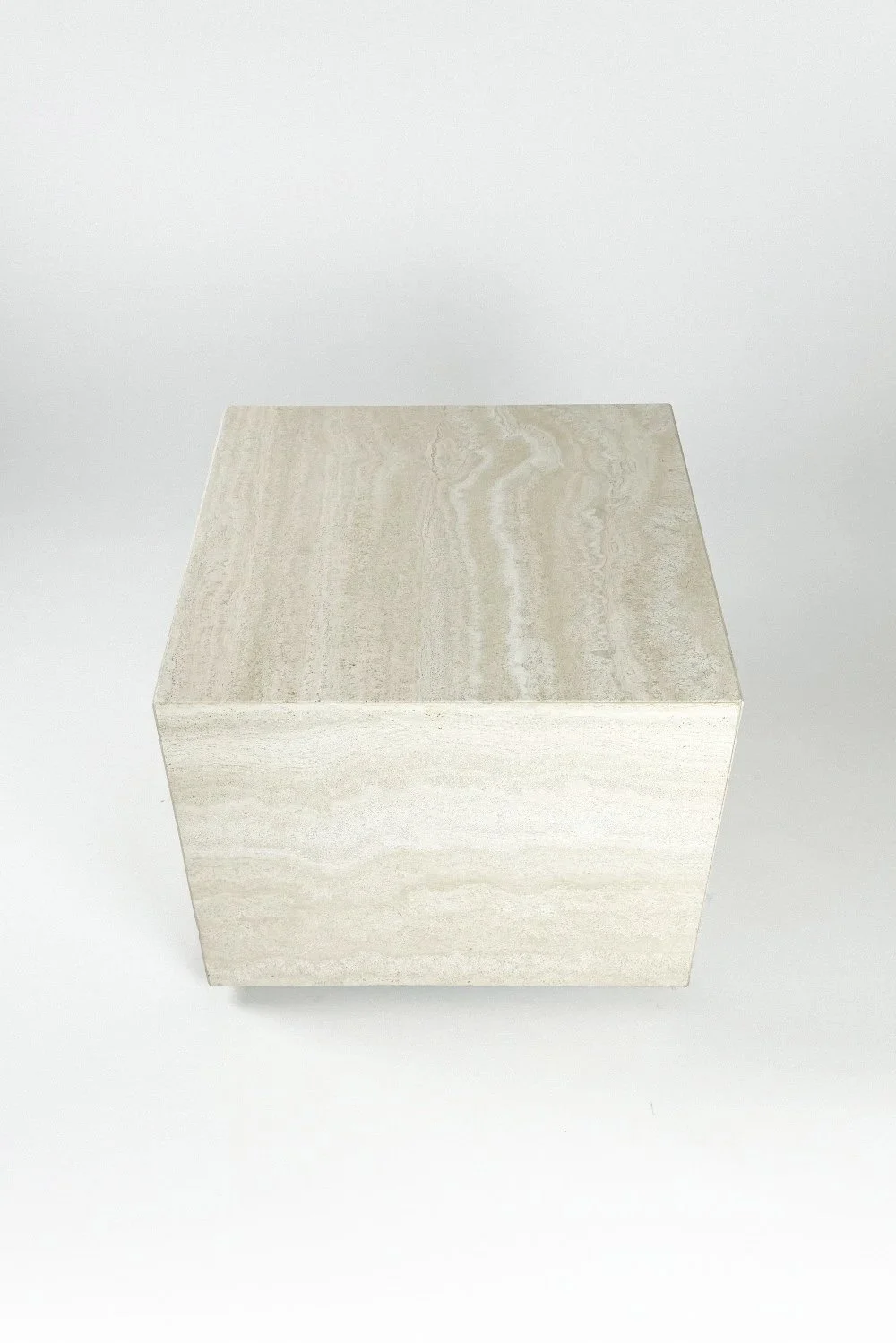
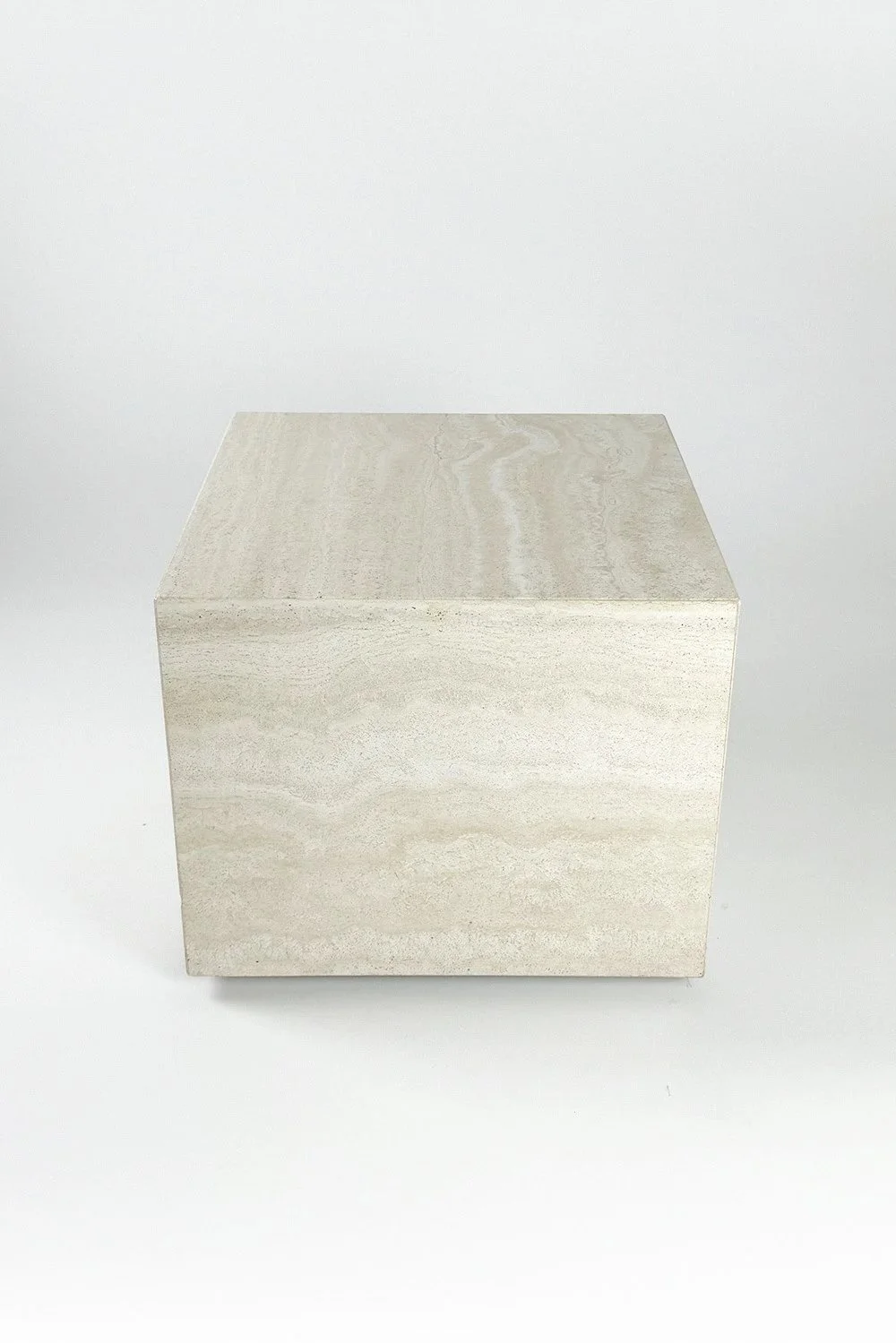
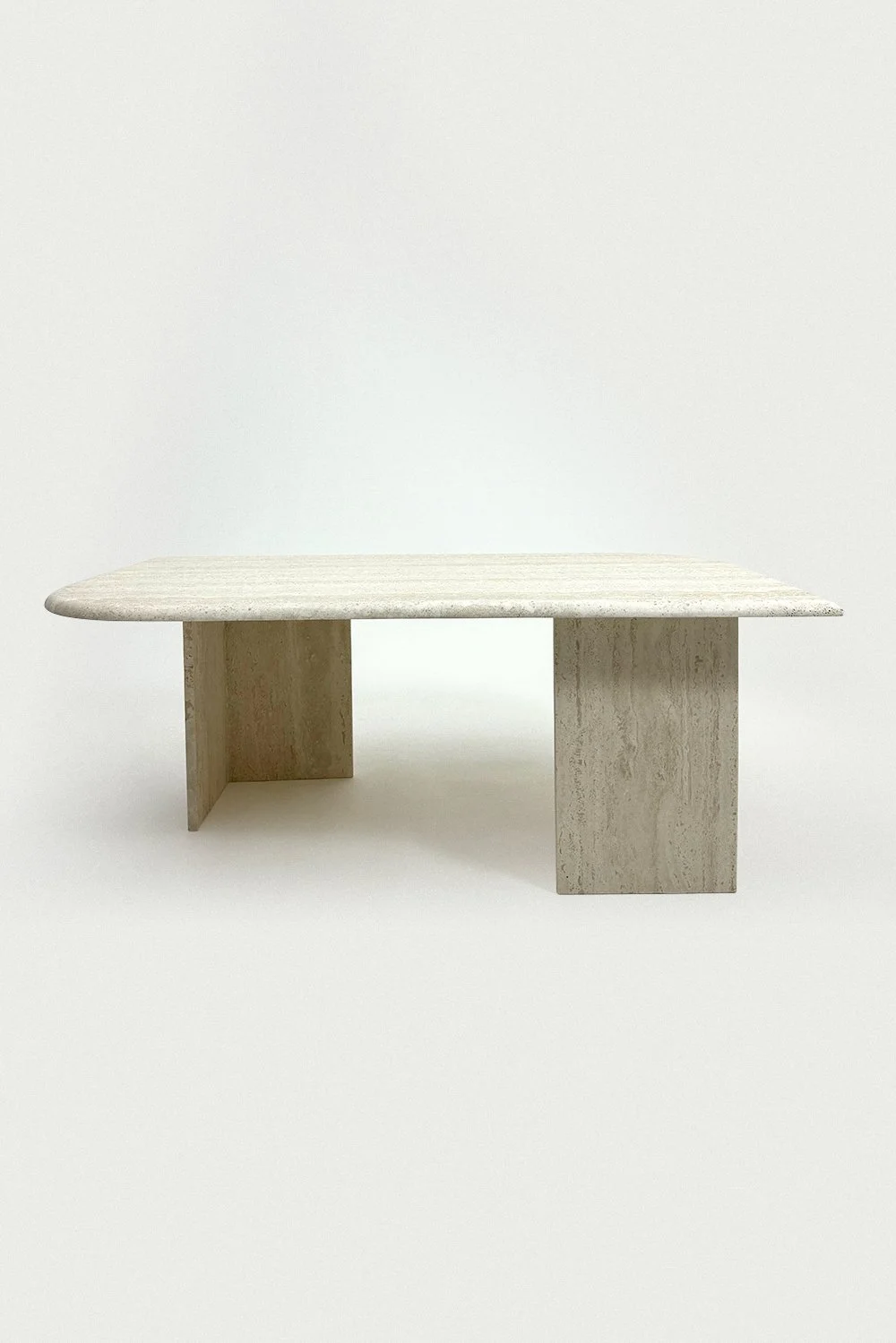
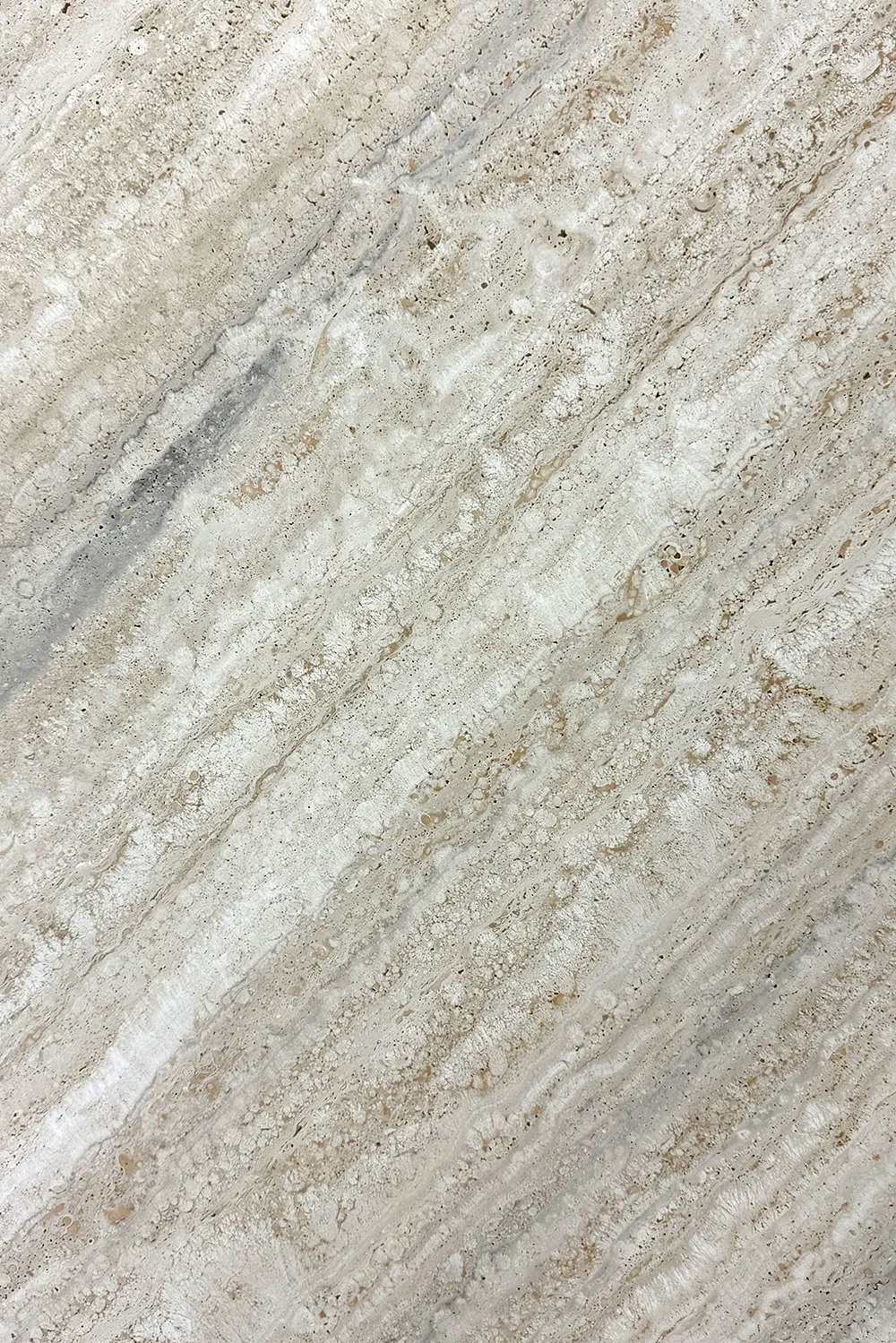
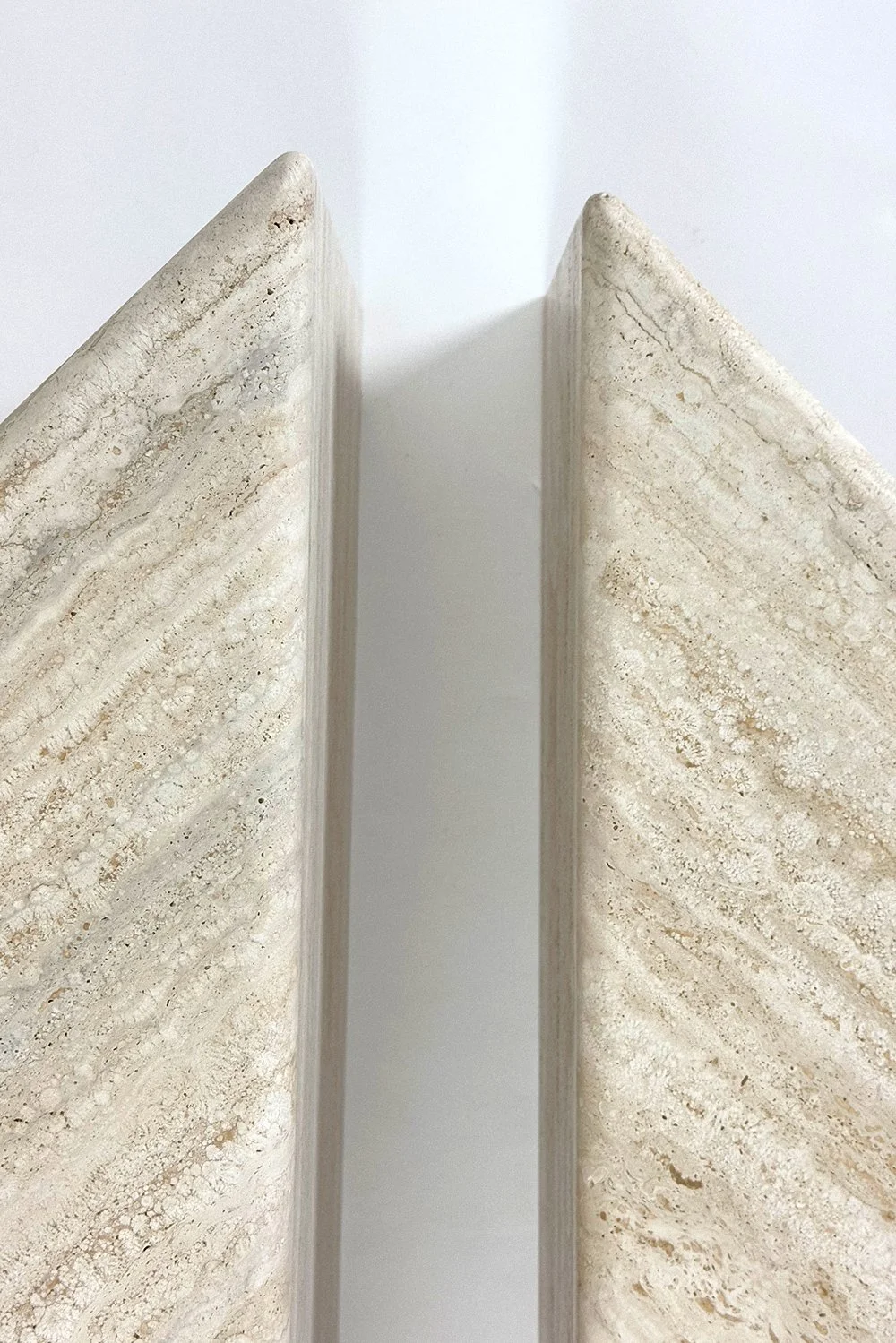
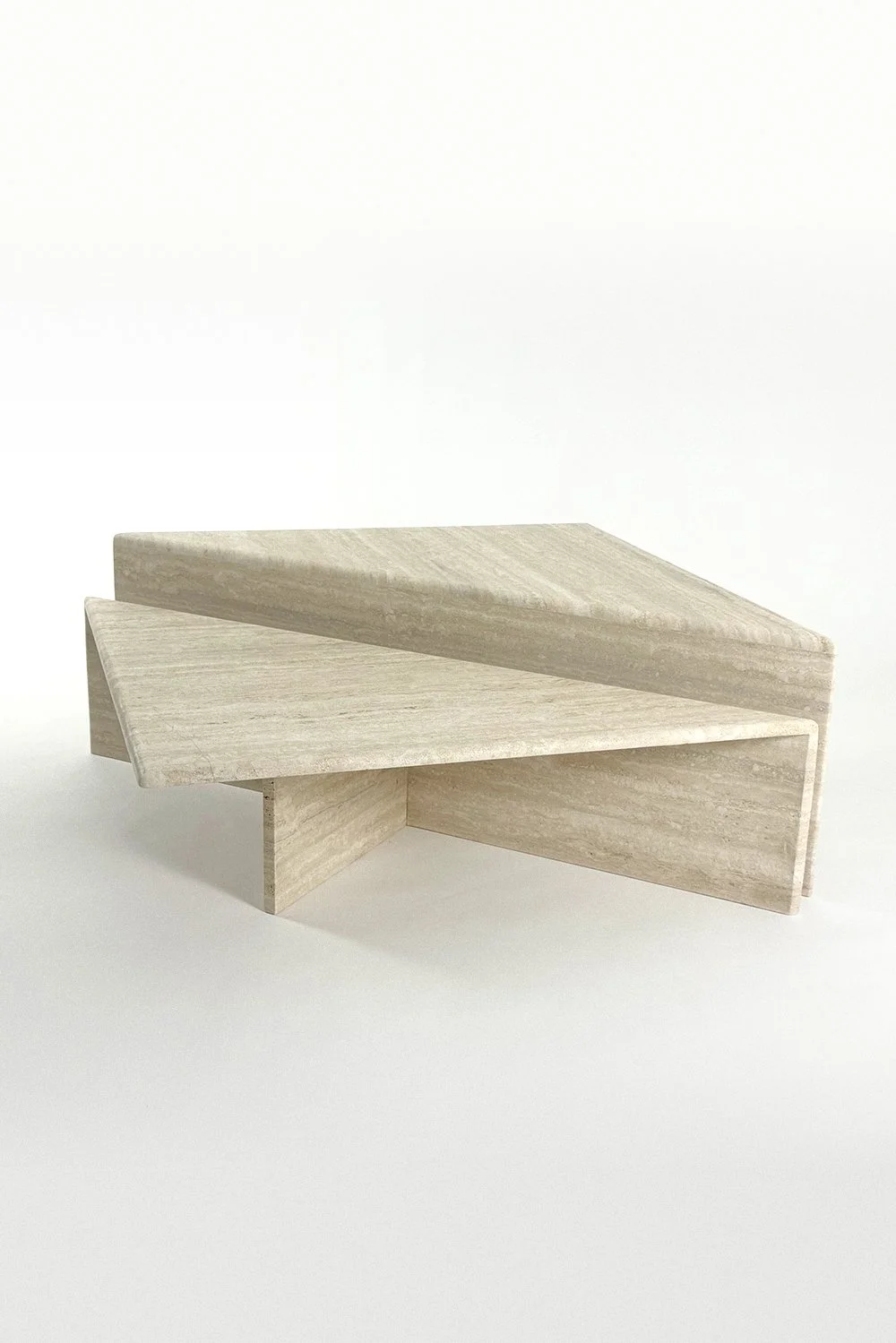
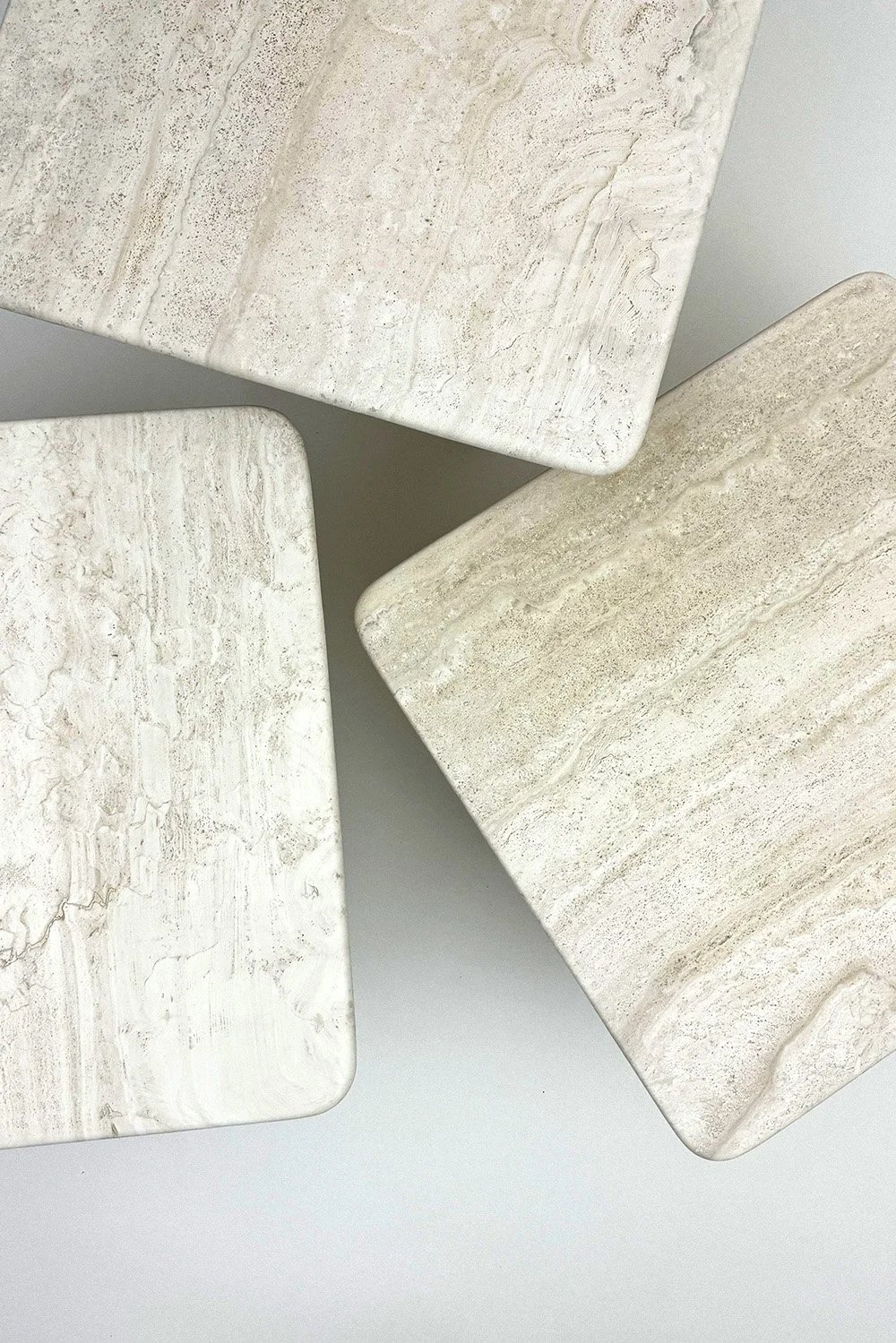
The tops — 2 cm slabs of warm ivory travertine — reveal the stone's full character: the lateral veining, the fossil inclusions, the tonal shifts between cream and sand that no two slabs repeat. They rest on four tapered travertine legs, monolithic in construction, with no metal, no adhesive visible, no material interruption. The result is an object of rare formal integrity, where structure and surface are resolved in a single gesture.
The three heights — 30, 35 and 40 cm — allow the set to function as a sculptural ensemble or to be distributed independently across a space, each piece holding its own with quiet authority. A formal logic reminiscent of the Italian studios — Mangiarotti, UP&UP, Skipper — that elevated the side table from functional object to spatial statement.
Sold as a complete set. Condition consistent with age and consistent with character.
Origin: Italy Period: c. 1970s–1980s Medium: Italian travertine Measurements: Table 1: 60 × 60 × 30 cm · Table 2: 60 × 60 × 35 cm · Table 3: 60 × 60 × 40 cm · Top thickness: 2 cmphilosophy that defined Italian design in the 1970s — the conviction that stone, left largely to itself, is already architecture. Each table shares the same generous 60 × 60 cm footprint while rising to a different height, creati
Stone does not negotiate. It simply endures.
This set of three Italian travertine side tables represents one of the most coherent expressions of the material ng a graduated sequence that is as considered in its proportions as it is effortless in its presence.
The tops — 2 cm slabs of warm ivory travertine — reveal the stone's full character: the lateral veining, the fossil inclusions, the tonal shifts between cream and sand that no two slabs repeat. They rest on four tapered travertine legs, monolithic in construction, with no metal, no adhesive visible, no material interruption. The result is an object of rare formal integrity, where structure and surface are resolved in a single gesture.
The three heights — 30, 35 and 40 cm — allow the set to function as a sculptural ensemble or to be distributed independently across a space, each piece holding its own with quiet authority. A formal logic reminiscent of the Italian studios — Mangiarotti, UP&UP, Skipper — that elevated the side table from functional object to spatial statement.
Sold as a complete set. Condition consistent with age and consistent with character.
Origin: Italy Period: c. 1970s–1980s Medium: Italian travertine Measurements: Table 1: 60 × 60 × 30 cm · Table 2: 60 × 60 × 35 cm · Table 3: 60 × 60 × 40 cm · Top thickness: 2 cmphilosophy that defined Italian design in the 1970s — the conviction that stone, left largely to itself, is already architecture. Each table shares the same generous 60 × 60 cm footprint while rising to a different height, creati
These are antique pieces and are sold as such. Although VV does its best to highlight major flaws, minor imperfections should be expected reflecting the age and previous use of the piece.