
These are antique pieces and are sold as such. Although VV does its best to highlight major flaws, minor imperfections should be expected reflecting the age and previous use of the piece.
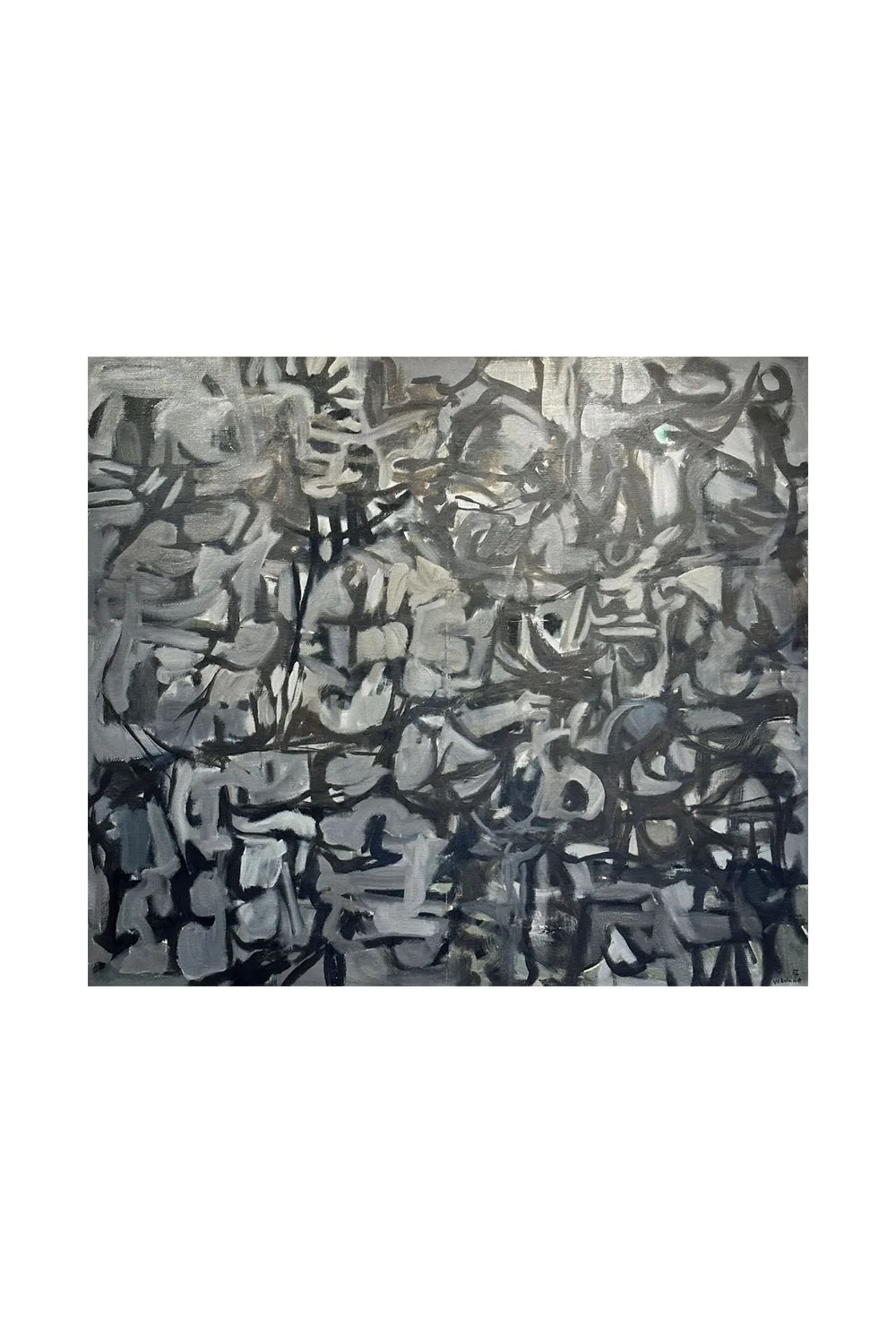
This monumental canvas by Swiss artist Willi Behrndt (1919–2013), executed in the 1960s at 160 × 180 cm, is one of the most significant works in the VV Interior Home collection — a large-scale abstract painting in which the physicality of the surface and the density of the mark-making create a visual field of exceptional intensity and sustained presence.
Executed in a palette of greys, blacks and muted silvers, the composition unfolds as a restless terrain of interlacing marks — simultaneously calligraphic and architectural. Behrndt does not pursue chromatic harmony but constructs a visual landscape charged with tension, where light emerges through opacity and movement is inscribed into every gesture. The painting reads as a palimpsest of forms — structured and improvised in equal measure — revealing an artist deeply attuned to the expressive potential of abstraction in its most elemental register.
At 160 × 180 cm the work functions as a spatial intervention as much as a painting — a presence that reorganises the room it enters and demands sustained engagement from anyone who inhabits the same space. Scale here is not decoration but argument.
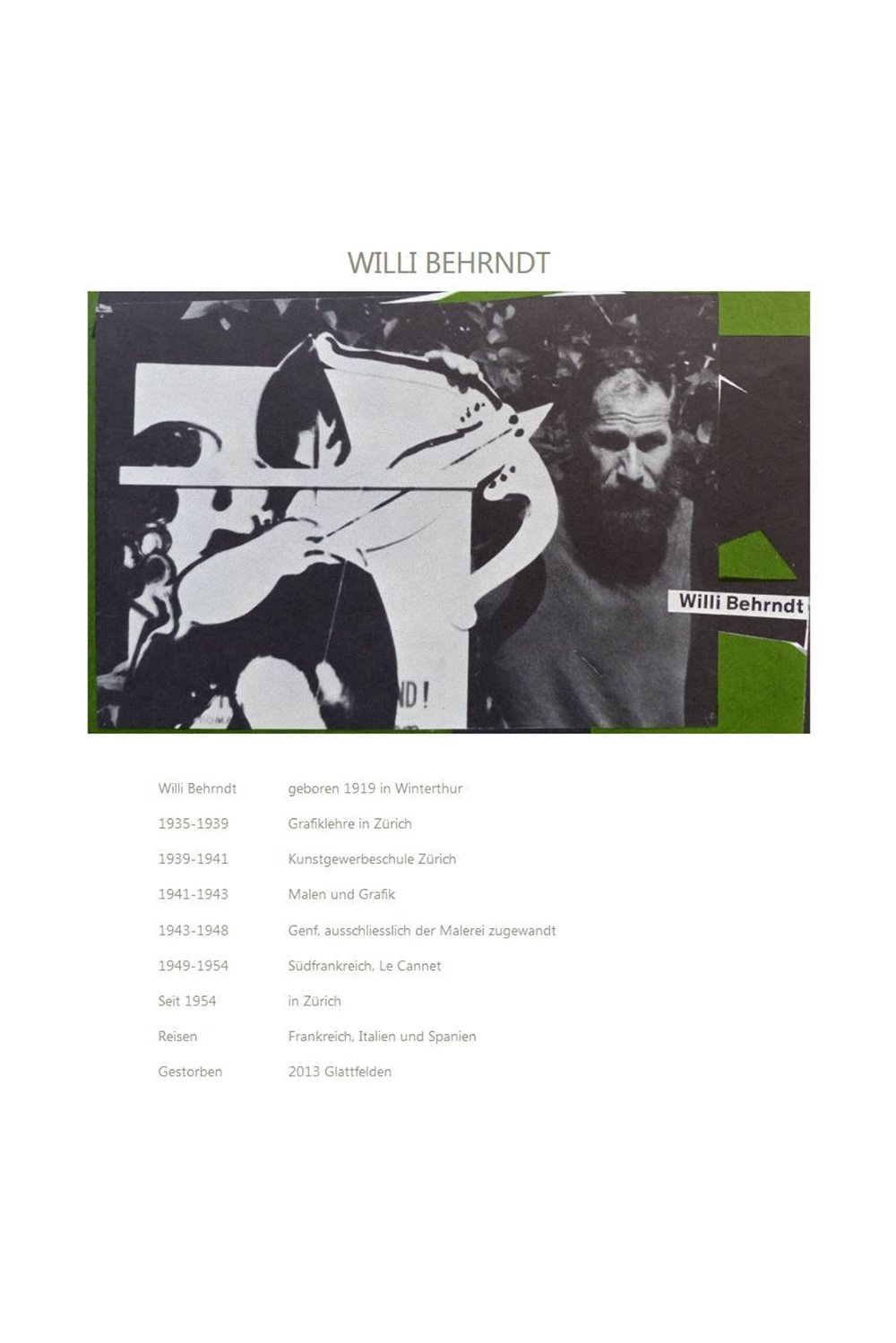
Trained in Zürich with formative years in Geneva and the South of France, Behrndt developed a distinct abstract language that merges gestural mark-making with structural rigour — bridging personal expression with the broader aesthetic currents of postwar European painting. His large-scale abstractions are increasingly rare in the secondary market.
Artist: Willi Behrndt, 1919–2013, Switzerland Title: Untitled Year: 1960s Medium: Oil on canvas Measurements: 160 × 180 cm Condition: Sold out — contact us to be notified of availability
This monumental canvas by Swiss artist Willi Behrndt (1919–2013), executed in the 1960s at 160 × 180 cm, is one of the most significant works in the VV Interior Home collection — a large-scale abstract painting in which the physicality of the surface and the density of the mark-making create a visual field of exceptional intensity and sustained presence.
Executed in a palette of greys, blacks and muted silvers, the composition unfolds as a restless terrain of interlacing marks — simultaneously calligraphic and architectural. Behrndt does not pursue chromatic harmony but constructs a visual landscape charged with tension, where light emerges through opacity and movement is inscribed into every gesture. The painting reads as a palimpsest of forms — structured and improvised in equal measure — revealing an artist deeply attuned to the expressive potential of abstraction in its most elemental register.
At 160 × 180 cm the work functions as a spatial intervention as much as a painting — a presence that reorganises the room it enters and demands sustained engagement from anyone who inhabits the same space. Scale here is not decoration but argument.
Trained in Zürich with formative years in Geneva and the South of France, Behrndt developed a distinct abstract language that merges gestural mark-making with structural rigour — bridging personal expression with the broader aesthetic currents of postwar European painting. His large-scale abstractions are increasingly rare in the secondary market.
Artist: Willi Behrndt, 1919–2013, Switzerland Title: Untitled Year: 1960s Medium: Oil on canvas Measurements: 160 × 180 cm Condition: Sold out — contact us to be notified of availability
These are antique pieces and are sold as such. Although VV does its best to highlight major flaws, minor imperfections should be expected reflecting the age and previous use of the piece.