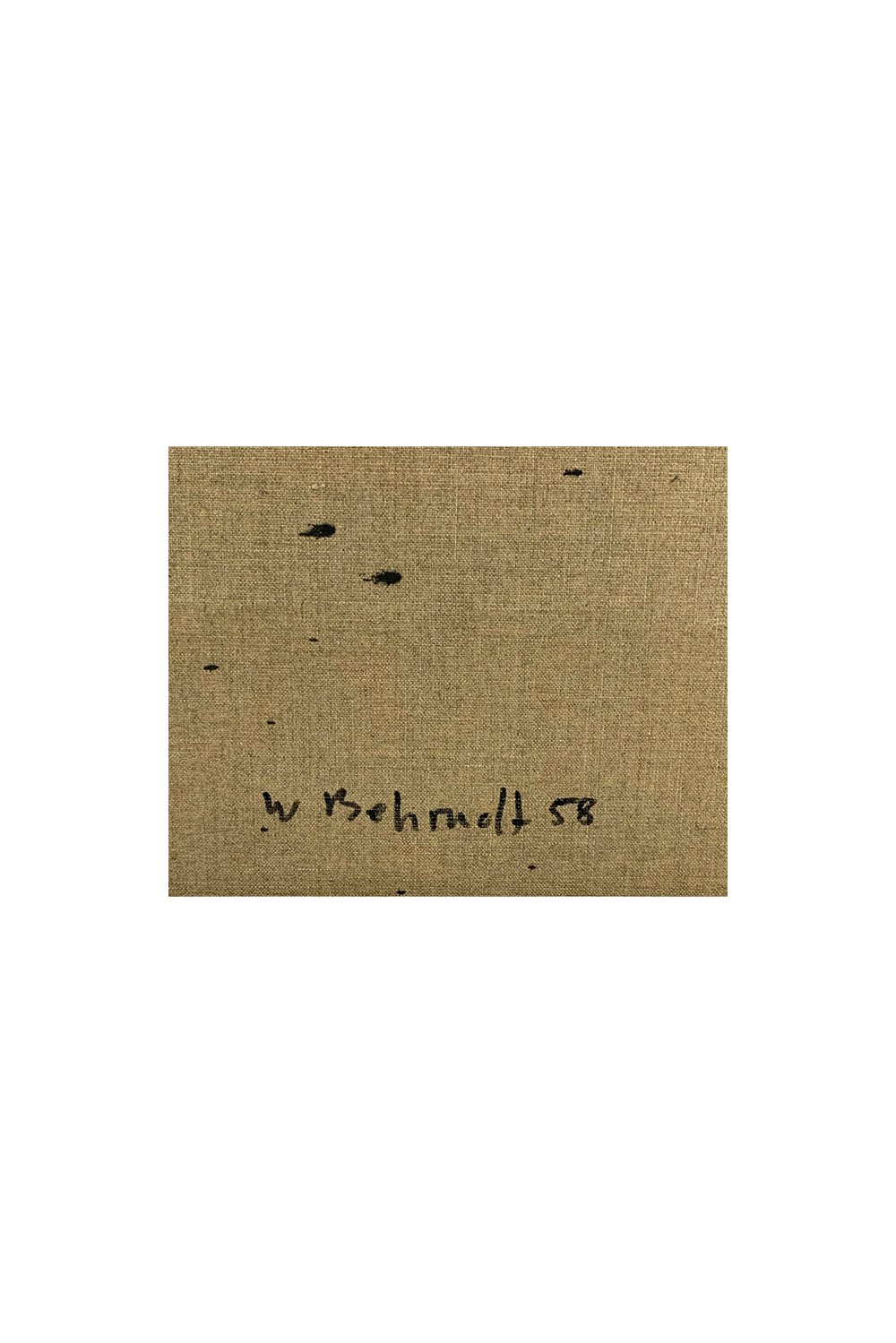
These are antique pieces and are sold as such. Although VV does its best to highlight major flaws, minor imperfections should be expected reflecting the age and previous use of the piece.
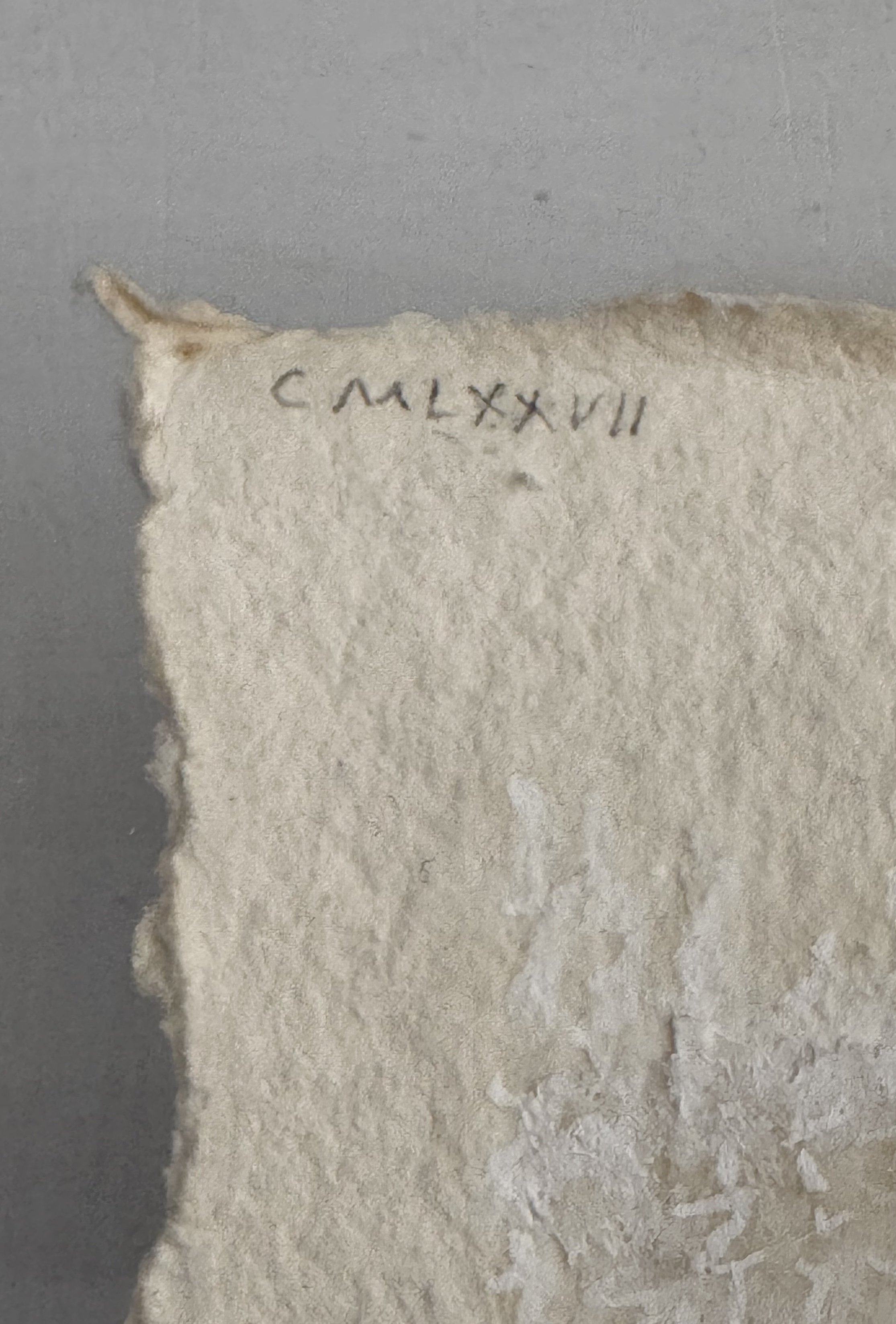
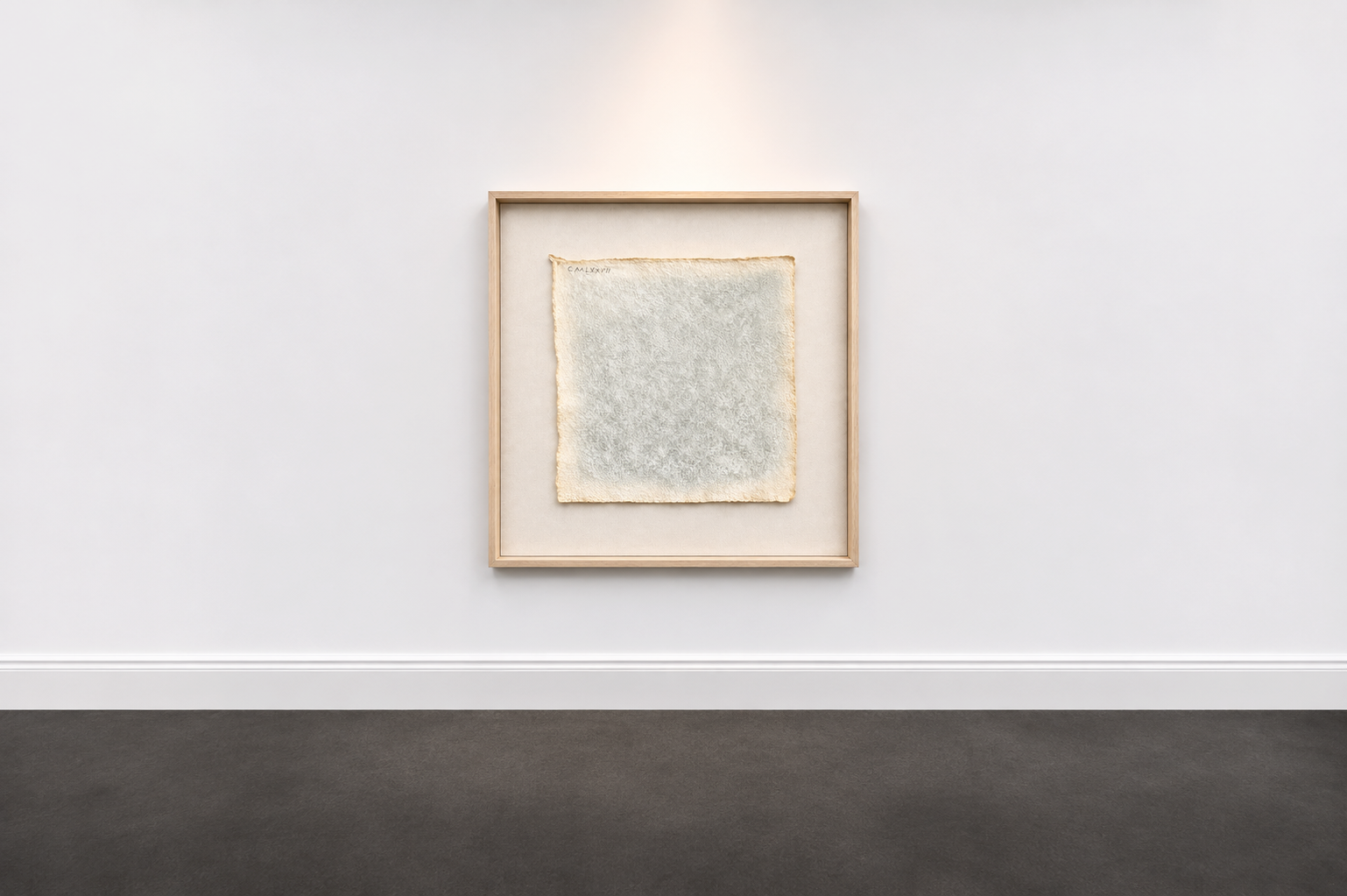
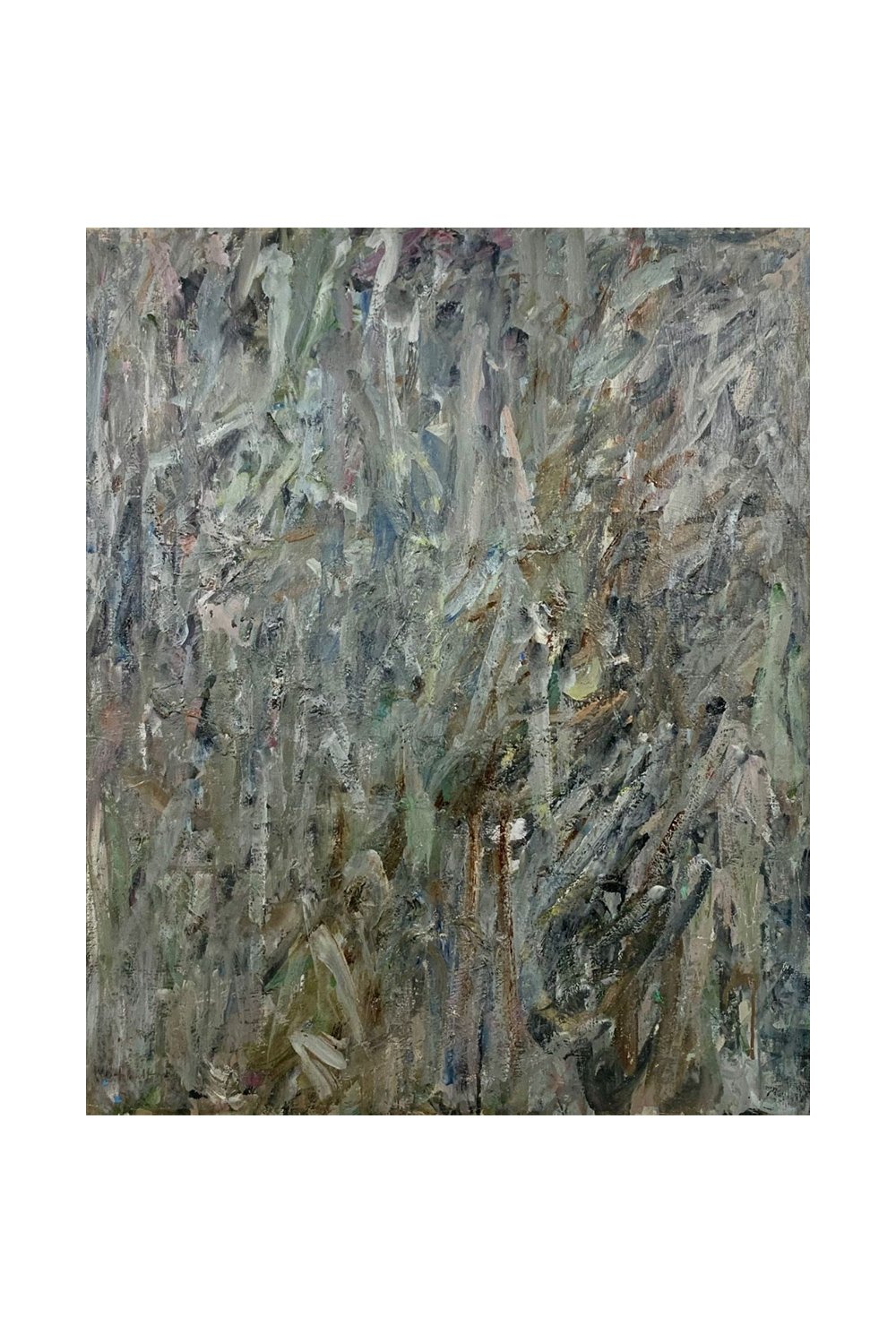
This intimate yet powerful abstract composition by Willi Behrndt (1919–2013) reveals the artist's mastery of material density and lyrical restraint. Executed with thick, gestural layers of pigment, the surface vibrates with a subtle interplay of greys, greens, and earthy tones — evoking both natural textures and emotional undercurrents.
Unlike Behrndt's more architectural abstractions, this canvas leans toward a painterly expressionism that maintains his signature meditative quietude. The overlapping strokes form a living surface — at once atmospheric and tactile — where each mark echoes the rhythm of nature or the slow erosion of stone. This tension between structure and dissolution situates the work at the crossroads of European postwar abstraction and lyrical painting.
Trained in Zürich, with formative years in Geneva and the South of France, Behrndt developed a visual language of tonal restraint and material vigor — quiet, rigorously constructed compositions that bridge architecture, nature, and inner landscape. A rare small-scale format from his oeuvre, offering a concentrated and deeply felt vision of his mature practice.
A work that resonates equally as a meditative object and as a significant document of postwar Swiss painting.
Measurements:
60 × 70 cm
About the Artist:
Willi Behrndt (1919–2013) was a Swiss painter trained in Zürich, whose career spanned graphic design, painting, and decades of exploration into abstraction. After formative years in Geneva and the South of France, he returned to Zürich, where his mature works emerged, quiet, rigorously constructed compositions that bridge architecture, nature, and inner landscape.
Behrndt’s art, oscillating between tonal restraint and material vigor, reflects the European postwar pursuit of order, purity, and transcendence. His works remain prized by collectors for their timeless ability to transform silence, structure, and matter into visual poetry.
These are antique pieces and are sold as such. Although VV does its best to highlight major flaws, minor imperfections should be expected reflecting the age and previous use of the piece.